

Written by Aisha Saleem, Pharmacist & Health Writer at PharmaHealths.com
Last updated: August 29, 2026
Not consistently, and that surprises most people looking for a simple answer. Freezing and refrigerating both trigger the same starch retrogradation process behind resistant starch formation, but which one works better depends heavily on what food you’re freezing, not on freezing being a universal upgrade over the fridge.
How does freezing actually affect resistant starch, mechanically?
Freezing works through the same retrogradation process as refrigeration, just at a more extreme temperature. A 2022 study in Foods compared refrigeration at 4°C for up to seven days against freezing at -20°C, -40°C and -80°C for up to 28 days in cooked rice, and found that colder storage temperatures and longer storage periods both increased resistant starch and slowly digestible starch content while lowering the estimated glycemic index. In other words, freezing isn’t a different mechanism, it’s the same one pushed further.
Does freezing rice increase resistant starch more than refrigerating it?
Not reliably, and the effect varies by rice variety. A 2025 comparative study in IOP Conference Series, Earth and Environmental Science found that refrigerating cooked rice for 24 hours at 4°C actually decreased resistant starch in two of three rice varieties tested and only increased it in one, while freezing at -18°C for 12 hours increased resistant starch in two of the three varieties. This is a genuinely messier picture than most articles present, and it means you can’t assume freezing automatically outperforms the fridge for every type of rice. A 2015 study in the Asia Pacific Journal of Clinical Nutrition measured this more precisely in one rice variety, fresh cooked rice contained 0.64 grams of resistant starch per 100 grams, rice cooled at room temperature for 10 hours reached 1.30 grams, and rice refrigerated for 24 hours at 4°C then reheated reached 1.65 grams, with the refrigerated version producing a significantly lower glycemic response in a 15-person clinical trial (125 versus 152 mmol min/L, p=0.047). A separate consideration for people with type 1 diabetes on insulin: a 2022 study in Nutrition & Diabetes that measured cooled rice’s blood sugar benefit in 32 people with type 1 diabetes also found significantly more hypoglycemic episodes after the cooled rice meal than the fresh-rice meal (12 episodes versus 3, p=0.0039), since the same slower, gentler glucose rise that helps prevent a spike can also mean less glucose available to match a standard insulin dose. If you use insulin, this is worth discussing with your care team before making cooled or frozen starches a regular swap, rather than assuming the blood sugar benefit is risk free in every context.
Does freezing bread lower its blood sugar impact?
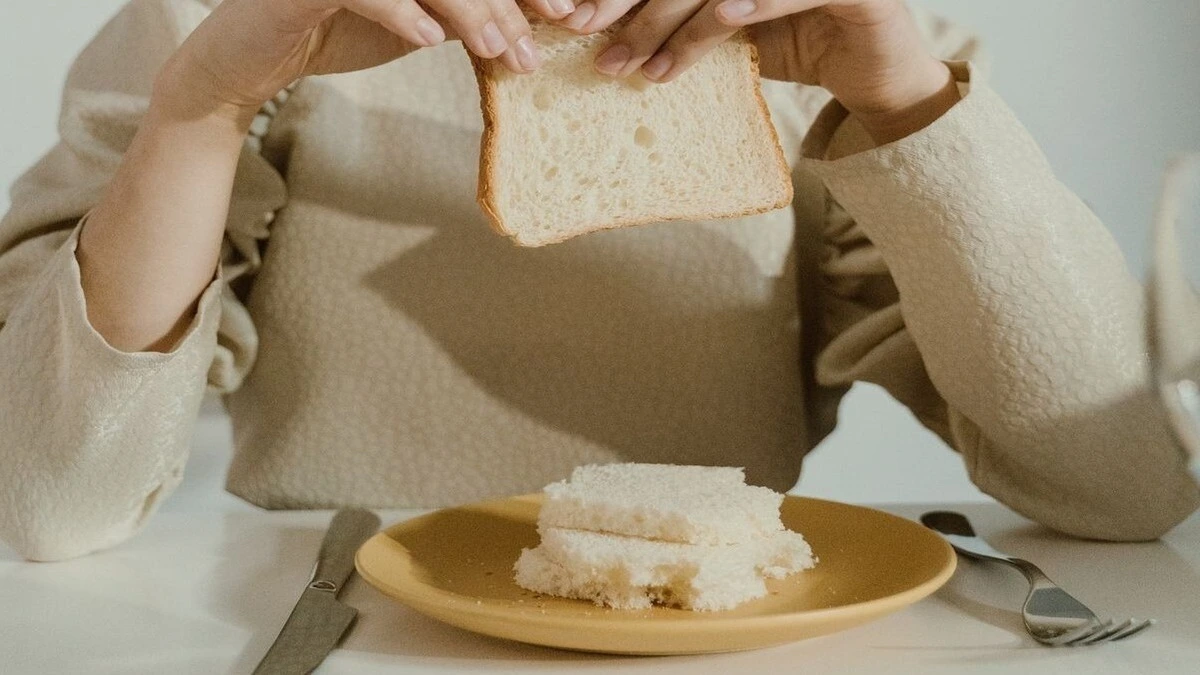
Yes, and this is where freezing shows its clearest, most consistent benefit. A 2023 randomized controlled trial in Novelty in Clinical Medicine, involving 32 healthy adults, found that frozen and reheated white bread produced a lower blood glucose response than fresh bread at every measured time point, peaking at 120 mg/dL compared to 132 mg/dL for fresh bread at the 30-minute mark. A separate study by researchers at Oxford Brookes University, published in the European Journal of Clinical Nutrition, tested fresh bread against frozen and defrosted, toasted, and toasted after freezing versions, and found that all three storage and preparation methods produced a lower blood glucose response than fresh bread. Bread appears to be one of the more reliable foods for the freezing approach, more consistent than rice.
Does freezing for longer keep increasing resistant starch?
No, and this is a common assumption worth correcting. The same Novelty in Clinical Medicine trial that found frozen bread lowered blood glucose also tested freezing durations of three, five, and seven days, and found that extending the freezing time didn’t further increase resistant starch or further lower glucose response beyond what the initial freeze already achieved. Whatever benefit you get from freezing bread, you get it early, not by leaving it in the freezer longer.
Can freezing and thawing repeatedly reduce resistant starch instead of increasing it?
Yes, and this is a real risk most articles never mention. A 2015 study in PLOS ONE on waxy rice starch found that resistant starch content dropped from 58.9% to just 19% after ten repeated freeze thaw cycles, as the repeated structural disruption broke down the same crystalline structure that freezing initially built up. The practical takeaway is to freeze a food once and thaw it once, rather than repeatedly refreezing leftovers.
Does freezing work for whole grains and legumes the same way?
Yes, and repeated cooking freezing cycles show one of the strongest effects recorded for any food category. A 2015 study in the Journal of Functional Foods put whole wheat flour through zero to seven cycles of cooking and freezing and found resistant starch rose from 1.03% to 8.07% of the starch content, with the increase also raising production of short chain fatty acids, particularly propionate, during fermentation, a marker of the gut health benefit resistant starch is known for.
Separately, a 2024 study in Frontiers in Nutrition found that steaming mung beans after germination and then storing them at 4°C for 24 hours produced the highest resistant starch and lowest glycemic index among several cooking methods tested, ahead of boiling, roasting or pressure cooking, which suggests refrigeration rather than freezing may be the more relevant lever for legumes specifically.
So, which should you actually use, the fridge or the freezer?
Match the method to the food rather than assuming one is universally better. For bread, freezing has the most consistent evidence behind it, and a single freeze cycle appears to capture the full benefit. For rice, both refrigeration and freezing can help, but the effect is inconsistent enough across varieties that you shouldn’t expect a guaranteed result either way, so refrigerating overnight remains the more studied, more reliable default. For legumes, refrigeration after cooking looks at least as effective as freezing, if not more relevant, based on current evidence. Whichever method you use, freeze or refrigerate once, thaw once, and reheat once rather than cycling a food through temperature changes repeatedly.
Conclusion
Freezing and refrigerating both increase resistant starch through the same retrogradation process, but neither one is a universal winner across every food. Bread responds most reliably to freezing, rice responds inconsistently to either method depending on the variety, and legumes may respond just as well or better to simple refrigeration. Freeze or refrigerate once, avoid repeated freeze thaw cycles, and match your method to what you’re actually cooking rather than assuming the coldest option is always the best one.
Disclaimer
This article is for general educational purposes and isn’t a substitute for personalized medical or dietary advice. Speak with your doctor or a registered dietitian before making significant changes to your diet, especially if you take glucose lowering medication or insulin.
References
• Li H, Liu B, Bess K, Wang Z, Liang M, Zhang Y, Wu Q, Yang L. Impact of low-temperature storage on the microstructure, digestibility, and absorption capacity of cooked rice. Foods, 2022;11(11):1642. https://www.ncbi.nlm.nih.gov/pmc/articles/PMC9180724/
• Yaseen AQ, Al-Zuhayri AMT. Study of the effect of cooling and freezing cooked rice on the formation of resistance starch in some domestic rice varieties. IOP Conference Series: Earth and Environmental Science, 2025. https://iopscience.iop.org/article/10.1088/1755-1315/1487/1/012136
• Sonia S, Witjaksono F, Ridwan R. Effect of cooling of cooked white rice on resistant starch content and glycemic response. Asia Pacific Journal of Clinical Nutrition, 2015;24(4):620-625. https://pubmed.ncbi.nlm.nih.gov/26693746/
• Strozyk S, Rogowicz-Frontczak A, Pilacinski S, LeThanh-Blicharz J, Koperska A, Zozulinska-Ziolkiewicz D. Influence of resistant starch resulting from the cooling of rice on postprandial glycemia in type 1 diabetes. Nutrition & Diabetes, 2022;12:21. https://pmc.ncbi.nlm.nih.gov/articles/PMC9013350/
• The effect of freezing and heating white bread on the glycemic response of healthy individuals. Novelty in Clinical Medicine, 2023. https://doaj.org/article/0bf534184c4a45c3bbb1aab4ec694106
• Impact of freezing and toasting on the glycaemic response of white bread. European Journal of Clinical Nutrition. https://link.springer.com/article/10.1038/sj.ejcn.1602746
• Tao H, Yan J, Zhao J, Tian Y, Jin Z, Xu X. Effect of multiple freezing/thawing cycles on the structural and functional properties of waxy rice starch. PLOS ONE, 2015;10(5):e0127138. https://www.ncbi.nlm.nih.gov/pmc/articles/PMC4446316/
• Arcila JA, Rose DJ. Repeated cooking and freezing of whole wheat flour increases resistant starch with beneficial impacts on in vitro fecal fermentation properties. Journal of Functional Foods, 2015;12:230-236. https://digitalcommons.unl.edu/foodsciefacpub/432
• Chauhan S, Kaur H, Aggarwal R, Kaur P, Bains K. Exploring the impact of cooking techniques and storage conditions on resistant starch levels in mung beans and its effect upon blood glucose level and lipid profile in vivo. Frontiers in Nutrition, 2024;11:1424112. https://www.frontiersin.org/journals/nutrition/articles/10.3389/fnut.2024.1424112/full
