
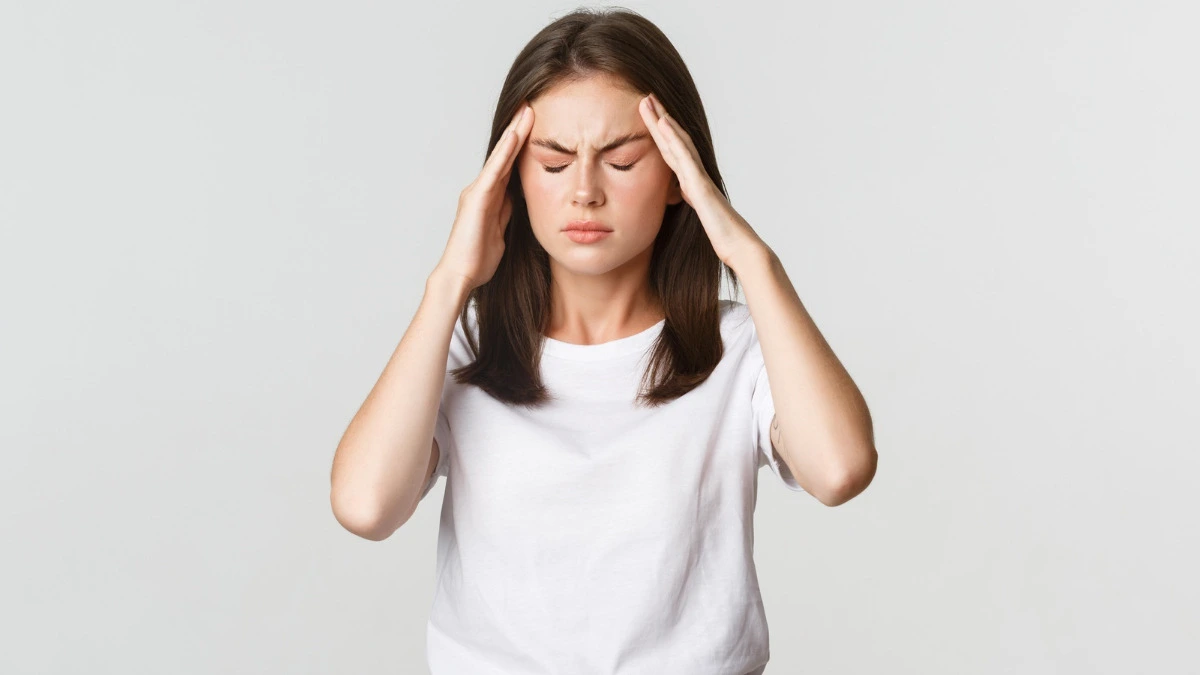

If you’ve ever pressed your fingers against your closed eyelids hoping to relieve a dull, nagging pressure sitting right behind your eyes, you’re far from alone. That deep, uncomfortable pressure isn’t just frustrating, it’s often your body trying to signal an underlying trigger. As a pharmacist, this is one of the most common complaints I hear across the counter, and it’s also one of the trickiest to pin down, because so many different conditions can produce that exact same sensation. The good news is that most causes are manageable once you know what’s actually behind them. Let’s break down the most likely reasons behind a headache behind the eyes, and how to tell them apart.
Migraine (The Most Common Cause of Headache Behind the Eyes)
For a huge number of people, that ache behind the eyes is actually a migraine, even if it doesn’t feel like the “classic” pounding headache you might expect. According to the American Migraine Foundation, retro-orbital pain (pain felt behind the eye) is one of the most frequently reported migraine symptoms, often appearing alongside light sensitivity, nausea, or a throbbing sensation that worsens with movement. A study published in Cephalalgia found that migraine attacks frequently involve activation of the trigeminal nerve pathways that supply the area around and behind the eyes, which helps explain why the pain can feel so localized even though migraine itself is a whole brain process. If your symptoms include light sensitivity, nausea, or pain that worsens with activity, migraine becomes a strong possibility.
Tension Type Headache (The Tight Band Effect)
Tension headaches are often described as a tight band wrapped around the head, but the pressure doesn’t always stay confined to the forehead or temples; it can radiate forward and settle right behind the eyes. A review in The Journal of Headache and Pain found that tension type headaches are strongly linked to muscle tightness in the neck, jaw, and scalp, and this referred pain can easily be perceived as originating from behind the eyeball itself. Stress, poor posture, clenching your jaw, or even sleeping in an awkward position can all trigger this pattern. In practice, people who spend long hours at a desk or on their phones are especially prone to this type of pain.
Sinus Pressure and Sinusitis
When your sinuses become inflamed, whether from a cold, allergies, or a sinus infection, pressure can build up right behind and around your eyes, especially if the frontal or ethmoid sinuses (located near the bridge of the nose and forehead) are affected. Mayo Clinic notes that sinus headaches typically come with a feeling of fullness in the cheeks, forehead, and behind the eyes that tends to worsen when bending forward or lying down, and they’re often accompanied by nasal congestion or discharge. A key clue, sinus related pressure usually shifts with head movement and improves as congestion clears, unlike migraine pain.
Digital Eye Strain
If you spend hours each day staring at screens, your eyes may simply be tired, and that fatigue can translate into an ache behind the eyes by the end of the day. The American Academy of Ophthalmology explains that digital eye strain, sometimes called computer vision syndrome, happens because we blink less frequently when focusing on screens, leading to dry eyes, eye fatigue, and referred pain that can feel like it’s coming from deep behind the eye socket. This is one of the most preventable causes, small habits can make a big difference. The 20-20-20 rule (every 20 minutes, look at something 20 feet away for 20 seconds) can help, along with proper screen brightness and lubricating eye drops if dryness is an issue.
Cluster Headache: Rare But Extremely Intense
Cluster headaches are far less common than migraine or tension headaches, but when they do occur, the pain is often described as one of the most severe a person can experience, typically centered around or behind one eye. According to the National Institute of Neurological Disorders and Stroke, cluster headaches tend to occur in cyclical patterns, often at the same time of day or night, and are frequently accompanied by symptoms on the same side as the pain, such as a drooping eyelid, watery eye, or stuffy nostril. If you notice severe, one-sided eye pain that comes in repeated attacks, this pattern should not be ignored. These headaches respond best to specific treatments rather than standard painkillers.
Dehydration, Caffeine Withdrawal, and Sleep Issues
Sometimes the explanation is refreshingly simple. Not drinking enough water, skipping your usual cup of coffee, or not getting enough sleep can all contribute to a dull pressure behind the eyes. The American Academy of Neurology has highlighted how both dehydration and irregular sleep patterns are common, often overlooked triggers for headache disorders generally. Correcting these basics, hydration, sleep consistency, and gradual caffeine use, can often resolve symptoms without medication.
Quick Clue Guide (What Your Eye Pain Might Mean)
• Throbbing pain with light sensitivity often points toward migraine
• Pressure with nasal congestion usually suggests sinus related causes
• A tight, band like discomfort is commonly linked to tension headaches
• Severe, one sided recurring pain may indicate cluster headache
• Symptoms that worsen after screen use are often due to digital eye strain
When to See a doctor
While most causes of pain behind the eyes aren’t dangerous, a few red flags deserve prompt medical attention. Sudden, severe eye pain with blurred vision, redness, nausea, and vomiting could signal acute angle closure glaucoma, which is a medical emergency. Similarly, if your headache is the “worst of your life,” comes on suddenly like a thunderclap, or is accompanied by fever, stiff neck, confusion, vision loss, or weakness on one side of the body, seek urgent medical care rather than waiting it out. These situations are uncommon, but recognizing them early matters.
FAQs
Q1: Can a headache behind the eyes mean I need glasses or a new prescription?
Yes, uncorrected refractive errors (like needing glasses or an updated prescription) can cause eye strain that translates into an ache behind the eyes, especially after reading or screen time. If this is new or getting worse, an eye exam is a smart next step.
Q2: What can I do at home to relieve pressure behind my eyes?
Resting in a dark, quiet room, applying a cool compress over closed eyes, staying hydrated, and taking breaks from screens can all help. If the pain is linked to sinus congestion, steam inhalation or a saline rinse may also bring relief. Simple measures often work surprisingly well when applied early.
Q3: How do I know if it’s a migraine or a sinus headache?
Migraine pain often comes with light sensitivity, nausea, and a throbbing quality that worsens with movement. Sinus headaches usually involve nasal congestion, facial fullness, and pain that gets worse when bending forward. Tracking your symptoms over time can make this distinction much clearer.
Q4: Is pain behind the eyes ever a sign of something serious?
Most of the time, no, but sudden severe pain with vision changes, redness, or nausea/vomiting should be checked urgently, as it could indicate acute angle closure glaucoma. Any headache that’s dramatically different or more severe than what you usually experience is also worth getting checked.
Call to Action
A Note from Me
If pain behind your eyes has become a regular visitor, please don’t just push through it. Understanding the pattern, what triggers it, what eases it, and what other symptoms come with it, makes a real difference in finding the right cause and treatment. If you want a deeper, practical breakdown of headache patterns and relief strategies, I cover these topics in more detail over at pharmahealths.com.
Disclaimer
This content is for informational and educational purposes only and is not intended as medical advice, diagnosis, or treatment. While every effort has been made to ensure accuracy, health information can change over time. Always consult a qualified healthcare professional regarding any medical concerns, symptoms, or before starting or changing any treatment. If you are experiencing severe or unusual symptoms, seek immediate medical attention.
References
• American Migraine Foundation
• Cephalalgia
• The Journal of Headache and Pain
• Mayo Clinic
• American Academy of Ophthalmology
• National Institute of Neurological Disorders and Stroke
• American Academy of Neurology