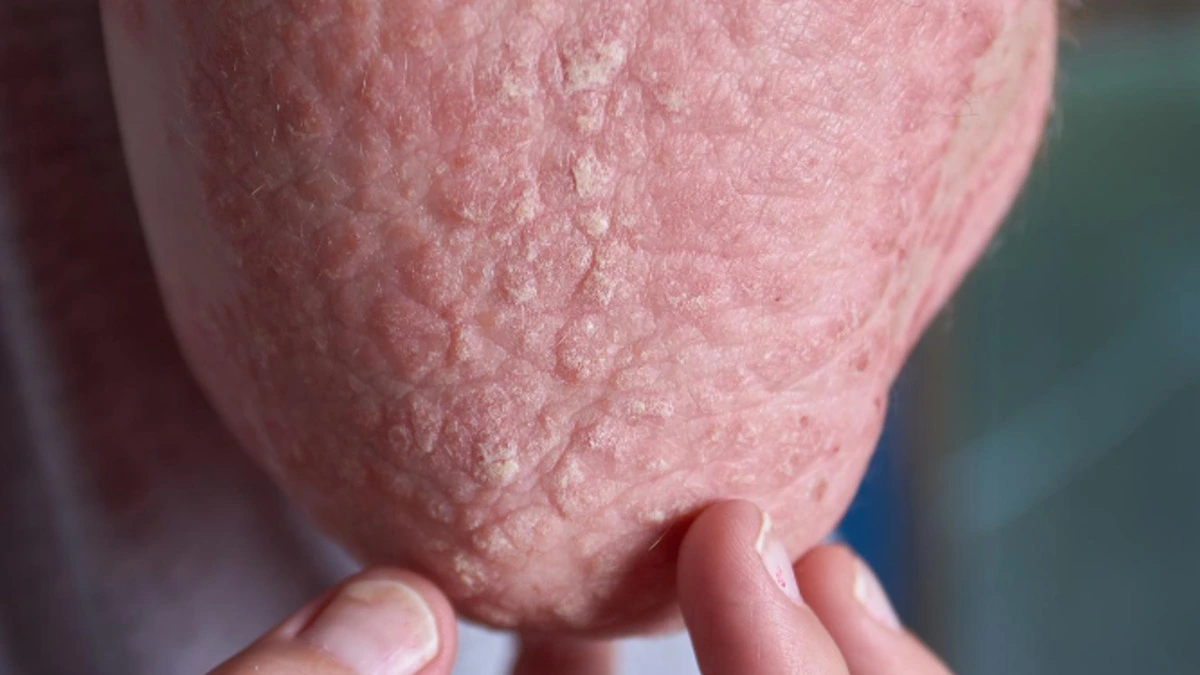

I remember one patient in particular, a mother in her thirties who had lived with eczema on her hands and the backs of her knees since childhood. She’d tried steroid creams, moisturizers, antihistamines, even short courses of oral steroids during bad flares. Nothing held. By the time she started dupilumab, she told me she’d stopped wearing short sleeves entirely. Eight months later, she came back to refill her prescription and casually rolled up her sleeves to show me clear skin. That’s the kind of shift dupilumab has made possible for a lot of patients with moderate to severe eczema, and it’s worth understanding exactly how it works.
For many patients with moderate to severe eczema, dupilumab has become one of the most effective targeted treatment options available today.
What Dupixent Actually Is
Dupixent is the brand name for dupilumab, a biologic medication, specifically a monoclonal antibody, approved for moderate to severe atopic dermatitis in both adults and children. Unlike topical steroids or oral immunosuppressants, dupilumab isn’t designed to dampen the immune system broadly. Instead, it’s engineered to bind to one very specific target: the alpha subunit of the IL-4 receptor.
That single target matters more than it might sound. The IL-4 receptor alpha subunit is shared by two cytokines, IL-4 and IL-13, both of which are central drivers of the Th2 immune response that fuels atopic dermatitis. By blocking this shared receptor, dupilumab effectively shuts down signaling from both cytokines at once, interrupting the inflammatory cascade and the itch scratch cycle that keeps eczema flaring.
In simpler terms, dupilumab blocks the key immune signals that keep inflammation and itching switched on.
How It’s Different from Older Treatments
For decades, moderate to severe eczema that didn’t respond to topical treatment left patients with limited options: stronger steroids, which carry risks like skin thinning with prolonged use, or systemic immunosuppressants like cyclosporine, which work but suppress immune function broadly and require close monitoring. According to the National Eczema Association, this lack of targeted options meant many patients simply lived with chronic, disruptive symptoms for years.
Dupilumab changed that by offering a treatment that targets the specific pathway driving the disease rather than suppressing immunity as a whole. This precision is a big part of why it became the first biologic approved specifically for atopic dermatitis, and why it reshaped expectations for what eczema treatment could achieve.
What the Evidence Shows
The clinical trial data behind dupilumab is substantial. The pivotal SOLO 1 and SOLO 2 trials, published in the New England Journal of Medicine, found that a significant proportion of patients treated with dupilumab achieved both clear or almost clear skin and meaningful reductions in itch severity compared to placebo, results that held up over extended treatment periods in follow up studies.
Beyond the skin clearance numbers, what stands out in the literature is the impact on quality of life. A review in the Journal of the American Academy of Dermatology highlighted that patients on dupilumab reported improvements not just in visible symptoms, but in sleep quality, anxiety related to flare ups, and overall daily functioning, outcomes that matter just as much as lab measurements of skin clearance. Research published in The Lancet has similarly noted that itch reduction often begins within the first couple of weeks of treatment, well before maximum skin clearance is reached.
Many patients begin to notice itch relief within the first 2 weeks, visible skin improvement by 4 to 16 weeks, and sustained control with continued use.
How It’s Taken and Who It’s For
Dupilumab is given as a subcutaneous injection, typically every two weeks after an initial loading dose, and many patients are trained to self-administer it at home. It’s approved for patients whose eczema hasn’t responded adequately to topical prescription therapies or for whom those therapies aren’t advisable, which generally means it’s reserved for moderate to severe cases rather than mild eczema that can usually be managed with topical treatment alone.
Beyond atopic dermatitis, dupilumab has also been approved for several other conditions driven by similar Th2 inflammatory pathways, including asthma, chronic rhinosinusitis with nasal polyps, and eosinophilic esophagitis, which speaks to how central the IL-4 and IL-13 pathway is across multiple allergic and inflammatory conditions, not just skin disease.
Safety Considerations Worth Knowing
No medication is without tradeoffs, and dupilumab is no exception. The most commonly reported side effects include injection site reactions and a notable rate of conjunctivitis, eye inflammation that’s more specifically associated with dupilumab than with most other biologics.
Research published in JAMA Dermatology has examined this link closely, and while the exact mechanism isn’t fully settled, dermatologists generally recommend monitoring for eye symptoms and addressing them early if they appear.
Patients should report symptoms like eye redness, dryness, or irritation early, as timely management can prevent complications. In some cases, simple lubricating eye drops may be recommended.
Because dupilumab works by blocking a specific immune pathway rather than suppressing immunity broadly, its overall safety profile tends to look different from older systemic treatments, but it still requires medical supervision and isn’t something to start or stop without a dermatologist’s guidance.
What Happens with Long Term Use
One question I get often is whether dupilumab keeps working overtime, or whether the body adapts to it the way it can with some other treatments. Long term extension data from the original trial cohorts, also published in the New England Journal of Medicine, has shown that skin clearance and itch control are generally well maintained over several years of continuous treatment, rather than fading after the first year. That durability is part of why many dermatologists view dupilumab as a long-term management strategy rather than a short course of treatment.
It’s also worth noting that dupilumab is approved for children as young as six months old with moderate to severe eczema, which reflects how consistently the IL-4 and IL-13 pathway shows up as a driver of disease across age groups. For families dealing with severe pediatric eczema, that approval has opened treatment options that simply didn’t exist a decade ago.
The Bottom Line
Dupilumab represents one of the clearest examples of how understanding the immune pathways behind a disease can translate into meaningfully better treatment. For patients who’ve spent years managing eczema with treatments that only partially worked, the ability to target the IL-4 and IL-13 pathway directly has changed what’s realistically achievable, not perfect for everyone, but genuinely transformative for many.
If you’re dealing with eczema that hasn’t responded to standard treatment, it’s worth bringing this up directly with your dermatologist. Understanding how a drug like this works is the first step toward having an informed conversation about whether it might be right for you.
FAQs
Q1: What is Dupixent used for?
Dupixent (dupilumab) is approved for moderate to severe atopic dermatitis (eczema) in adults and children, as well as several other conditions driven by similar immune pathways, including asthma and chronic rhinosinusitis with nasal polyps.
Q2: How does Dupixent work?
Dupixent blocks the IL-4 receptor alpha subunit, which is shared by two cytokines, IL-4 and IL-13. Blocking this shared receptor interrupts both signaling pathways at once, calming the inflammation and itch scratch cycle that drives eczema flares.
Q3: How is Dupixent administered?
It’s given as a subcutaneous injection, typically every two weeks after an initial loading dose. Many patients are trained to self-administer it at home once they’re comfortable with the process.
Q4: How long does it take for Dupixent to work?
Itch reduction often begins within the first couple of weeks, while more significant skin clearance typically builds over several weeks to a few months of consistent treatment.
Q5: What are the most common side effects of Dupixent?
The most commonly reported side effects are injection site reactions and conjunctivitis, eye inflammation that’s more specifically linked to dupilumab than to most other biologics. Dermatologists generally recommend monitoring for eye symptoms early on.
Q6: Is Dupixent safe for long-term use?
Long-term extension studies show that skin clearance and itch control are generally well maintained over several years of continuous treatment. It still requires regular monitoring by a dermatologist, but its safety profile differs from older, broadly immunosuppressive treatments.
Q7: Is Dupixent approved for children?
Yes, Dupixent is approved for children as young as six months old with moderate to severe eczema, making it an option for severe pediatric cases that previously had limited treatment choices.
Q8: Who is a good candidate for Dupixent?
It’s generally reserved for people with moderate to severe eczema that hasn’t responded adequately to topical prescription treatments, or for whom those treatments aren’t advisable. A dermatologist evaluates severity and treatment history before recommending it.
Explore More on PharmaHealths
For more on the immune pathways behind eczema and psoriasis, check out my Complete Immunology Guide to biologic therapy on PharmaHealths.com, where I break down how Cosentyx, Skyrizi, and JAK inhibitors compare to dupilumab.
Disclaimer
This article is for general informational purposes only and is not a substitute for professional medical advice, diagnosis, or treatment. Always consult your doctor, dermatologist, or pharmacist before starting, stopping, or changing any treatment.
References
• National Eczema Association
• New England Journal of Medicine
• Journal of the American Academy of Dermatology
• The Lancet
• JAMA Dermatology