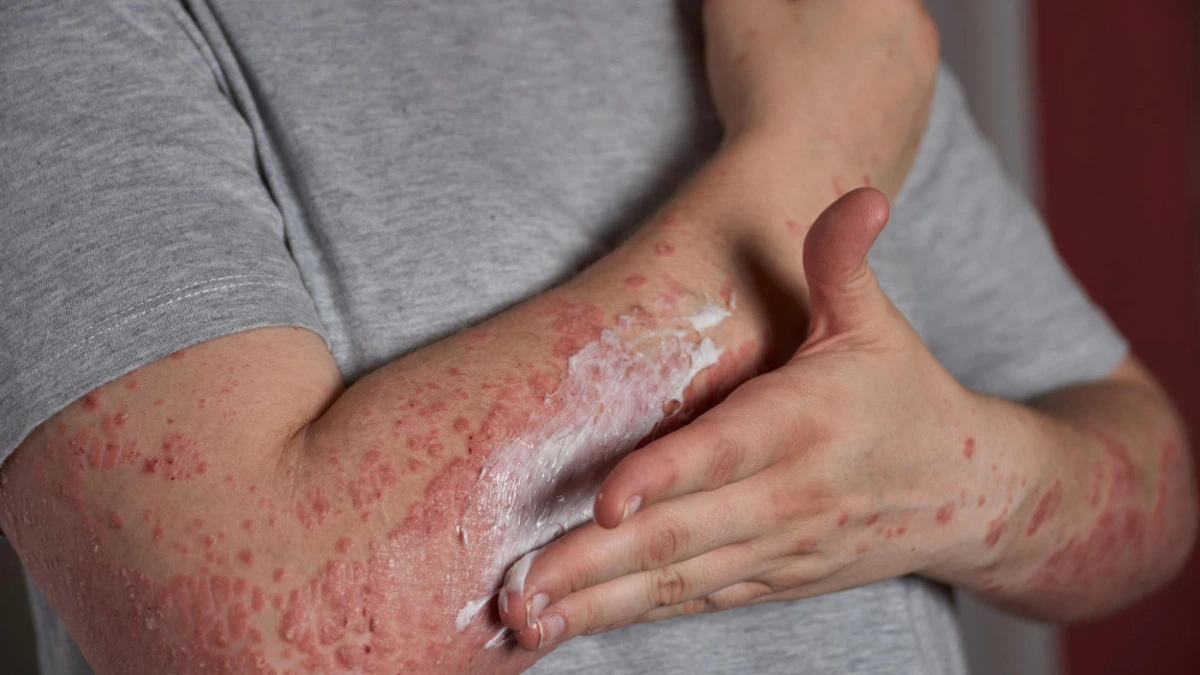

A decade ago, if a patient came to me with severe, treatment resistant psoriasis or eczema, my options were limited. Stronger steroids. Methotrexate. Cyclosporine. Drugs that worked by suppressing broad parts of the immune system, often with side effects that made long term use a tough trade off. Today, that conversation has fundamentally changed. Biologic therapy for psoriasis and eczema has given us the ability to target the exact immune signals driving these conditions, and for many patients, it has turned “managing symptoms” into achieving near complete or even fully clear skin.
This guide is meant to be your starting point for understanding how biologic therapy works across both psoriasis and eczema, the immune pathways these drugs target, and where each major treatment option fits into the bigger picture. I’ll be publishing more detailed articles on individual drugs and treatment decisions in the coming weeks, but this is the foundation everything else builds on.
Why the Immune System Is the Real Target
Psoriasis and eczema look similar on the skin, redness, inflammation, itching, but they are driven by different immune circuits entirely. Psoriasis is classified as an autoimmune condition, where the immune system mistakenly accelerates skin cell turnover, producing the thick, scaled plaques associated with the disease. Eczema, or atopic dermatitis, involves a different combination of skin barrier dysfunction and an allergic type immune response.
In simple terms: psoriasis is driven by an overactive immune attack, while eczema is driven by immune imbalance combined with a weakened skin barrier.
According to research published in Nature Reviews Immunology, both conditions ultimately trace back to specific cytokines, the chemical messengers’ immune cells use to communicate and coordinate inflammation throughout the body.
For psoriasis, the central players are IL-17 and IL-23. These cytokines drive the rapid skin cell turnover and persistent inflammation that defines the disease, and they tend to stay chronically elevated unless something interrupts the cycle. For eczema, IL-4 and IL-13 take center stage instead, fueling the itch scratch cycle and barrier breakdown that make atopic dermatitis so disruptive to daily life, sleep, and mental wellbeing. Understanding these pathways matters because it’s exactly what biologic drugs are designed to interrupt.
How Biologics Actually Work
Unlike older systemic treatments that blunt immune function broadly, biologics are engineered antibodies that bind to one specific target, either a cytokine itself or its receptor, blocking that one signal while leaving the rest of the immune system largely intact. The American Academy of Dermatology notes that this targeted approach is a major reason biologic tend to produce more consistent results, with a side effect profile that looks quite different from traditional systemic immunosuppressants.
For psoriasis, IL-17 inhibitors like secukinumab (Cosentyx) and ixekizumab (Taltz) block that pathway directly, while IL-23 inhibitors like risankizumab (Skyrizi) work further upstream, shutting down the signal before it triggers the broader inflammatory cascade. Trials covered in the New England Journal of Medicine have shown that a substantial proportion of patients on these therapies reach near-complete skin clearance, a benchmark that was genuinely rare with older treatments like methotrexate or topical steroids alone.
For eczema, dupilumab (Dupixent) was the breakthrough biologic, blocking the IL-4 receptor and indirectly dampening IL-13 signaling as well. This dual effect on the core eczema pathway is a big part of why dupilumab reshaped treatment expectations for moderate to severe atopic dermatitis, particularly for patients who had spent years cycling through topical steroids without lasting relief.
Where JAK Inhibitors Fit In
JAK inhibitors represent a related but distinct approach. Rather than blocking one specific cytokine, they interrupt the internal signaling pathway that several different inflammatory messengers rely on to relay their instructions inside cells. This makes them broader in mechanism than biologics, while still being far more targeted than older systemic immunosuppressants.
Unlike biologics, which are typically given as injections, JAK inhibitors are oral medications, something that can be a deciding factor for many patients. Research summarized in Frontiers in Immunology has positioned JAK inhibitors as an important option, particularly for eczema patients who haven’t responded adequately to other treatments, though they come with their own distinct monitoring requirements that patients and prescribers need to weigh carefully.
For example, JAK inhibitors require monitoring for blood counts and lipid changes, which makes regular follow up essential.
Who Actually Needs a Biologic
Biologics aren’t a first line treatment, and that’s by design. They’re generally reserved for moderate to severe psoriasis or eczema that hasn’t responded well to topical treatments or standard systemic options. The National Psoriasis Foundation and National Eczema Association both emphasize that the decision to start a biologic should involve a thorough discussion with a dermatologist, factoring in disease severity, prior treatment history, other existing health conditions, and how significantly the disease is affecting day to day life, sleep, work, and confidence.
In real world practice, this often includes patients who experience frequent flares despite topical steroids, persistent itching that disrupts sleep, or visible skin involvement that impacts daily functioning and confidence.
Cost and access also factor heavily into this decision. Biologics are expensive, and insurance coverage varies considerably depending on where you live and what plan you’re on, so many patients work through a step-therapy process, trying and failing other treatments first, before getting approved. It’s a real and frustrating barrier for a lot of people, and one I think deserves its own honest discussion, which I’ll get into in a future article on this site.
The Bigger Picture
What I find most meaningful about this shift toward biologic therapy isn’t just the clinical trial data, it’s what it means in practice, in real patients’ lives. People who spent years cycling through creams that barely touched their symptoms are now achieving levels of skin clearance that once seemed unrealistic. The itch that disrupted sleep for years in eczema patients is, for many on dupilumab, dramatically reduced within weeks. The visible plaques that made psoriasis patients self-conscious in summer clothing are, for many on IL-17 or IL-23 inhibitors, simply gone.
That said, biologic therapy isn’t right for everyone, and it isn’t without trade-offs. These are powerful, targeted drugs that require ongoing monitoring, regular follow up, and a clear understanding of the risks involved. For example, some biologics may slightly increase the risk of infections, make patient selection and monitor especially important. The right choice depends heavily on the individual case, which is exactly why this decision belongs in a conversation with a dermatologist rather than a quick decision made alone.
My goal with this guide, and the articles that will follow it, is to give you a clear, honest, and genuinely useful picture of how these treatments work, so you can walk into that conversation already informed. Understanding the immune system behind your skin condition is the first step toward understanding your treatment options. From here, I’ll be walking through each major biologic in detail, comparing treatment approaches side by side, and addressing the practical questions around cost and access that matter just as much as the underlying science.
FAQs
Q1: What is biologic therapy for psoriasis and eczema?
Biologic therapy uses lab-engineered antibodies that target specific immune messengers, like IL-17, IL-23, IL-4, or IL-13, that drive inflammation in psoriasis and eczema. Unlike older treatments that suppress the whole immune system, biologics block one specific pathway, often leading to better results with a different side effect profile.
Q2: How are biologics different from steroid creams or methotrexate?
Steroids and drugs like methotrexate work by broadly dampening immune activity. Biologics are far more targeted, binding to one specific cytokine or its receptor, so they interrupt the exact signal driving the disease rather than suppressing immune function across the board.
Q3: Which biologics are used for psoriasis?
Common options include secukinumab (Cosentyx) and ixekizumab (Taltz), both IL-17 inhibitors, and risankizumab (Skyrizi), an IL-23 inhibitor. Each targets a slightly different point along the same inflammatory pathway.
Q4: Which biologic is used for eczema?
Dupilumab (Dupixent) is the most widely used biologic for moderate to severe eczema. It blocks the IL-4 receptor, which also dampens IL-13 signaling, two of the main drivers of the itch-scratch cycle in atopic dermatitis.
Q5: How long does it take for biologics to start working?
Many patients notice improvement within a few weeks, though more significant results, like substantial skin clearance, typically build over two to three months of consistent treatment.
Q6: Are biologics safe for long-term use?
Biologics generally carry a different safety profile than older systemic immunosuppressants, but they still require regular monitoring by a dermatologist, since suppressing even one immune pathway long-term carries some risk, including increased susceptibility to infection.
Q7: Who is a candidate for biologic therapy?
Biologics are typically reserved for moderate to severe psoriasis or eczema that hasn’t responded well to topical treatments or standard systemic medications. A dermatologist will weigh disease severity, treatment history, and overall health before recommending one.
Q8: Are JAK inhibitors the same as biologics?
Not exactly. JAK inhibitors are targeted oral medications, not antibody-based biologics, but they work on a related principle, interrupting inflammatory signaling, and are often used for eczema patients who haven’t responded to other treatments.
Explore More on PharmaHealths
This is the first piece in a series I’m building out on biologic therapy. If you found this useful, keep an eye on PharmaHealths.com over the coming weeks for in-depth breakdowns of Dupixent, Cosentyx, Skyrizi, and the JAK inhibitors, plus an honest look at the cost and access side of these treatments.
Disclaimer
This article is for general informational purposes only and is not a substitute for professional medical advice, diagnosis, or treatment. Always consult your doctor, dermatologist, or pharmacist before starting, stopping, or changing any treatment.
References
• Nature Reviews Immunology
• American Academy of Dermatology
• New England Journal of Medicine
• Frontiers in Immunology
• National Psoriasis Foundation
• National Eczema Association