
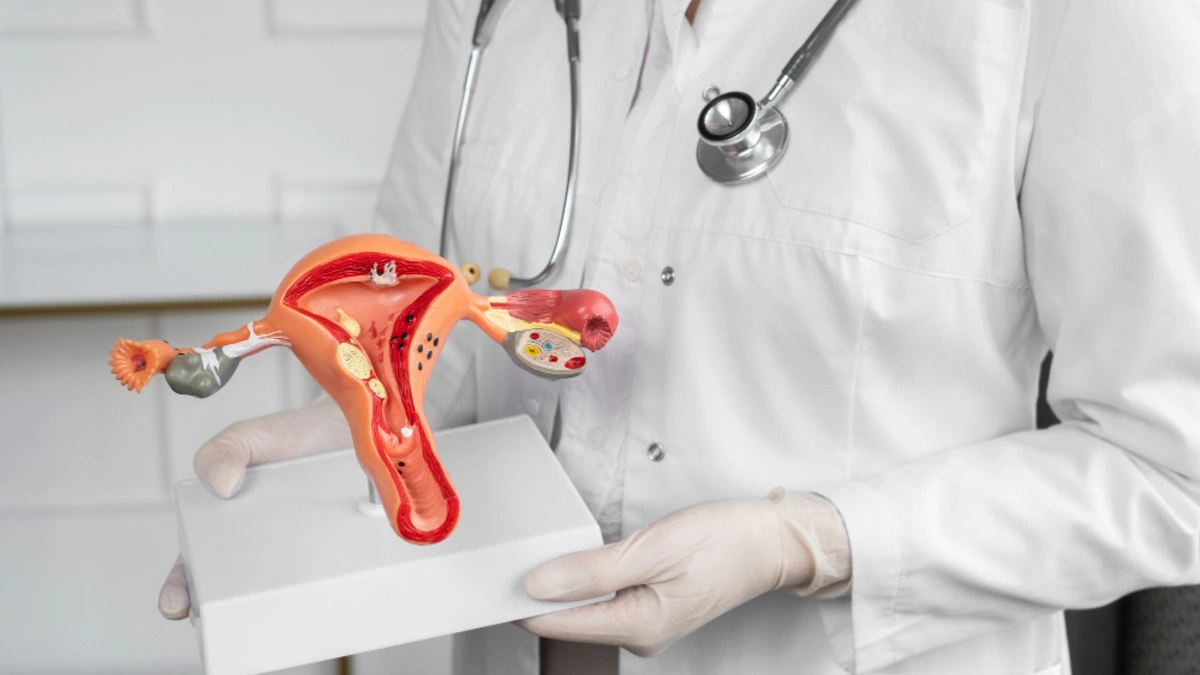

As a pharmacist, I’ve started noticing a shift in the questions women are asking about their reproductive health. Fibroids were once framed as a “perimenopause problem.” Now, women in their twenties, thirties, and forties are asking the same question: why is this happening so early, and so often?
Uterine fibroids, non-cancerous growths that develop in or around the uterus, are now among the most commonly diagnosed gynecological conditions worldwide. And increasingly, attention is turning toward something many people live with daily: chronic stress.
This connection isn’t just a wellness trend. There is growing scientific evidence suggesting that long-term stress and cortisol dysregulation may interact with the same hormonal pathways that influence fibroid growth.
The Biology Behind the Connection
Fibroids are hormonally responsive. They tend to grow in the presence of estrogen and progesterone, which is why they are most common during the reproductive years and often shrink after menopause.
Stress enters this picture through the hypothalamic–pituitary–adrenal (HPA) axis, the system that regulates your body’s cortisol response.
In short bursts, this system works perfectly,
• Cortisol rises
• Helps you respond to stress
• Then returns to baseline
But with chronic stress, the system stays activated longer than intended.
Here’s where it becomes relevant to fibroids,
The HPA axis closely interacts with the hypothalamic–pituitary–gonadal (HPG) axis, which regulates reproductive hormones.
Sustained cortisol exposure may disrupt this hormonal signaling, potentially influencing estrogen and progesterone balance, key drivers of fibroid growth.
What the Research Shows
Multiple studies support this biological link,
• Research in Women’s Health Issues found that major life stressors, such as bereavement, divorce, or job loss, were associated with a higher likelihood of fibroids.
• The Ultrasound Screening Study (published in Stress and Health) showed that women reporting severe daily stress had a higher prevalence of fibroids. Interestingly, suppressing anger was also linked to increased risk in some groups.
• A meta-analysis in Stress and Health reinforced a consistent association between chronic psychological stress and fibroid risk.
• More recent research in Reproductive Sciences found that women with higher stress levels showed distinct microRNA activity patterns in fibroid tissue, suggesting stress may leave a measurable molecular imprint.
• Another study in the same journal reported that women with fibroids scored significantly higher on perceived stress, especially those experiencing heavy menstrual bleeding.
This highlights an important point: the relationship likely goes both ways.
Living with fibroid symptoms, heavy bleeding, pelvic pain, fertility concerns, can itself be a major source of stress.
Emerging Evidence on Causality
A newer approach using Mendelian randomization (published in BMC Women’s Health) adds another layer.
This method uses genetic data to explore cause and effect relationships rather than simple associations.
The findings suggested that genetic susceptibility to depression may increase fibroid risk, even after adjusting for factors like BMI and smoking.
This strengthens the idea that stress related pathways may not just be a consequence of fibroids, but part of their development.
Why This Matters in Real Life
Whether you’re in your twenties dealing with an unexpected diagnosis or in your forties managing symptoms alongside work and family demands, this research has practical implications.
It suggests that,
• Stress is not “just emotional”, it has biological effects
• Cortisol dysregulation may interact with reproductive hormones
• Managing stress may support overall fibroid care
To be clear, stress is not the only factor. Genetics, age, body weight, and vitamin D levels all play established roles.
But it does mean that stress management deserves a place alongside medical treatment, not as an alternative, but as a supportive strategy.
What You Can Do
Evidence backed approaches that help regulate cortisol include,
• Regular physical activity
• Consistent sleep patterns
• Structured relaxation practices (like mindfulness or breathing exercises)
These won’t replace medical treatment, but they can support hormonal balance and overall well-being.
Final Thought
If you’re experiencing heavy periods, pelvic pressure, or persistent fatigue, especially during a stressful period of life, don’t ignore either side of the equation.
Your symptoms and your stress levels may be more connected than they appear.
And understanding that connection is often the first step toward better management.
FAQs
Q1: Can stress alone cause fibroids to develop?
Stress on its own is unlikely to be the sole cause. The research points to stress as one contributing factor among several, including genetics, age, and hormone exposure, that together influence fibroid risk.
Q2: Does reducing stress shrink existing fibroids?
There’s no solid evidence that stress reduction shrinks fibroids that are already present. What current research suggests is that managing stress may help support more balanced hormone signaling going forward, which is worth doing for your overall health regardless.
Q3: Why do some studies show a stronger stress-fibroid link in Black women specifically?
Several of the studies I referenced specifically recruited Black and White women and found stronger associations in Black women, which researchers have linked to disparities in chronic stress exposure, including the effects of racial discrimination, alongside known differences in fibroid prevalence and severity across racial groups.
Q4: Is the relationship between stress and fibroids one-directional?
Most likely not. Living with fibroid symptoms, especially heavy bleeding and pain, is itself a source of significant stress, so the research increasingly points to a bidirectional relationship rather than a simple cause and effect.
Q5: Should I bring up stress with my doctor if I have fibroids?
Yes, I’d encourage it. It gives your doctor a fuller picture of your overall health and may open the door to discussing complementary approaches like sleep, exercise, or counselling alongside your standard fibroid treatment plan.
Call to Action
If fibroids or hormonal health are on your mind, I write regularly about exactly these topics over on pharmahealths.com, where I break down the evidence in plain language so you can make sense of what’s happening in your own body. I’d love for you to come explore more there.
Disclaimer
This article is for educational purposes only and is not a substitute for professional medical advice, diagnosis, or treatment. Please consult your doctor or gynaecologist regarding any symptoms or before making changes to your health routine.
References
• Stress and Health, Studies on chronic stress, daily stress patterns, and fibroid prevalence
• Women’s Health Issues, Association between major life stressors and fibroid risk
• Reproductive Sciences, MicroRNA expression and perceived stress in fibroid patients
• BMC Women’s Health, Mendelian randomization study on depression and fibroid risk
• NICHD, Funding support for reproductive health research