

Written by Aisha Saleem, Pharmacist & Health Writer at PharmaHealths.com
Last Updated: August 15, 2026
You have the right to know that the syringe about to touch your skin is sterile, unused, and disposed of properly once it’s done its job. I put this checklist together so you can walk into any clinic, large hospital or small local setup, and know exactly what to look for before you roll up your sleeve.
WHY DOES CHECKING SYRINGE SAFETY MATTER?
Reused or poorly handled syringes are still one of the leading causes of HIV and hepatitis transmission in countries like Pakistan, something I covered in more depth in my article on auto-disable syringes. Taking a few seconds to look before an injection can genuinely lower your risk.
BEFORE THE INJECTION: WHAT TO LOOK FOR
Ask to see the syringe packaging opened right in front of you, not pre opened, not sitting loose on a tray. The packaging should be sealed, undamaged, and clearly marked single use or auto disable. If the syringe is already unwrapped by the time you arrive, that’s a fair moment to start asking questions.
DURING THE INJECTION: WHAT SHOULD HAPPEN
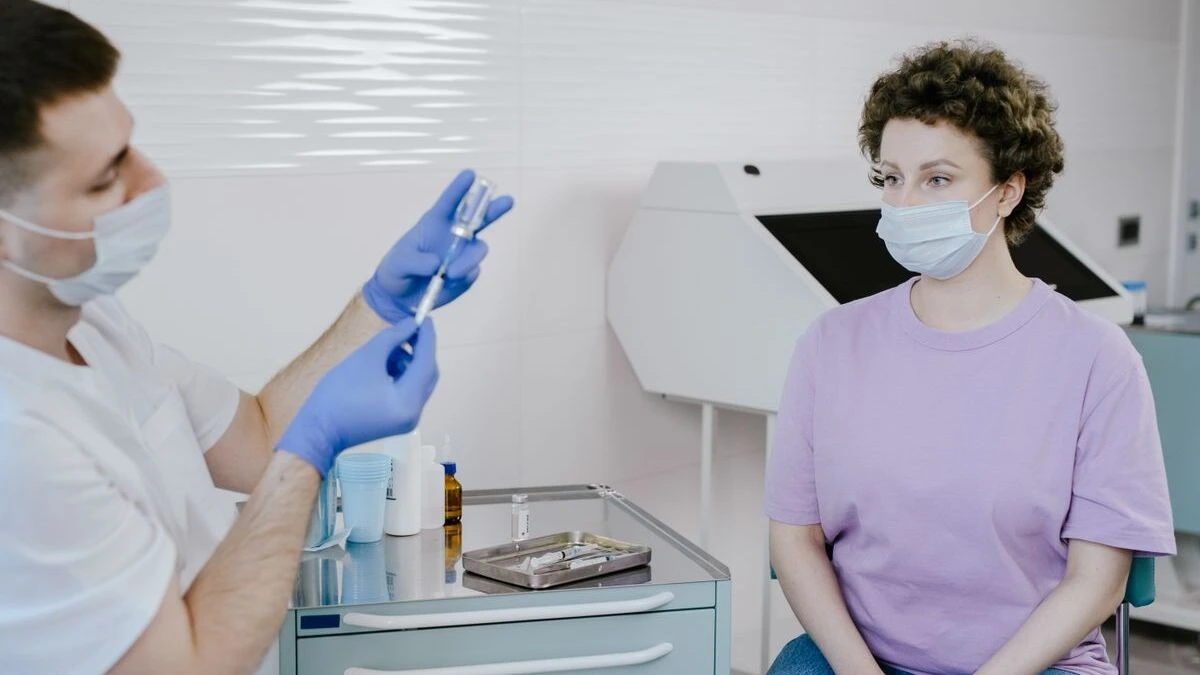
A properly trained healthcare worker opens the syringe packaging while you watch, uses it once, and never sets it aside for later, not even on the same patient. Look for a clean, dry injection site that’s been wiped with an alcohol swab first.
AFTER THE INJECTION: WHAT SHOULD HAPPEN TO THE NEEDLE?
Once it’s used, the needle goes straight into a puncture-resistant sharps container. It shouldn’t be recapped, set down, or left within reach for reuse. Auto disable syringes lock automatically once fully depressed, which is exactly why I recommend asking whether your clinic uses them.
SIGNS A CLINIC MAY BE REUSING SYRINGES
A handful of warning signs are worth knowing. Syringes stored loosely without individual sealed packaging. Staff who hesitate to open a new syringe in front of you. Visible reuse of the same needle across different patients in a waiting room. No sharps disposal container anywhere in sight.
IS IT SAFE TO GET INJECTIONS AT SMALL PRIVATE CLINICS?
Plenty of small private clinics are perfectly safe. But oversight tends to be weakest there, especially in areas with a lot of unregistered practitioners. This checklist matters most in exactly these settings, where you can’t assume the same regulatory standards apply as they would in a major hospital.
CAN YOU ASK YOUR DOCTOR TO OPEN A NEW SYRINGE IN FRONT OF YOU?
Yes, and you should feel completely comfortable doing it. A confident, well-trained healthcare provider won’t be offended by the question. It’s reasonable to ask, and hesitation or defensiveness in response is itself worth noticing.
DISCLAIMER
This article is intended for educational and public health awareness purposes only. It does not replace professional medical advice. Please consult a qualified healthcare provider with any concerns about injection safety.
REFERENCES
• World Health Organization, Injection safety: https://www.who.int/health-topics/injection-safety
• WHO, Guideline on the use of safety-engineered syringes: https://www.who.int/publications/i/item/9789241549820
• CDC, One and Only Campaign, injection safety: https://www.oneandonlycampaign.org/
• NHS, Sharps and needle safety: https://www.nhs.uk/conditions/needle-and-syringe-programmes/
• Reference check: WHO, CDC, and NHS are all named in the body text and each has a matching reference entry. No orphaned citations either direction. Confirmed.



