
Written by Aisha Saleem, Pharmacist & Health Writer at PharmaHealths.com
Psoriasis is one of those conditions that looks straightforward from the outside but is considerably more complex once you look at the full picture. Most people have heard of it, many associate it with a skin rash, and a surprising number assume it’s contagious or just a cosmetic issue. In my experience at the pharmacy, the patients who struggle most with psoriasis are often the ones who spent years not fully understanding what was happening to their skin, which made it harder to have informed conversations with their doctors about treatment. Understanding psoriasis symptoms and stages early can make a significant difference in how effectively the condition is managed over time. This article is designed to change that by walking through what psoriasis actually is, what the different stages look and feel like, and when the condition warrants more than a topical cream.
What Is Psoriasis and What Causes It?
Psoriasis is a chronic autoimmune condition in which the immune system mistakenly accelerates the growth cycle of skin cells, pushing new cells to the surface in days rather than the usual weeks. This rapid turnover is what produces the raised, thickened, scaly plaques characteristic of the most common form of the disease, plaque psoriasis. According to the National Psoriasis Foundation, psoriasis affects roughly 2 to 3 percent of the global population and can develop at any age, though it most commonly appears between the ages of fifteen and thirty-five or again between fifty and sixty.
The underlying driver is immune dysfunction rather than a skin problem per se. Research published in Nature Reviews Immunology has established that overactivation of the IL-17 and IL-23 pathways is central to psoriasis, causing the chronic inflammatory cycle that keeps skin cells turning over too quickly. This is why modern biologic treatments that target these specific immune signals have been so effective, and why psoriasis cannot be fully controlled with topical treatments alone in moderate to severe cases.
What Does Psoriasis Look Like at Each Stage?
Psoriasis severity is typically classified as mild, moderate, or severe, based on how much of the body surface area is affected and how significantly the condition impacts quality of life. Understanding which stage, a patient falls into matters because treatment decisions, including whether topical therapy alone is sufficient or whether systemic treatment is needed, depend heavily on this classification.
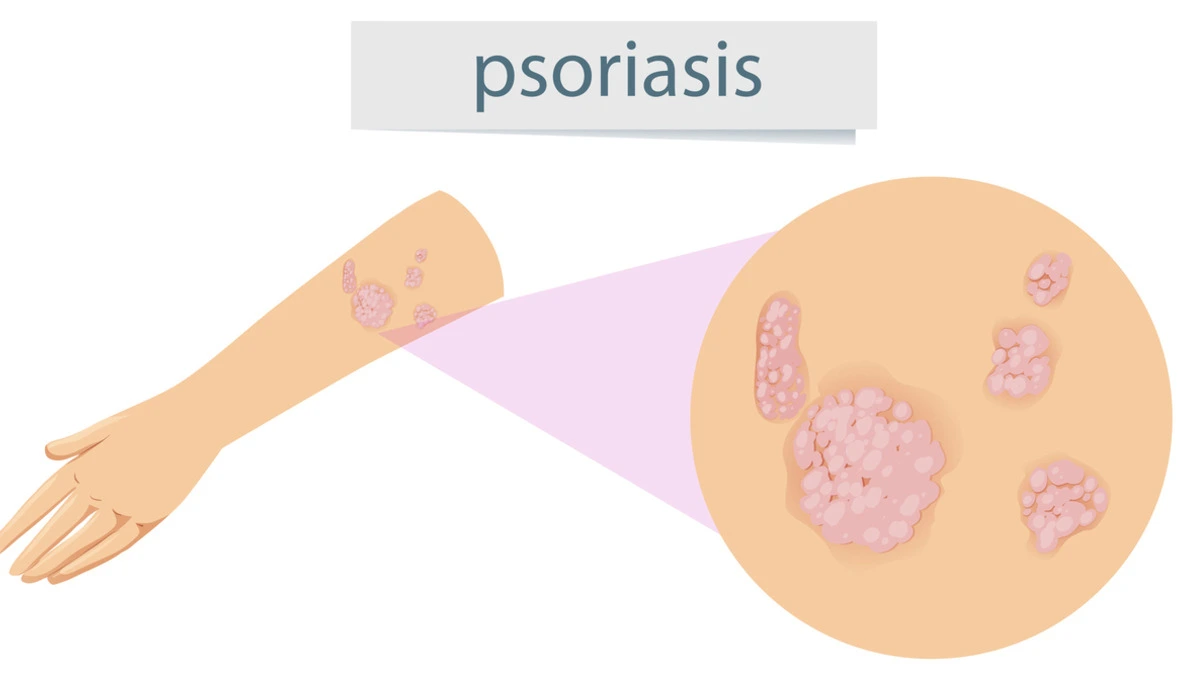
Mild psoriasis covers less than three percent of the body surface area. Plaques at this stage are well defined, with a clearly visible silvery or white scale on top of raised, red or pink skin. They tend to appear in isolated patches, most commonly on the elbows, knees, or scalp, and while they can be itchy or uncomfortable, they generally do not dominate daily life. The Journal of the American Academy of Dermatology notes that mild psoriasis is usually managed with topical treatments including corticosteroids, vitamin D analogues, or coal tar preparations.
Moderate psoriasis involves three to ten percent of body surface area. At this stage, plaques are more widespread, may involve more visible areas including the face, hands, and lower back, and the impact on daily life becomes more significant. Itching, burning, and skin cracking can interfere with sleep and work. In practice, this is often the stage where patients realize topical treatments alone are no longer enough and start needing more structured treatment plans. Moderate psoriasis often requires a combination of topical treatments and either phototherapy or systemic therapy to achieve adequate control.
Severe psoriasis covers more than ten percent of body surface area, or affects high-impact areas like the hands, feet, face, genitals, or nails regardless of the total area involved. At this level, psoriasis is no longer just a skin concern. it becomes a condition that can shape daily routines, clothing choices, work life, and self-confidence. Research published in the British Journal of Dermatology has consistently shown that severe psoriasis carries a significant quality of life burden comparable to other major chronic diseases, and that patients at this stage typically require systemic therapy including biologics or JAK inhibitors to achieve meaningful clearance.
What Are the Different Types of Psoriasis?
Plaque psoriasis is the most common form, accounting for around eighty to ninety percent of cases according to the National Psoriasis Foundation, but several other types exist and present differently.
Guttate psoriasis appears as small, drop shaped lesions scattered across the trunk and limbs, often triggered by a streptococcal throat infection, and is more common in children and young adults.
Inverse psoriasis affects skin folds including the armpits, groin, and under the breasts, producing smooth red patches rather than the typical raised plaques.
Pustular psoriasis involves pus filled blisters and can affect either specific areas like the palms and soles or the whole body in rare, severe cases.
Erythrodermic psoriasis is the rarest and most serious form, causing widespread redness and skin shedding across nearly the entire body surface and requiring urgent medical attention.
What Triggers Psoriasis Flares?
Psoriasis flares are often predictable once patients identify their personal triggers. Common triggers include stress, which is one of the most frequently reported drivers of new or worsening plaques, as well as infections particularly streptococcal throat infections, skin injuries including cuts, sunburn, or insect bites, certain medications including beta-blockers, lithium, and antimalarials, alcohol, and smoking. A review in The Lancet identified smoking and obesity as particularly significant modifiable risk factors, both associated with more severe disease and poorer treatment response.
Is Psoriasis Contagious?
Psoriasis is not contagious. It cannot be passed from one person to another through skin contact, sharing items, or any other form of transmission. The National Psoriasis Foundation emphasizes this consistently because stigma around visible psoriasis plaques remains one of the most significant barriers to patients seeking treatment and living normally with the condition. Psoriasis is an immune driven condition rooted in genetics and environmental triggers, not infection.
What Are the Health Risks Beyond the Skin?
Psoriasis is not purely a skin condition, and this is something I think more patients need to hear. Research published in the Journal of the American Academy of Dermatology has established clear associations between moderate to severe psoriasis and increased risk of psoriatic arthritis, cardiovascular disease, type 2 diabetes, metabolic syndrome, and depression. Psoriatic arthritis develops in up to thirty percent of people with psoriasis and can cause significant joint damage if left untreated, which makes early dermatological assessment and appropriate systemic treatment particularly important in moderate to severe cases.
When Should You See a Dermatologist for Psoriasis?
See a dermatologist if your psoriasis is affecting more than a small area of your body, if it is impacting your sleep, work, or mental health, if topical treatments have stopped working or never worked adequately, if your joints are painful or swollen, or if your psoriasis is in a high-impact area like your hands, face, or genitals. Dermatologists use a scoring system called the PASI score, the Psoriasis Area and Severity Index, to objectively measure disease severity and guide treatment decisions, including whether a biologic like Cosentyx, Skyrizi, or Taltz might be appropriate.
The Bottom Line
Understanding where your psoriasis sits on the severity spectrum is the first step toward getting the right treatment for it. Mild psoriasis can often be managed well with topical therapy, but moderate to severe psoriasis deserves proper dermatological assessment and, in many cases, systemic treatment that targets the underlying immune dysfunction rather than just the visible plaques. The earlier the disease is properly assessed, the better the chances of preventing long term complications and improving quality of life.
Psoriasis is not just a cosmetic issue, it is a chronic systemic condition with real implications for long-term health, and it deserves to be taken seriously.
FAQs
Q1: What are the first symptoms of psoriasis?
The first symptoms of psoriasis are usually raised, red or pink patches of skin covered with silvery or white scales, most commonly appearing on the elbows, knees, scalp, or lower back. The skin may feel itchy, sore, or burning, and in some cases cracks and bleeds.
Q2: What does mild psoriasis look like?
Mild psoriasis covers less than three percent of the body surface area and appears as small, well-defined plaques with a silvery scale. It typically affects isolated areas like the elbows or knees and can usually be managed with topical treatments.
Q3: What triggers a psoriasis flare up?
Common psoriasis flare triggers include stress, streptococcal infections, skin injuries, certain medications including beta-blockers and lithium, alcohol, smoking, and obesity. Identifying and managing personal triggers is an important part of long-term psoriasis control.
Q4: Is psoriasis contagious?
No, Psoriasis is not contagious and cannot be passed from person to person through any form of contact. It is an autoimmune condition driven by immune dysfunction and genetic factors, not by infection.
Q5: What is severe psoriasis?
Severe psoriasis is classified as affecting more than ten percent of the body surface area, or affecting high impact areas including the hands, feet, face, genitals, or nails regardless of total coverage. It typically requires systemic therapy including biologics or JAK inhibitors to achieve meaningful clearance.
Q6: What are the different types of psoriasis?
The main types of psoriasis are plaque psoriasis, guttate psoriasis, inverse psoriasis, pustular psoriasis, and erythrodermic psoriasis. Plaque psoriasis is the most common, accounting for around eighty to ninety percent of cases.
Q7: Can psoriasis affect more than just the skin?
Yes, Moderate to severe psoriasis is associated with increased risk of psoriatic arthritis, cardiovascular disease, type 2 diabetes, metabolic syndrome, and depression. Up to thirty percent of people with psoriasis develop psoriatic arthritis.
Q8: When should I see a dermatologist for psoriasis?
See a dermatologist if your psoriasis covers more than a small area, affects high-impact areas like hands or face, impacts your sleep or mental health, involves joint pain or swelling, or has not responded adequately to topical treatments.
Call to Action
If this article helped you understand where your psoriasis sits on the severity spectrum, I have covered the biologic and JAK inhibitor treatments used for moderate to severe psoriasis in dedicated guides on PharmaHealths.com, including detailed breakdowns of Cosentyx, Skyrizi, Taltz, and how they compare. Head over to PharmaHealths.com to explore the full psoriasis and biologics series.
Disclaimer
This article is for general informational purposes only and is not a substitute for professional medical advice, diagnosis, or treatment. Always consult your doctor, dermatologist, or pharmacist before starting, stopping, or changing any treatment.
References
• National Psoriasis Foundation, Epidemiology and patient education data
• Nature Reviews Immunology, IL-17/IL-23 pathway mechanisms
• Journal of the American Academy of Dermatology, Clinical severity and comorbidity associations
• British Journal of Dermatology, Quality of life impact
• The Lancet, Risk factors and systemic burden