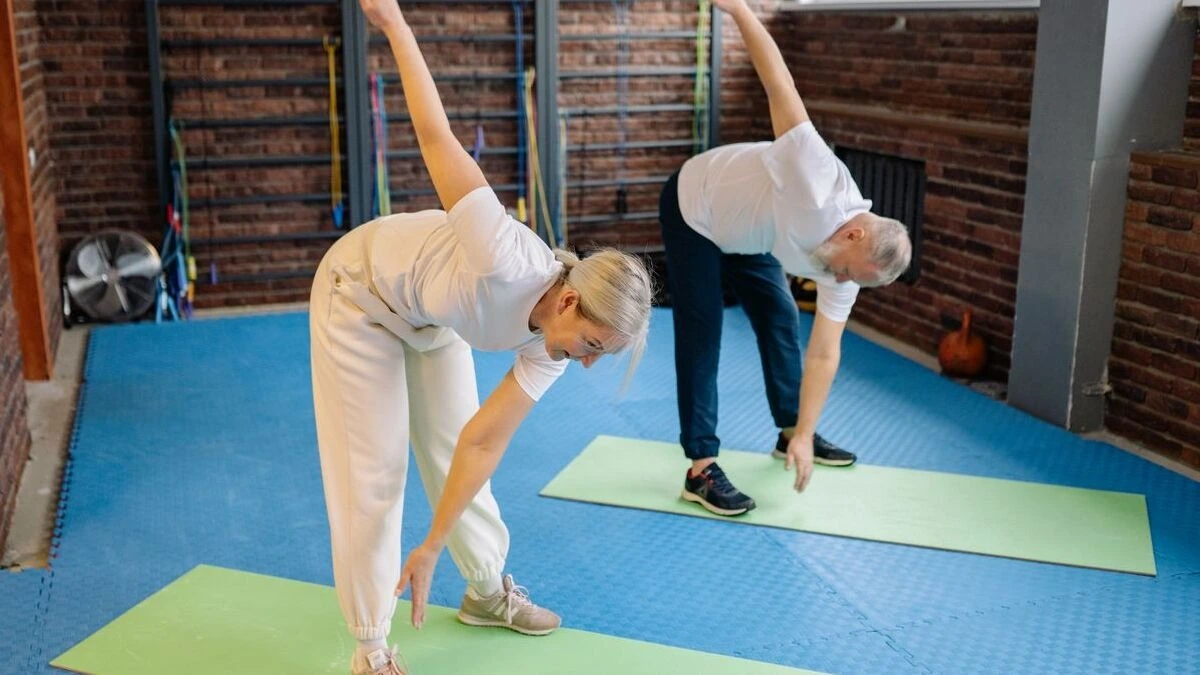

When most people picture explosive jump training, they imagine professional athletes on a court or elite sprinters on a track, not a 70-year-old doing chair squats at their local gym. But that image is rapidly changing, and the science behind it is compelling. Plyometric exercise, once considered too intense for older adults, is now being recognized as one of the most powerful tools available for preserving muscle power, protecting bone density, and reducing fall risk as we age.
As a pharmacist, I speak with a lot of people managing conditions that are directly worsened by physical decline, osteoporosis, type 2 diabetes, hypertension, and even cognitive impairment. And one thing I’ve come to understand is that the type of exercise matters just as much as the fact of exercising at all. Plyometrics is one modality that deserves far more attention than it gets in older adult health conversations.
So, What Exactly Is Plyometric Exercise?
Plyometric exercise, often called “jump training” or explosive training. refers to any movement that rapidly stretches a muscle and then immediately contracts it. In technical terms, this is known as the stretch shortening cycle: the muscle first goes through an eccentric phase (lengthening under load), then explosively transitions into a concentric phase (shortening to produce force). Think of it like a coiled spring being compressed and then released.
In a traditional athletic setting, this looks like burpees, box jumps, and bounding drills. But for older adults, the same physiological principle can be applied through far gentler, scaled down movements, quick sit to stands, fast heel raises, step ups with intent, or small supported hops. The key ingredient isn’t necessarily height or impact; it’s how quickly the muscle is activated and coordinated. According to exercise physiology research, it is precisely this rapid neuromuscular demand that makes plyometrics uniquely valuable for ageing bodies.
Why Ageing Bodies Actually Need This Kind of Training
Here is where things get clinically interesting. As we age, we lose something called muscle power. and we lose it faster than we lose muscle strength. Power is the ability to generate force quickly. It’s what you use to catch yourself when you trip, rise from a low sofa, or step off a kerb without stumbling.
Research consistently shows that the ageing process is associated with a progressive decline in neuromuscular function, an increased risk of falls and fractures, impaired functional performance, and loss of independence. A systematic review published in Sports Medicine, which analyzed 18 randomized trials involving nearly 300 older adults aged 58 to 79, found that plyometric training positively affects muscular strength, jump performance, and physical performance in older adults. Crucially, not a single study in that review reported an increased occurrence of injuries or adverse events related to plyometric exercises, confirming it as a safe, feasible, and clinically relevant training option when properly programmed.
What makes this finding particularly striking is the speed of benefit. According to a 2026 review of plyometric training in older adults, even short-term programs lasting as little as four weeks produce measurable gains in strength, agility, and balance, with the most significant improvements seen in those who begin with lower baseline fitness levels. For the average older adult who has been relatively sedentary, that is both realistic and highly encouraging.
The Bone Health Bonus You Didn’t Expect
Osteoporosis is one of the most common concerns I hear from patients in their 60s and 70s, particularly women. The instinctive response is often to avoid high impact activity for fear of fractures. But the evidence tells a more nuanced story.
Higher intensity impact exercise stimulates bone growth by triggering the body’s natural bone-building processes, a mechanism that makes plyometric training an effective strategy against osteoporosis. A systematic review examining plyometric training in older adults found that these exercises improved bone mineral density, especially in weight bearing areas like the hips, which are precisely the sites most vulnerable to age related fracture.
Research published in a 2024 health and fitness review adds a practical dimension to this: jumping just 10 to 20 times twice a day, with 30 seconds of rest between each jump, was shown to improve hip bone mineral density in premenopausal women after just 16 weeks. While this specific data comes from younger populations, it strongly supports the underlying principle that bone adapts to mechanical load across the lifespan. The mechanism is straightforward; bones respond to mechanical load. Impact exercise sends a signal to bone forming cells called osteoblasts to lay down new tissue. Slow, steady walking doesn’t generate this stimulus particularly well, but faster, weight-bearing, and slightly higher impact movements do.
How Can Seniors Safely Incorporate Plyometrics?
Safety is naturally the first consideration, and the good news is that plyometric exercise for older adults does not have to mean anything dramatic or high risk. According to current evidence-based guidance, safer and more practical versions for seniors include quick sit-to-stands, fast heel raises, controlled step ups, and small supported hops, all with a focus on quick but controlled effort, soft landings, and staying within a comfortable range of movement.
A few practical principles worth knowing,
Start supervised. Research published in the Journal of Orthopedic and Sports Physical Therapy in 2024 confirms that long term plyometric and resistance training is just as safe as lower impact methods in older adults, including those with low bone mineral density, when properly implemented. Working initially with a physiotherapist or trained exercise professional makes a meaningful difference to both safety and outcomes.
Prioritize the lower body. Most of the research, and most of the functional benefit, centers on lower limb power. Exercises like sit to stand performed as quickly as possible, set ups onto a low stable surface, or controlled lateral stepping movements are excellent starting points.
Land softly. Dynamic side to side movements that build the stabilizing muscles responsible for balance are particularly effective for reducing fall risk, but only when landings are absorbed with soft, bent knees and controlled hip position. Form always comes before speed or height.
Progress gradually. Begin with two sessions per week, keeping repetitions low and rest intervals generous. Over weeks, increase tempo before considering any increase in load or height.
Plyometrics vs. Eccentric Training: Which Is Better for Older Adults?
This is a question worth exploring because both modalities are increasingly recommended for seniors, and they overlap more than they differ.
Eccentric training involves the controlled lengthening phase of a muscle contraction, think slowly lowering yourself down from a step, or the downward phase of a squat performed with deliberate deceleration. A 2024 randomized controlled trial published in Scientific Reports found that just 12 minutes of once-weekly eccentric resistance training led to significant increases in muscle power of 13%, isometric strength of 17 to 36%, and muscle thickness of 9 to 18% over 12 weeks in adults averaging 69 years of age, with minimal muscle soreness reported throughout the entire intervention period.
Plyometric training, by contrast, uses the eccentric phase as a launching pad. The brief muscle lengthening is immediately followed by an explosive concentric contraction. A randomized trial comparing plyometric training, resistance training, and walking in older men, published in Frontiers in Physiology, concluded that plyometric exercises more closely resemble the demands of daily functional movement than traditional resistance training, precisely because they combine both speed and force in a single action.
So which approach wins? The honest answer is: neither in isolation. According to a review of the current evidence, combining plyometric exercises with resistance training provides the best overall benefits for muscle function and fall prevention, helping older adults maintain independence for longer. Eccentric training offers an excellent lower barrier entry point, it is gentler on joints, easier to control, and still deeply effective for building muscle in those not yet ready for explosive movement. Plyometrics then builds on that foundation by adding the speed component that eccentric-only training does not fully address.
For most older adults, a well-structured programmed will naturally incorporate elements of both, controlled eccentric lowering on the way down and faster, more intentional effort on the way up.
The Bigger Picture
Research published in the Journal of Orthopedic and Sports Physical Therapy makes a striking point: when implemented correctly, the crossover adaptations of resistance and plyometric training may be superior to aerobic exercise alone for overall health and longevity in older adults. That reflects a growing body of evidence showing that speed of muscle activation, not just cardiovascular fitness, is what determines how well and how independently older adults’ live day to day.
Plyometric exercise is not about pushing seniors to their limits. It is about equipping their muscles and nervous system to handle the unexpected demands of real life, the stumble on the pavement, the heavy shopping bag, the flight of stairs. That capacity does not have to fade with age. With the right approach, it can be trained, preserved, and even restored.
Call to Action
Explore More on PharmaHealths
If you found this useful, I have more evidence-based articles covering bone health in postmenopausal women, sarcopenia prevention, exercise and blood sugar control, and practical nutrition strategies for ageing well. Visit pharmahealths.com to explore the full library, written with the same clinical honesty and plain English approach you’ve come to expect.
Disclaimer
This content is for educational purposes only and is not a substitute for professional medical advice. Always consult a qualified healthcare provider before starting any new exercise programmed, especially if you have underlying health conditions.
References
• Sports Medicine, Plyometric Training Systematic Review (Vetrovsky et al.)
• Scientific Reports, Eccentric Resistance Training RCT (Baxter et al., 2024)
• Frontiers in Physiology, Plyometric vs Resistance Training in Older Men
• Journal of Orthopaedic and Sports Physical Therapy (JOSPT, 2024)
• International Journal of Environmental Research and Public Health, Eccentric Training Review (Cvečka et al., 2023)
• Equinox Health, Bone Health and Impact Exercise Review (2024)