
Written by Aisha Saleem, Pharmacist & Health Writer at PharmaHealths.com
Last Updated: July 2026
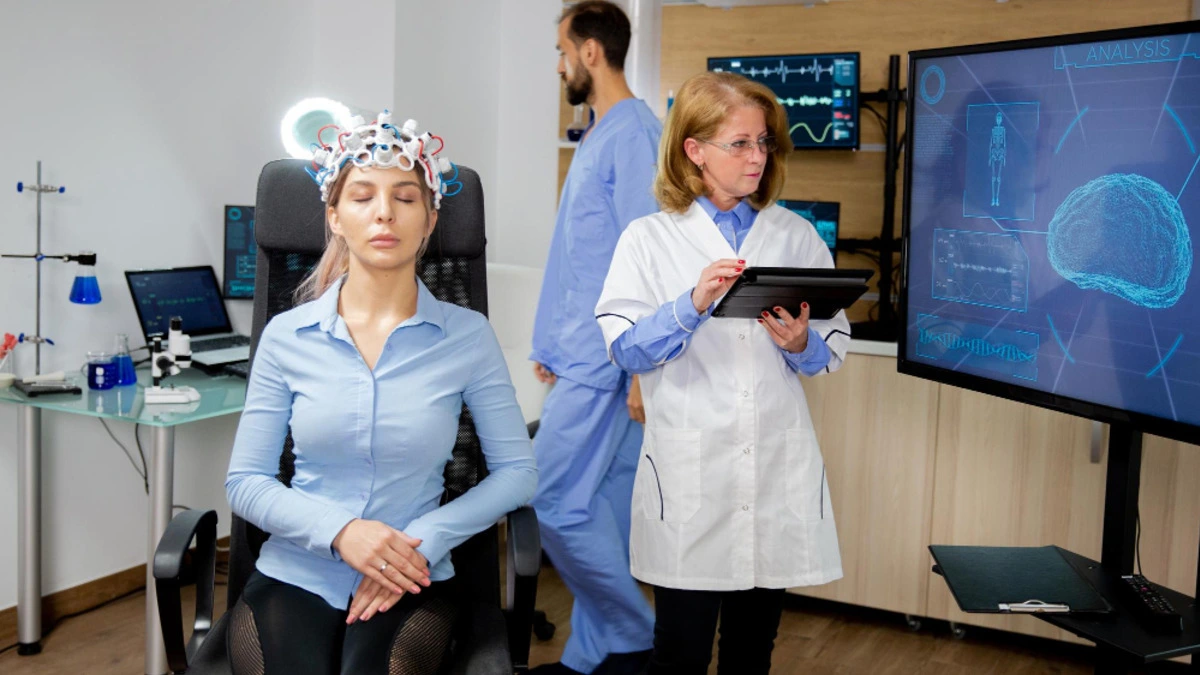
When depression does not respond to medication, many people assume they have run out of options. That is not the case. When antidepressants don’t deliver enough relief, or when someone needs faster results than medication can provide, brain stimulation therapies offer a fundamentally different approach. Rather than adjusting brain chemistry through a pill, these treatments directly modulate the electrical and magnetic activity of neural circuits involved in mood regulation.
These therapies are now used worldwide across public and private healthcare systems, with availability continuing to expand as evidence grows.
Brain stimulation therapies for depression are not fringe treatments. Several are approved by major regulatory bodies including the FDA and recommended by NICE, and the evidence base supporting them has grown substantially over the past two decades. Understanding how each one works and how they differ from each other is essential for anyone considering them or supporting someone who is.
Several of these therapies are approved or regulated by major global authorities including the U.S. Food and Drug Administration, the European Medicines Agency, and are recommended in clinical guidelines such as those from the National Institute for Health and Care Excellence.
What Are Brain Stimulation Therapies and How Do They Differ from Medication?
Brain stimulation therapies are a group of treatments that target neural circuits directly using magnetic fields, electrical currents, or implanted devices, rather than altering neurotransmitter levels through systemic pharmacology.
The distinction matters clinically. Antidepressants work by modifying the chemical environment across the entire brain over a period of weeks, relying on downstream neuroplastic changes to produce therapeutic benefit. Brain stimulation therapies can target specific brain regions with greater precision and in some cases produce measurable effects much faster. Research from the National Institute of Mental Health has demonstrated that depression involves identifiable patterns of hypoactivity in the prefrontal cortex and disrupted connectivity between mood regulating circuits, and brain stimulation approaches are designed to directly address those patterns rather than working around them pharmacologically.
Quick Comparison of Brain Stimulation Therapies
• TMS is non-invasive and performed as an outpatient procedure.
• ECT is the most effective option for severe cases but requires anesthesia.
• VNS involves an implanted device and works gradually over time.
• tDCS is an emerging option with milder effects and ongoing research support.
How Does TMS Therapy Work for Depression?
Transcranial Magnetic Stimulation (TMS) delivers focused magnetic pulses to the left dorsolateral prefrontal cortex, a region consistently underactive in people with depression, through a coil placed against the scalp.
The magnetic pulses induce small electrical currents in the underlying cortical tissue, which stimulate neuronal activity in circuits responsible for mood regulation, motivation, and emotional processing. Repeated stimulation over a course of treatment drives neuroplastic changes, strengthening synaptic connections and upregulating brain derived neurotrophic factor, the protein essential for neuronal growth and resilience. Research published in Brain Stimulation confirmed that active TMS produced significantly higher remission rates than sham treatment in patients with treatment resistant depression, with response rates consistently between 50 and 60 percent.
TMS is delivered as an outpatient procedure. Sessions last 20 to 40 minutes, require no sedation, produce no systemic side effects, and allow patients to drive themselves home and continue normal activities immediately after. A standard course involves daily sessions five days per week for four to six weeks. The most common side effect is mild scalp discomfort or a headache during the first few sessions, which typically resolves within the first week.
Deep TMS, which uses a different coil design to reach deeper cortical structures, received FDA clearance in 2020 and is used in some specialist centers. Early comparative data suggests similar or modestly improved response rates compared to standard TMS in specific patient populations.
TMS is now available in many countries including the United States, United Kingdom, Canada, Australia, and parts of Asia, primarily through specialist clinics and increasingly within hospital based mental health services.
How Does ECT Work and Is It Still Used?
Electroconvulsive therapy (ECT) is one of the oldest and most effective treatments in psychiatry and also one of the most misrepresented. Yes, it is still used, and for certain clinical presentations it remains the most effective intervention available.
ECT remains widely used worldwide in psychiatric hospitals and is considered a standard treatment for severe depression in both high income and resource limited healthcare settings.
Modern ECT is very different from outdated portrayals and is performed under carefully controlled medical conditions.
ECT involves inducing a brief controlled seizure under general anaesthetic using a precisely calibrated electrical current applied to the scalp. The patient is fully anaesthetised and given a muscle relaxant, so there are no visible convulsion and no pain. Sessions last approximately 5 to 10 minutes from induction to recovery.
The mechanism is more complex than it might appear. ECT produces rapid and broad neurobiological effects, increasing brain derived neurotrophic factor, normalizing HPA axis activity, promoting neurogenesis in the hippocampus, and rapidly restoring connectivity in prefrontal circuits disrupted by severe depression. A systematic review published in The Lancet Psychiatry confirmed that ECT produced significantly higher response and remission rates than pharmacotherapy in severe depression, with particular efficacy in psychotic depression and severe melancholic presentations where medication response is typically poor.
ECT is generally reserved for severe, life-threatening depression, including when there is significant suicide risk, inability to eat or drink, or catatonia, or for patients who have failed multiple other treatments. NICE recommends ECT as an option for severe depressive illness where a rapid response is required or where other treatments have not worked.
The most significant side effect is memory disruption. Short term confusion immediately after each session is common and expected. Some patients experience gaps in autobiographical memory for events surrounding the treatment period. These effects are typically temporary, though for a small proportion of patients some memory difficulties persist longer. This is a genuine risk that should be discussed transparently with the treating team before consenting to treatment.
What Is Vagus Nerve Stimulation for Depression?
Vagus nerve stimulation involves a small implanted device, similar in concept to a pacemaker, that delivers regular electrical pulses to the vagus nerve, which carries signals between the brain and the body’s major organs.
The vagus nerve has extensive connections to brain regions involved in mood regulation including the amygdala, hippocampus, and prefrontal cortex. Regular stimulation through this pathway modulates neurotransmitter activity and promotes neuroplastic changes over time.
The FDA approved an implanted VNS device for treatment resistant depression in 2005 for patients who have not responded to four or more adequate antidepressant treatments.
VNS is a long-term treatment. Meaningful antidepressant effects typically take months to develop and continue to improve over one to two years of use. It is an option for a specific and narrow patient population and is not widely available outside specialist centers. Side effects include voice alteration, coughing, and tingling in the neck during stimulation cycles, which patients generally adapt to over time.
Its availability remains limited globally and is typically restricted to specialist centers in countries where regulatory approval and surgical expertise are in place.
What Is Transcranial Direct Current Stimulation?
Transcranial direct current stimulation applies a weak, constant electrical current to the scalp through electrodes, modulating neuronal excitability in targeted cortical regions without inducing neuronal firing directly, unlike TMS, which actively stimulates neurons through magnetic induction.
tDCS has a growing evidence base in depression research. A meta-analysis published in JAMA Psychiatry found significant antidepressant effects from tDCS compared to sham treatment across multiple randomized trials. However, effect sizes are generally more modest than TMS or ECT, and it currently sits at an earlier stage of clinical implementation. Home use tDCS devices are commercially available in some markets, but clinical protocols delivered under medical supervision differ substantially from consumer devices, and self-administration without clinical guidance is not recommended.
Research and clinical use of tDCS are expanding globally, although its adoption varies widely and it is not yet a standard treatment in most clinical guidelines.
Which Brain Stimulation Therapy Is Most Effective for Depression?
The most effective brain stimulation therapy depends on the clinical presentation, severity, and treatment history of the individual patient.
ECT has the highest response rates of any available treatment for severe and psychotic depression, consistently outperforming antidepressants in head-to-head comparative data. For treatment resistant depression that does not reach this threshold of severity, TMS has the strongest evidence base and the most favorable safety and tolerability profile. VNS offers a long-term option for highly refractory cases. tDCS remains promising but is at an earlier stage of clinical validation.
Clinical outcomes are broadly consistent across regions, although access and treatment pathways differ depending on local healthcare systems.
What all of these therapies share is a mechanistic rationale grounded in directly addressing the neural circuit dysfunction that underlies depression, a rationale that becomes increasingly compelling as our understanding of depression as a circuit level disorder continues to develop.
Who Might Benefit from Brain Stimulation Therapies?
These treatments may be considered for people who have not responded to two or more antidepressants, those with severe depression requiring faster improvement, or individuals who cannot tolerate medication side effects. Suitability always depends on a full psychiatric assessment.
Who Is Eligible for Brain Stimulation Therapy?
Eligibility for brain stimulation therapies depends on the severity of depression, previous treatment response, and clinical assessment by a qualified specialist.
In the UK, TMS is available through some NHS specialist centers for patients with confirmed treatment resistant depression, although access varies by region. ECT is available through NHS mental health services for patients meeting clinical criteria for severe or treatment resistant depression. National Institute for Health and Care Excellence guidance provides the clinical framework for both, and a psychiatric referral is the appropriate starting point.
Globally, access varies by country and healthcare system. In the United States, Europe, and parts of Asia, TMS is widely available in private clinics and increasingly in hospital settings. ECT is broadly available worldwide in psychiatric hospitals for severe depression and emergency situations. Vagus nerve stimulation is approved in some countries for highly treatment resistant cases but is less commonly used due to its invasive nature.
Private access to TMS is available across many countries, including the UK, often without the need for a formal referral, although a clinical evaluation by the treating team is always required to determine suitability.
FAQs
Q1. What is the difference between TMS and ECT?
TMS uses focused magnetic pulses to stimulate specific brain regions non-invasively, with no sedation required and no seizure induced. ECT delivers a controlled electrical current under general anaesthetic to produce a brief therapeutic seizure. TMS is generally used for moderate to severe treatment resistant depression and has a mild side effect profile. ECT is reserved for the most severe presentations and has higher response rates but carries a greater risk of short-term memory disruption.
Q2. Is ECT still used for depression in the UK?
Yes, ECT is still used through NHS mental health services and is recommended by NICE for severe depressive illness where a rapid response is needed or other treatments have failed. It is not a first line treatment, but for certain severe and life-threatening presentations including psychotic depression, catatonia, and high suicide risk it remains the most effective option available.
Q3. Does ECT cause permanent memory loss?
Memory disruption is a genuine side effect of ECT. Short term confusion after each session is expected and temporary. Some patients experience gaps in memory for events around the treatment period. In the majority of patients these effects resolve over weeks to months after treatment ends. A small proportion experience longer lasting memory difficulty. This risk should be discussed in detail with the treating team as part of the consent process.
Q4. How many TMS sessions does it take to see results?
Most patients do not notice a difference in the first one to two weeks of TMS. Meaningful improvement typically begins to emerge in weeks two to three, with the full therapeutic benefit usually apparent by the end of the standard four-to-six-week course. A minority of patients respond earlier. If there is no response at all by the end of a full course, the treating team will reassess the clinical approach.
Q5. Can I have TMS if I have a pacemaker or metal implants?
TMS is contraindicated in patients with implanted metallic or electronic devices in or near the head including cochlear implants, metal skull plates, and deep brain stimulators. A pacemaker located in the chest is not automatically a contraindication, but any implanted device must be disclosed and evaluated by the treating team before TMS can proceed. This assessment is standard practice at any reputable TMS clinic.
Q6. What makes brain stimulation therapies different from antidepressants mechanically?
Antidepressants modify the brain’s chemical environment systemically, relying on downstream neuroplastic changes over weeks. Brain stimulation therapies directly target specific neural circuits using magnetic or electrical energy, promoting neuroplastic change through a fundamentally different route. This is why brain stimulation works in many patients who have not responded to pharmacological approaches.
Q7. Are any brain stimulation therapies available without a referral?
TMS is available privately at specialist clinics without an NHS referral, though a clinical assessment by the treating team is required before starting. ECT and VNS require specialist psychiatric input and cannot be accessed without formal referral and clinical assessment. Home tDCS devices are commercially available but operate at substantially lower parameters than clinical protocols, and their efficacy is not equivalent to supervised clinical treatment.
Call to Action
If you have tried two or more antidepressants without meaningful improvement, it may be worth discussing brain stimulation therapies with your doctor. If you’re exploring brain stimulation therapies as part of your depression treatment journey, I’d encourage you to read the wider mental health content on PharmaHealths.com. I’ve put together a detailed head-to-head comparison of TMS and ketamine therapy, an in-depth explanation of how fast acting antidepressants work through the NMDA pathway, a full guide to treatment resistant depression covering every evidence-based pathway, and a breakdown of how to safely combine depression treatments. All of it is written from a pharmacist’s perspective, evidence based, clearly explained, and designed to help you ask better questions at your next clinical appointment.
Disclaimer
This article is for general informational and educational purposes only and does not constitute medical advice, a diagnosis, or a treatment recommendation. Brain stimulation therapies are specialist medical procedures that must be assessed, recommended, and supervised by qualified healthcare professionals. Individual eligibility, risks, and expected outcomes vary significantly. Always consult your doctor, psychiatrist, or specialist team before making any decisions about your treatment.
References
• George MS et al. Daily left prefrontal transcranial magnetic stimulation therapy for major depressive disorder.
• Brain Stimulation. 2010. https://www.brainstimjrnl.com/article/S1935-861X(09)00007-9/fulltext
• The Lancet Psychiatry. Electroconvulsive therapy for depression: systematic review and meta-analysis. https://www.thelancet.com/journals/lanpsy/home
• National Institute for Health and Care Excellence. Depression in Adults: Treatment and Management. NICE Guideline NG222. https://www.nice.org.uk/guidance/ng222
• US Food and Drug Administration. FDA clears transcranial magnetic stimulation device for major depressive disorder. https://www.fda.gov
• National Institute of Mental Health. Brain Stimulation Therapies. https://www.nimh.nih.gov/health/topics/brain-stimulation-therapies
• JAMA Psychiatry. Transcranial direct current stimulation for depression: a meta-analysis. https://jamanetwork.com/journals/jamapsychiatry