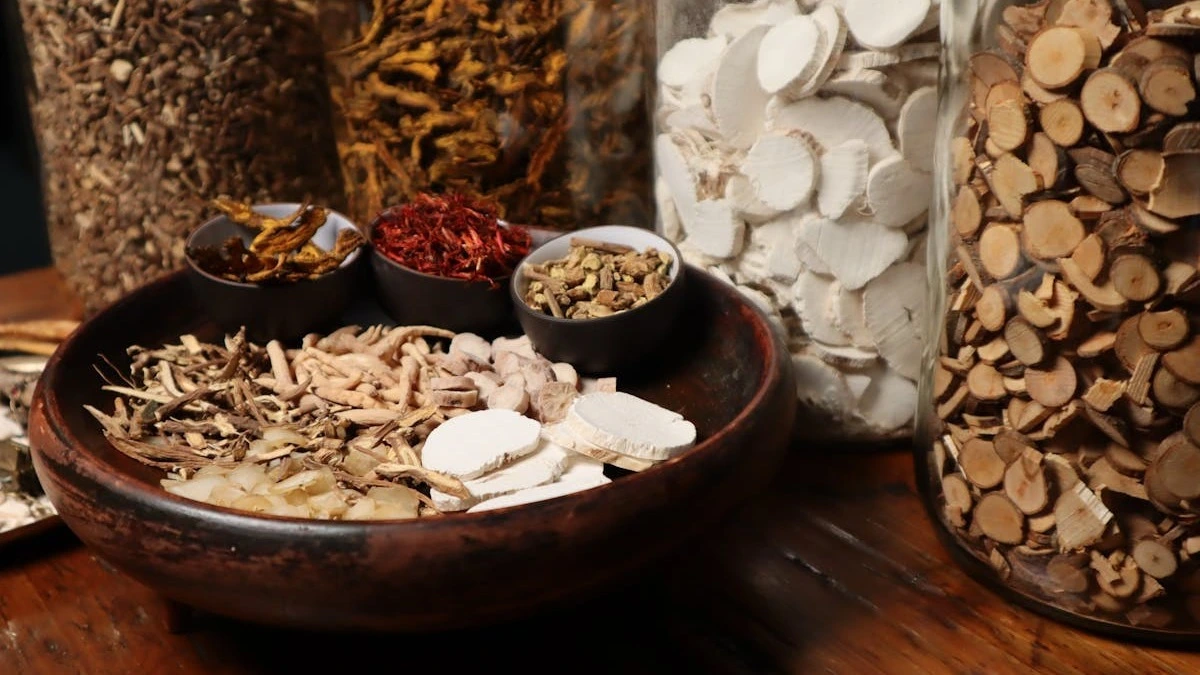

Hair loss is more than a cosmetic concern. For many adults, it quietly affects confidence, social comfort, and even mental well-being. Medically, the most common cause is androgenetic alopecia, a genetically influenced, hormone sensitive condition that gradually miniaturizes hair follicles.
While treatments like minoxidil and finasteride remain the standard of care, they do not work for everyone. Side effects, slow response, and incomplete regrowth often leave patients searching for alternatives. Interestingly, recent research highlighted by ScienceDaily suggests that an ancient Chinese medicinal herb may hold scientific promise.
Let’s examine what the evidence actually says, and what it does not.
From Traditional Use to Laboratory Investigation
He Shou Wu, scientifically known as Polygonum multiflorum, has been used in traditional Chinese medicine for centuries. Historically, it was described as a tonic believed to “nourish the blood” and restore hair color. However, modern pharmacology requires more than historical reputation.
According to coverage by ScienceDaily, researchers recently analyzed the molecular mechanisms behind this traditional remedy. Rather than relying on folklore, scientists used contemporary laboratory methods to evaluate how compounds in the plant interact with known hair growth pathways.
This shift, from tradition to molecular biology, is what makes the discussion clinically meaningful.
Understanding Hair Loss at the Biological Level
To appreciate why this herb is being studied, it helps to understand how androgenetic alopecia develops.
Hair follicles cycle through three stages, growth (anagen), transition (catagen), and rest (telogen). In androgenetic alopecia, dihydrotestosterone (DHT) gradually shrinks genetically sensitive follicles. Over time, thick hairs become thinner and shorter.
According to the recent scientific review summarized by ScienceDaily, compounds within Polygonum multiflorum may influence multiple biological targets involved in this process.
That multi target action is particularly important. Unlike single pathway drugs, herbal compounds often interact with several signaling systems simultaneously.
Potential Mechanisms (What the Research Suggests)
First, hormone modulation appears to be one area of interest. Laboratory findings suggest certain active compounds may reduce DHT activity. Since DHT is central to follicle miniaturization, this mechanism aligns with existing medical strategies.
Second, the herb appears to influence the Wnt/β-catenin signaling pathway (Wnt/β-catenin is a key cell signaling pathway that activates hair follicle stem cells and triggers the growth phase of the hair cycle. When this pathway is active, it helps follicles regenerate and produce thicker hair strands.). This pathway plays a crucial role in activating hair follicle stem cells and initiating the growth phase. According to researchers cited by ScienceDaily, enhanced Wnt signaling could theoretically support follicle regeneration.
Additionally, preliminary studies indicate involvement in the Sonic hedgehog (Shh) pathway, another key regulator of follicular development.
Beyond signaling pathways, antioxidant effects are also being explored. Hair follicles are metabolically active and vulnerable to oxidative stress. Some compounds in Polygonum multiflorum demonstrate antioxidant properties in experimental settings. Therefore, reducing oxidative damage could support a healthier scalp environment.
However, it is critical to emphasize that most of these findings come from laboratory and preclinical models, into large human clinical trials.
Where the Evidence Currently Stands
At this stage, enthusiasm must remain balanced with scientific discipline.
According to the review discussed by ScienceDaily, much of the supporting data comes from cell culture experiments, animal studies, and computational modeling. These methods are valuable for identifying mechanisms but do not guarantee the same effects in humans.
Randomized controlled clinical trials, the gold standard for medical recommendations, are still limited.
Therefore, while the biological plausibility is compelling, definitive claims about hair regrowth in humans would be premature.
Safety Considerations
Another important dimension involves safety. According to broader pharmacovigilance reports outside the primary review, improperly processed forms of Polygonum multiflorum have been associated with liver toxicity in some cases. Traditional preparation methods differ significantly from raw extracts.
Consequently, quality control and standardized processing are essential. Herbal medicine is pharmacologically active. “Natural” does not automatically mean risk-free.
Patients considering herbal supplements should consult healthcare professionals, particularly if they have liver disease, take multiple medications, or are pregnant.
Why Multi Target Therapies Are Gaining Attention
Modern research increasingly recognizes that complex conditions often involve multiple biological pathways. Hair loss is not caused by one single factor. Genetics, hormones, inflammation, microcirculation, and oxidative stress all interact.
Therefore, therapies that influence several targets simultaneously may offer theoretical advantages. This concept, known as polypharmacology, is gaining traction in drug development.
In that context, traditional herbal compounds, which naturally contain multiple active constituents, are being reevaluated using modern research tools.
Still, complexity also presents challenges. Identifying active compounds, determining optimal dosing, and ensuring reproducibility require rigorous study design.
Practical Takeaway for Patients
So, what does this mean for individuals experiencing hair thinning?
• First, diagnosis matters. Not all hair loss is androgenetic alopecia. Thyroid dysfunction, iron deficiency, autoimmune disorders, and medication effects can all contribute.
• Second, established treatments remain first line therapy because their safety and effectiveness have been extensively studied.
• Third, emerging herbal options such as He Shou Wu may eventually serve as complementary therapies, but only after high quality human trials confirm their benefit.
In other words, the research is promising, but not yet practice changing.
The Bigger Scientific Picture
Perhaps the most fascinating aspect of this story is not the herb itself, but the process of scientific validation.
Ancient medical traditions often observed patterns over generations. Modern science now tests those observations with molecular tools, controlled experiments, and statistical rigor.
When historical use aligns with biological plausibility, researchers pay attention. Yet science moves forward through verification, not assumption.
According to the recent analysis reported by ScienceDaily, Polygonum multiflorum demonstrates measurable activity on pathways relevant to hair growth. That finding alone justifies further investigation.
Final Thoughts
Hair follicles may be small, but the science behind them is remarkably complex. The exploration of He Shou Wu represents a thoughtful merging of traditional knowledge and contemporary pharmacology.
At present, the evidence supports continued research, not immediate clinical replacement of established therapies.
For readers interested in evidence-based innovation, this development serves as a reminder: some of tomorrow’s therapies may originate in centuries-old remedies, but they must pass through the filters of modern science before earning their place in routine care.
And as research evolves, careful optimism remains the most rational stance.
FAQs
Q1: Can He Shou Wu regrow hair in humans?
Current evidence is primarily based on laboratory and preclinical studies. While mechanisms are biologically plausible, large human clinical trials are still needed before confirming its effectiveness for hair regrowth.
Q2: Is He Shou Wu safer than finasteride or minoxidil?
Not necessarily. While it is traditionally used, improperly processed forms have been associated with liver toxicity. Established medications have more extensive safety data. Consultation with a healthcare professional is recommended before use.
Disclaimer
This article is for educational purposes only and does not constitute medical advice. Always consult a qualified healthcare professional before starting, stopping, or combining treatments for hair loss.
Call to Action
If you found this evidence-based explanation helpful, consider sharing it with someone exploring safe options for hair thinning. For more pharmacist reviewed insights on emerging therapies and traditional medicine evaluated through modern science, stay connected and follow for updates.
References
• ScienceDaily, News report summarizing recent research on Polygonum multiflorum and its molecular effects on hair growth pathways.
• Frontiers in Pharmacology, Review discussing signaling pathways such as Wnt/β-catenin and Shh in hair follicle biology and herbal compound interactions.