
Written by Aisha Saleem, Pharmacist & Health Writer at PharmaHealths.com
Last updated: August 28, 2026
Most people assume a carbohydrate behaves the same way every time you eat it. Rice is rice, potato is potato. It isn’t quite true. Cooling a cooked starch and reheating it can measurably change how fast it raises your blood glucose, and there is now solid clinical research behind that claim rather than just a wellness trend talking point.
What is resistant starch?
Resistant starch is the fraction of a starchy food that escapes digestion in the small intestine and passes into the colon instead, where gut bacteria ferment it much like fiber. Because it isn’t broken down into glucose in the small intestine, it doesn’t contribute to a fast blood sugar rise the way rapidly digested starch does. There are several types, but the one that forms when you cook and then cool a starchy food is called retrograded starch, or RS3.
How does cooking and cooling actually change a carbohydrate?
Cooling cooked starch for as little as a few hours triggers a structural change called retrogradation, and this is what raises its resistant starch content. When you first cook rice, pasta or potato, heat and water cause the starch granules to swell and gelatinize, which makes them easy for digestive enzymes to break down quickly. As the food cools, the starch chains realign into a tighter, more ordered structure that enzymes can’t access as easily. Reheating afterwards doesn’t fully reverse this. Some of that resistant structure survives the second heating, which is why the effect shows up even in food you serve warm.
Does cooling rice really lower blood sugar spikes?
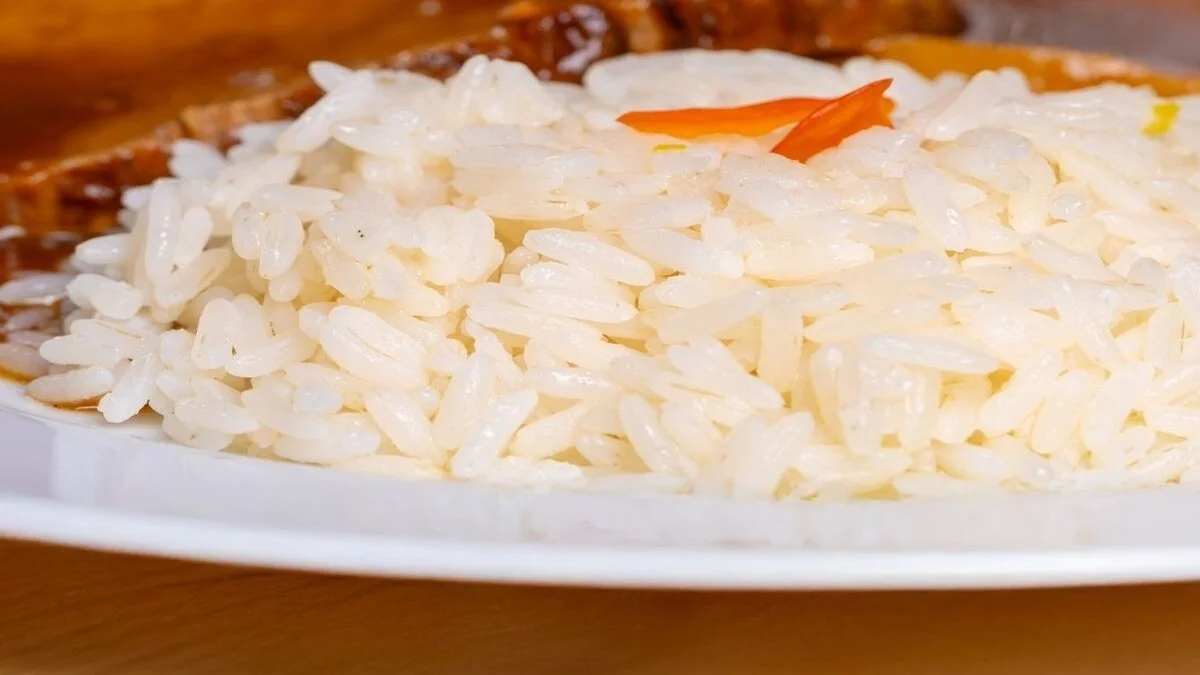
Yes, and in people with type 1 diabetes the difference has been measured directly on continuous glucose monitors. A study published in Nutrition & Diabetes had participants with type 1 diabetes eat the same white rice either freshly cooked or cooled for 24 hours in the refrigerator and reheated. The cooled rice produced a lower peak glucose (9.9 versus 11 mmol/L), a smaller glucose rise, and a much smaller area under the glucose curve over three hours than the freshly cooked rice. Similar work in people with type 2 diabetes has found that rice naturally higher in resistant starch produces a gentler post meal glucose curve than standard rice.
This doesn’t turn rice into a low carb food, and it doesn’t mean you can eat unlimited amounts. It means the glucose from that same portion enters your bloodstream more slowly.
Does the same effect apply to pasta and potatoes?
It does, and the mechanism is the same starch retrogradation described above. A 2024 study in Metabolites found that cooling and reheating chickpea pasta nearly doubled its resistant starch content and produced a significantly lower glycemic index (33 vs. 39) than pasta eaten straight after cooking. Potato studies point the same direction, a trial published in Foods found that a potato derived resistant starch fiber lowered post meal glucose and insulin response in healthy adults compared to a matched control, and separate work on potato processing has repeatedly linked structures that preserve more intact starch to a flatter post meal glucose curve than heavily processed or freshly mashed potato.
Why does resistant starch lower the glucose spike?
The core reason is timing, not calories. Resistant starch reaches your small intestine in a form digestive enzyme can’t fully access, so it isn’t converted to glucose there the way ordinary starch is. Instead, it travels on to the colon, where bacteria ferment it slowly. The practical result across the studies above is a lower peak glucose, a smaller total glucose rise, and in some cases a longer time to reach that peak, which is a gentler pattern for the pancreas to manage than a sharp spike.
What most articles about this get wrong
Coverage of this topic tends to flatten it into “eat more fiber,” which misses three things that actually determine the size of the effect. Food structure matters more than food type, a whole potato and a mashed potato are not interchangeable even though they’re the same food. Cooking method matters within a single dish, overcooked, very soft starch digests faster than starch left slightly firmer. And the rest of the meal matters more than the resistant starch trick on its own, since a large portion, added sugar, or a very low fiber plate can outweigh any benefit from cooling one component.
How much difference does this actually make
A systematic review and meta-analysis in the British Journal of Nutrition pooling nineteen randomized controlled trials found that resistant starch produced a modest but statistically significant drop in fasting plasma glucose, with a larger effect at daily doses above 28 grams or with interventions lasting more than eight weeks. A separate meta-analysis in Frontiers in Nutrition, covering 36 randomized trials in people with type 2 diabetes or prediabetes, found that resistant starch type 2 lowered acute post. Meal glucose by a moderate to large margin and also improved the insulin response. In a smaller crossover study in Diabetic Medicine, adults with type 2 diabetes who replaced about 15% of their daily starch with resistant starch spent nearly 8% more time in their target glucose range over four days than on their usual diet. These are meaningful, reproducible effects, but they sit alongside, not in place of, medication, portion control, and overall diet quality.
A practical way to use this
I’d treat this as one adjustable factor in a meal rather than a fix on its own.
• Favour intact starch structures where you can, whole grains, legumes, and minimally processed potato over mash or purée.
• Cook a portion of your rice, pasta, or potatoes ahead of time and refrigerate it for a few hours or overnight before reheating, since this is what drives the resistant starch increase in the studies above.
• Eat starch alongside protein, fiber, and vegetables rather than on its own, since meal composition affects the glucose curve more than any single ingredient trick.
• Don’t treat cooled starch as calorie free or as license for a bigger portion. The starch is still there; it’s the speed of digestion that changes.
Conclusion
The clearest takeaway from this research is that a carbohydrate’s effect on your blood sugar isn’t fixed the moment it’s cooked. Cooling and reheating rice, pasta, and potatoes measurably increases their resistant starch content and softens the post meal glucose spike in controlled studies, though the size of the benefit depends on the food, the amount, and the rest of your meal.
Disclaimer
This article is for general educational purposes and isn’t a substitute for personalized medical or dietary advice. Speak with your doctor, diabetes care team, or a registered dietitian before making changes to your diet, especially if you take glucose. Lowering medication.
References
• Strozyk S, et al. Influence of resistant starch resulting from the cooling of rice on postprandial glycemia in type 1 diabetes. Nutrition & Diabetes, 2022. https://pmc.ncbi.nlm.nih.gov/articles/PMC9013350
• Collins SM, et al. Partial starch substitution with resistant starch lowers postprandial glucose and glycemic variability in people with type 2 diabetes. Diabetic Medicine, 2025. https://www.ncbi.nlm.nih.gov/pmc/articles/PMC12352712/
• Pugh JE, et al. A comparison of the effects of resistant starch types on glycemic response in individuals with type 2 diabetes or prediabetes: a systematic review and meta-analysis. Frontiers in Nutrition, 2023. https://www.frontiersin.org/journals/nutrition/articles/10.3389/fnut.2023.1118229
• Effects of resistant starch on glycemic control: a systematic review and meta-analysis. British Journal of Nutrition, 2021. https://pubmed.ncbi.nlm.nih.gov/32959735/
• Bojarczuk A, et al. The effect of cooking and cooling chickpea pasta on resistant starch content, glycemic response, and glycemic index in healthy adults. Metabolites, 2024. https://pmc.ncbi.nlm.nih.gov/articles/PMC11596303/
• Gourineni V, et al. Nutritional bar with potato-based resistant starch attenuated post-prandial glucose and insulin response in healthy adults. Foods, 2020. https://pmc.ncbi.nlm.nih.gov/articles/PMC7698388