

Written by Aisha Saleem, Pharmacist & Health Writer at PharmaHealths.com
Last Updated: August 2026
What You Need to Know
Low ferritin usually means your iron stores are running low, often before a standard blood count shows anemia.
The World Health Organization defines iron deficiency as ferritin below 15 µg/L in adults and below 12 µg/L in children under five, though many labs report a wider “normal” reference range of roughly 20 to 250 ng/mL in men and 10 to 120 ng/mL in women. These are two different measurements answering two different questions, and I’ll walk through why below.
Common symptoms include fatigue, hair loss, brittle nails, restless legs, and in some people, low mood or anxiety.
Diet, supplements, and treating the underlying cause are the main paths to recovery, and most doctors recheck ferritin after 8 to 12 weeks of treatment.
What Does Low Ferritin Actually Mean?
Ferritin is the protein your body uses to store iron. When I see a low ferritin result on a lab report, I think of it as an empty savings account rather than a low daily paycheck: your active iron supply (measured separately) might still look fine for now, but your reserves are gone. That’s why ferritin usually drops before hemoglobin does, making it one of the earliest markers of iron deficiency, often appearing before a standard complete blood count flags anemia at all.
This is also where the confusion between two numbers comes from. The World Health Organization sets a deficiency cutoff of below 15 µg/L for adults and below 12 µg/L for children under five, rising to 70 µg/L or 30 µg/L respectively if there’s inflammation in the body, since inflammation can artificially raise ferritin. Separately, most labs also print a “normal reference range” on your results, typically 20 to 250 ng/mL for men and 10 to 120 ng/mL for women. The WHO figure is a deficiency threshold. The lab reference range is a population spread. You can sit inside the “normal” range and still be low enough to cause symptoms, which is one reason two people with different ferritin numbers can both be told they’re iron deficient.
What Causes Low Ferritin?
The most frequent causes I come across are:
• Inadequate dietary iron, particularly in vegetarian and vegan diets
• Heavy or prolonged menstrual periods
• Pregnancy, when iron demand rises sharply
• Chronic blood loss from the gastrointestinal tract
• Poor iron absorption, including from celiac disease or after gastric bypass surgery
• Frequent blood donation
• Endurance training, which can lower ferritin through a combination of GI blood loss, sweat losses, and an exercise-induced hormone called hepcidin that blocks iron absorption
What Are the Symptoms of Low Ferritin?
Fatigue and weakness are the symptoms most people notice first, since your body struggles to move oxygen efficiently when iron stores run low. Beyond that, I typically watch for,
• Hair thinning or shedding
• Brittle or spoon shaped nails
• Restless legs, particularly at night
• Shortness of breath or dizziness on exertion
• Pale skin or pale inner eyelids
• Cold hands and feet
• Difficulty concentrating, sometimes described as brain fog
• Pica or pagophagia, an urge to chew ice or eat nonfood items, which is less common but a fairly specific sign worth mentioning to your doctor
• Low mood, irritability, or anxiety in some people, since iron plays a role in producing serotonin and dopamine
I’ve covered the mental health connection in more depth in a dedicated article, since it’s a genuinely underdiscussed piece of the puzzle.
How Is Low Ferritin Treated?
Treatment starts with finding the cause, not just raising the number. Once that’s underway, the usual approach includes,
• Increasing dietary iron, prioritizing heme iron from meat, poultry, and fish, which absorbs more efficiently than plant based non heme iron
• Pairing iron rich meals with vitamin C to improve absorption
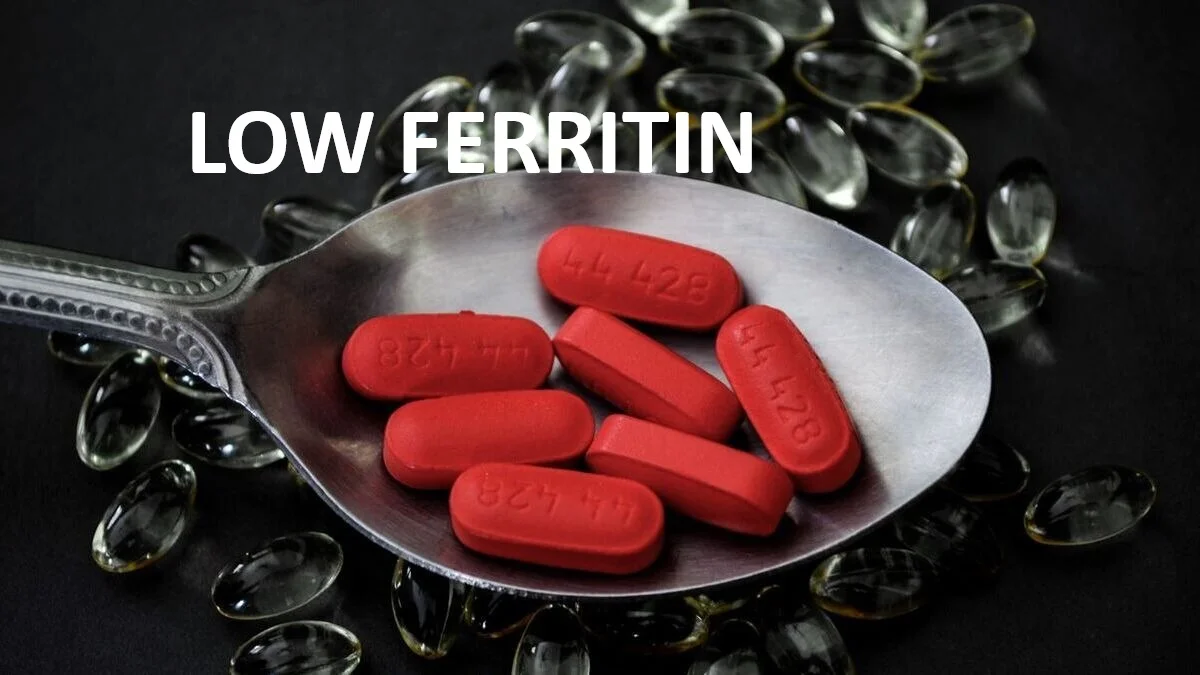
• Oral iron supplements, commonly ferrous sulfate or ferrous bisglycinate
A Lancet Hematology trial found alternate day iron dosing increased iron absorption by roughly a third compared to daily dosing, and a follow-up randomized trial found alternate day dosing led to fewer gastrointestinal side effects, though it didn’t raise ferritin any faster than daily dosing. This is worth discussing with your doctor rather than adjusting your own dosing schedule.
IV iron for people who can’t tolerate oral iron or have ongoing losses that oral supplementation can’t keep up with
Most clinicians recheck ferritin around 8 to 12 weeks after starting treatment, since it takes time for stores to rebuild. If levels aren’t improving by then, it’s usually a sign to look harder for an underlying cause rather than simply increasing the dose.
Conclusion
Low ferritin is common, usually treatable, and often the earliest clue your body gives before other blood markers catch up. If you recognize several of these symptoms, a simple blood test is the place to start.
References
• World Health Organization – Ferritin concentrations (ELENA): https://www.who.int/tools/elena/interventions/ferritin-concentrations
• Mayo Clinic – Ferritin test: https://www.mayoclinic.org/tests-procedures/ferritin-test/about/pac-20384928
• Cleveland Clinic – Ferritin test: https://my.clevelandclinic.org/health/diagnostics/17820-ferritin-test
• GoodRx – Low Ferritin: Symptoms, Causes, and Treatment: https://www.goodrx.com/conditions/iron-deficiency/low-ferritin
• The Lancet Hematology – Iron absorption from oral iron supplements given on consecutive versus alternate days: https://www.thelancet.com/article/S2352-3026(17)30182-5/abstract
• NCBI/PMC – Significance of low ferritin without anemia in screen-detected coeliac disease patients: https://www.ncbi.nlm.nih.gov/pmc/articles/PMC9805163/
