
Written by Aisha Saleem, Pharmacist & Health Writer at PharmaHealths.com
Last Updated: August 2026
If you have eczema, you already know the pattern. The skin settles, the itching fades, and for a while things feel manageable. Then something shifts, the weather changes, stress builds, you switch your washing powder, and the rash is back, sometimes worse than before.
This cycle of flare and remission is one of the most frustrating things about living with eczema. Patients often ask me whether they have done something wrong, whether their treatment has stopped working, or whether eczema ever truly goes away. In real practice, this is one of the most common concerns I hear. The honest answer is that eczema keeps coming back because of how it works at a biological level, and understanding that mechanism is the first step to managing it more effectively.
What Makes Eczema a Chronic Condition?
Eczema keeps coming back because it is not just a skin problem. At its core, eczema is a condition driven by two interconnected issues: a defective skin barrier and a dysregulated immune response. Neither of these fully resolves between flares, which is why the cycle continues even when the skin looks clear.
The skin barrier in people with eczema is structurally compromised. In healthy skin, the outermost layer, the stratum corneum, acts like a brick wall, keeping moisture in and irritants out. In eczema, this wall has gaps. Moisture escapes more easily, and allergens, bacteria, and irritants penetrate more readily, triggering an immune response that produces the inflammation, redness, and itch that characterize a flare.
Research published in the Journal of Investigative Dermatology has established that mutations in the filaggrin gene, which codes for a protein essential to skin barrier integrity, are one of the strongest known genetic risk factors for atopic dermatitis. People with filaggrin mutations do not simply have a temporary skin problem. They have a structural predisposition that persists throughout their life, regardless of whether the skin is currently flaring.
The Role of the Immune System
Alongside the barrier defect, eczema involves chronic immune activation. Even during periods of apparent remission, research has shown that the skin of people with atopic dermatitis retains subclinical inflammation, meaning the immune system remains in a low-level activated state, even when no visible rash is present.
This was demonstrated in a landmark study published in the Journal of Allergy and Clinical Immunology, which showed that non lesional skin in atopic dermatitis patients, skin that looks completely normal, still displays abnormal immune cell activity and cytokine expression, particularly in the Th2 pathway involving interleukin-4 (IL-4) and interleukin-13 (IL-13).
This background immune activation means the skin never truly resets to a healthy baseline between flares. It sits in a sensitized state, ready to react disproportionately to triggers that healthy skin would tolerate without difficulty. This is why even small changes that seem harmless can suddenly trigger a flare. A brief exposure to cold air, a new soap, or a stressful week at work can be enough to tip the balance from subclinical inflammation into a full flare.
Why Eczema Flares Up: The Main Triggers
Triggers do not cause eczema; the underlying predisposition is already there. What they do is push already sensitized, barrier compromised skin past the threshold into a visible flare. Understanding your personal trigger profile is one of the most practical steps you can take to extend the periods between flares.
Irritants
Soaps, detergents, shampoos, and cleaning products disrupt the skin barrier directly. Fragranced products, antibacterial washes, and bubble baths are among the most common culprits. In day-to-day practice, fragranced soaps and harsh detergents are some of the most frequent triggers people overlook. Washing powders and fabric conditioners leave residues on clothing that sit against the skin all day, even a small amount can be enough to trigger a flare in sensitive individuals.
Allergens
House dust mites are one of the most significant allergen triggers for eczema, particularly in children. Pet dander, pollen, and mould are also common. Skin contact allergens, nickel in jewelry, latex, certain plant resins, can trigger localized eczema flares at the contact site.
Temperature and weather
Cold, dry weather strips moisture from already compromised skin. Central heating further reduces indoor humidity, exacerbating dryness. Conversely, overheating and sweating can also provoke flares, sweat is an irritant to sensitized skin.
Stress
Psychological stress has a well-documented bidirectional relationship with eczema. A review published in the British Journal of Dermatology confirmed that stress activates the hypothalamic pituitary adrenal axis and the sympathetic nervous system, both of which modulate skin inflammation. Stress related flares are particularly common in adults, and the itch scratch cycle that follows a flare can itself become a significant source of psychological distress, perpetuating the cycle.
Skin infections
Staphylococcus aureus colonizes the skin of the majority of people with atopic dermatitis, according to research published in the Journal of Allergy and Clinical Immunology. This bacterium disrupts the skin barrier, releases toxins that act as superantigens, and drives Th2 inflammation, making it both a trigger for flares and a factor that perpetuates them once they begin.
Food
Food triggers are more relevant in young children with eczema than in adults. Egg, milk, wheat, soy, and peanut are the most commonly implicated foods. In adults, the relationship between food and eczema is less straightforward, elimination diets should only be undertaken under clinical supervision to avoid unnecessary nutritional restriction.
The Atopic March: Why Eczema Often Appears First
Eczema is frequently the first manifestation of what is known as the atopic march, the tendency for allergic conditions to develop in sequence over time. Atopic dermatitis typically appears in infancy or early childhood, followed by food allergies, then allergic rhinitis (hay fever), and then asthma as the child grows.
The atopic march is not inevitable for every child with eczema, but the underlying immune dysregulation in atopic dermatitis appears to sensitize the immune system in ways that increase the risk of developing these other allergic conditions. A large prospective cohort study published in the Journal of Allergy and Clinical Immunology found that early onset, persistent eczema was a significant predictor of later asthma and hay fever development.
This systemic immune context is another reason eczema cannot simply be treated as a local skin problem. Managing it well, particularly in early childhood, may have implications beyond skin health.
Can Eczema Be Cured Permanently?
There is no permanent cure for eczema. The underlying genetic predisposition and immune dysregulation do not resolve. However, eczema is highly manageable, many people achieve long periods of remission with the right treatment plan and trigger management.
A significant proportion of children with eczema see their symptoms improve substantially or appear to resolve as they move into adolescence and adulthood. Research published in the British Journal of Dermatology followed children with atopic dermatitis into adulthood and found that around 60% had significantly reduced symptoms by their mid-twenties. However, the same research noted that many of these individuals retained subclinical skin barrier abnormalities and remained at risk of flares under the right conditions.
For adults whose eczema has not resolved, and for those who develop adult-onset eczema, long term management rather than cure is the realistic goal. This means consistent use of emollients to support the skin barrier, avoidance of known triggers, a clear action plan for managing flares when they occur, and for moderate to severe disease, appropriate escalation to prescription treatments or biologics where indicated.
Why Does Eczema Get Worse at Night?
Itch is typically at its worst in the evening and at night in eczema. Several factors contribute to this.
Cortisol, the body’s natural anti-inflammatory hormone, follows a circadian rhythm, peaking in the morning and dropping significantly by evening. As cortisol levels fall overnight, the inflammatory brake it provides weakens, allowing itch signals to intensify. Skin temperature also rises slightly during sleep, which increases itch sensation. The removal of clothing and contact with bedding can also expose the skin to dust mites and fabric irritants that compound the itch.
This night time itch disrupts sleep, and sleep deprivation in turn impairs skin barrier recovery, creating another cycle that contributes to ongoing flares.
Why Does Eczema Come Back After Years of Being Clear?
It is not uncommon for adults to experience eczema returning after years, sometimes decades, of being symptom free. This can happen for several reasons.
A new environmental trigger may be introduced, a change of job exposing the skin to new chemicals, moving to a drier climate, starting a new skincare product, or increased occupational handwashing. Significant hormonal changes, pregnancy, perimenopause, thyroid dysfunction, can shift immune activity in ways that reactivate atopic disease. I often see flare ups linked to life changes like stress, new routines, or hormonal shifts that patients do not immediately connect to their skin. Prolonged or severe psychological stress is another common driver of adult eczema relapse.
The underlying predisposition has not gone away. What changes is the balance between that predisposition and the protective factors, good emollient use, a stable environment, manageable stress levels, that were keeping it in check.
How to Reduce the Frequency of Eczema Flares
Eczema cannot be prevented in the sense of eliminating the underlying condition. But flare frequency and severity can be reduced significantly with a consistent approach.
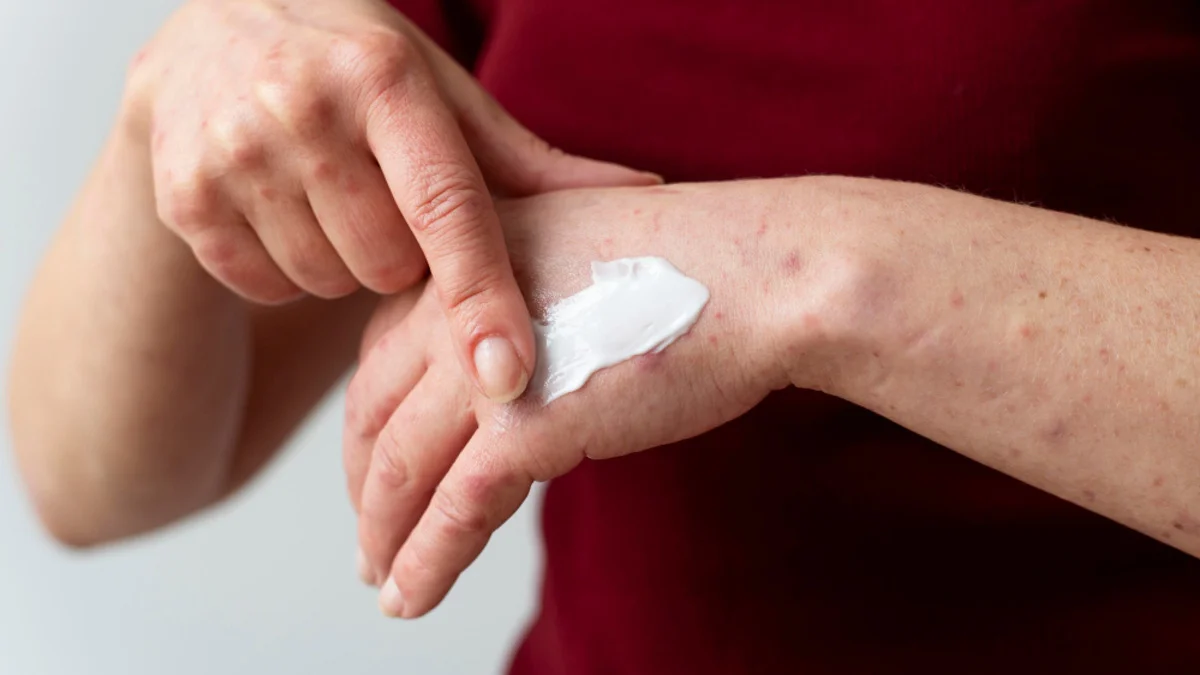
Daily emollient use is the most evidence supported single intervention for extending the period between flares. A Cochrane review on emollients in atopic eczema found that consistent moisturizer uses reduced flare frequency and delayed time to next flare compared to no moisturizer use. Emollients should be applied generously and frequently, not just during flares but as a daily maintenance habit, even when the skin looks clear.
Identifying and reducing exposure to personal triggers is the second pillar. A symptom diary, noting what you ate, what products you used, your stress levels, and when flares occurred, can help identify patterns that are not immediately obvious.
For people with frequent, difficult to control flares, proactive or weekend therapy with topical corticosteroids, applying them to previously affected areas two or three times a week even when the skin is clear, has been shown in clinical trials to reduce flare frequency. Research published in the British Journal of Dermatology confirmed that twice weekly fluticasone application to previously affected sites significantly extended the flare free interval.
Where topical treatments are insufficient, escalation to systemic treatments or biologics, particularly dupilumab for moderate to severe atopic dermatitis, offers a step change in disease control for appropriate patients. I have covered dupilumab in detail separately on PharmaHealths.
Conclusion
Eczema keeps coming back because the conditions that drive it, a compromised skin barrier and a sensitized immune system, do not fully resolve between flares. Triggers push an already primed system over the threshold into a visible flare, but the underlying vulnerability is always present. The key shift is not trying to eliminate eczema completely, but learning how to stay one step ahead of it. Understanding this is not discouraging. It shifts the focus from trying to cure eczema to managing it strategically, keeping the skin barrier supported, reducing trigger exposure, and having a clear plan for when flares do occur.
Explore More on PharmaHealths
If you found this helpful, you might also want to read my full guide to eczema vs psoriasis, which covers how to tell the two conditions apart and why the distinction matters for treatment. I have also written in depth on dupilumab (Dupixent) for moderate to severe eczema, and on the different types of eczema and what distinguishes them. All of these sit alongside this article as part of the PharmaHealths skin health series at pharmahealths.com.
Disclaimer
This article is written for informational purposes only and does not constitute medical advice. Always consult a qualified healthcare professional before starting, stopping, or changing any treatment for eczema or any other skin condition. If your eczema is significantly affecting your quality of life, sleep, or mental health, speak to your GP — effective treatments are available beyond over-the-counter options.
References
• National Eczema Society — Atopic Eczema: https://eczema.org/information-and-advice/types-of-eczema/atopic-eczema/
• NHS — Eczema (Atopic Dermatitis): https://www.nhs.uk/conditions/atopic-eczema/
• Irvine AD, McLean WH, Leung DY. Filaggrin mutations associated with skin and allergic diseases. New England Journal of Medicine. 2011: https://www.nejm.org/doi/full/10.1056/NEJMra1011040
• Gittler JK et al. Progressive activation of T(H)2/T(H)22 cytokines and selective epidermal proteins characterizes acute and chronic atopic dermatitis. Journal of Allergy and Clinical Immunology. 2012: https://www.jacionline.org/article/S0091-6749(12)00821-5/fulltext
• Langan SM, Irvine AD, Weidinger S. Atopic dermatitis. The Lancet. 2020: https://www.thelancet.com/journals/lancet/article/PIIS0140-6736(20)31286-1/fulltext
• Chida Y, Hamer M, Steptoe A. A bidirectional relationship between psychosocial factors and atopic disorders: a systematic review and meta-analysis. Psychosomatic Medicine. 2008: https://journals.lww.com/psychosomaticmedicine/abstract/2008/01000/a_bidirectional_relationship_between_psychosocial.8.aspx
• Gallo RL, Nakatsuji T. Microbial symbiosis with the innate immune defense of the skin. Science. 2011: https://www.science.org/doi/10.1126/science.1206095
• Staphylococcus aureus and atopic dermatitis. Journal of Allergy and Clinical Immunology. 2017: https://www.jacionline.org/article/S0091-6749(17)30004-4/fulltext
• Illi S et al. The natural course of atopic dermatitis from birth to age 7 years and the association with asthma. Journal of Allergy and Clinical Immunology. 2004: https://www.jacionline.org/article/S0091-6749(04)00497-5/fulltext
• Van Der Meer JB et al. The carryover effect of short-term, twice-weekly applications of fluticasone propionate 0.005% cream in patients with atopic dermatitis. British Journal of Dermatology. 1999: https://academic.oup.com/bjd/article/141/6/1072/6699217
• Cochrane Review — Emollients and moisturizers for eczema. Cochrane Database of Systematic Reviews. 2017: https://www.cochranelibrary.com/cdsr/doi/10.1002/14651858.CD012119.pub2/full
• Williams HC et al. Is eczema really on the increase worldwide? Journal of Allergy and Clinical Immunology. 2008: https://www.jacionline.org/article/S0091-6749(07)01958-4/fulltext
• British Association of Dermatologists — Atopic Eczema Patient Information Leaflet: https://www.bad.org.uk/pils/atopic-eczema/