

Written by Aisha Saleem, Pharmacist & Health Writer at PharmaHealths.com
If your eyes feel gritty, tired, or burn by mid-afternoon, you are not imagining it. Dry eye disease affects a huge slice of the population, and it is one of the most common reasons people book an eye exam in the first place. As a pharmacist, I see this at the counter constantly: someone reaching for the third different brand of eye drops because the first two “didn’t work.” So, let’s go through what dry eye disease actually is, why it happens, and which treatments are genuinely worth trying.
What Is Dry Eye Disease?
Dry eye disease is a condition where your tear film cannot keep your eyes properly lubricated, either because you are not producing enough tears or because the tears you do produce evaporate too quickly. The current clinical definition describes it as a multifactorial disease of the ocular surface where the tear film loses its natural balance, leading to instability, inflammation, and discomfort.
In plain terms: your tear film is a three-layer coating on the surface of your eye (oil, water, and mucus), and dry eye disease happens when that coating breaks down. This is not just “having dry eyes now and then.” It is a chronic, often progressive condition that can affect your vision, comfort, and quality of life if left unmanaged.
Dry eye disease is also very common. A global prevalence review found it affects somewhere between 5% and 50% of the population, with rates varying by age, region, and how strictly the condition is diagnosed. Studies centered in East Asia have consistently found higher rates of dry eye symptoms compared with Caucasian populations, which suggests genetics and environment both play a role.
What Causes Dry Eye Disease?
Dry eye disease rarely has just one cause. It is usually the result of several overlapping factors.
Age, Hormones and Health Conditions
Tear production naturally declines with age, which is why dry eye becomes more common after 50. Hormonal shifts, particularly around menopause, are a major contributor. Certain autoimmune and systemic conditions are also strongly linked to dry eye, including Sjögren’s syndrome, rheumatoid arthritis, thyroid disease, and lupus.
Environment and Lifestyle
Triggering factors include age, gender, hormones, autoimmune disorders, and local environment, with low humidity and windy conditions contributing significantly to ocular surface dryness. Air conditioning, heating, wind, and prolonged screen use (which reduces your blink rate) are some of the most common everyday triggers I hear about from patients. Extended digital screen exposure is especially important today, as reduced blinking directly increases tear evaporation.
Medications and Preservatives
This is where pharmacists spend a lot of time. A wide range of common medications can cause or worsen dry eye, including antihistamines, antidepressants, beta-blockers, diuretics, decongestants, and isotretinoin. Preservatives found in some eye drops, particularly benzalkonium chloride, can also aggravate the ocular surface with repeated use. Frequent exposure to these preservatives can gradually disrupt the tear film rather than support it.
Contact Lenses and Eye Surgery
Contact lens wear is consistently associated with dry eye disease, and procedures such as LASIK can trigger or worsen symptoms afterward, since the surgery temporarily disrupts the corneal nerves that help regulate tear production.
Newer Recognized Risk Factors
More recent research has expanded the list of contributing factors. Confirmed drivers now include ocular surgery, certain systemic and topical medications, autoimmune disorders, chemotherapy, isotretinoin, eye drop preservatives, and behavioral exposures like poor sleep, heavy screen use, and periocular cosmetics. Emerging factors with growing evidence include gut microbiome changes, air pollution, and temperature, and psychological factors such as depression, stress, and anxiety have been reinforced as being linked to worse symptoms and disease burden. These newer insights highlight that dry eye is not just a local eye problem, but a condition influenced by overall health and environment.
What Are the Symptoms of Dry Eye Disease?
Dry eye disease shows up differently from person to person, but the most commonly reported symptoms include,
• A gritty, sandy, or foreign body sensation in the eye
• Burning or stinging
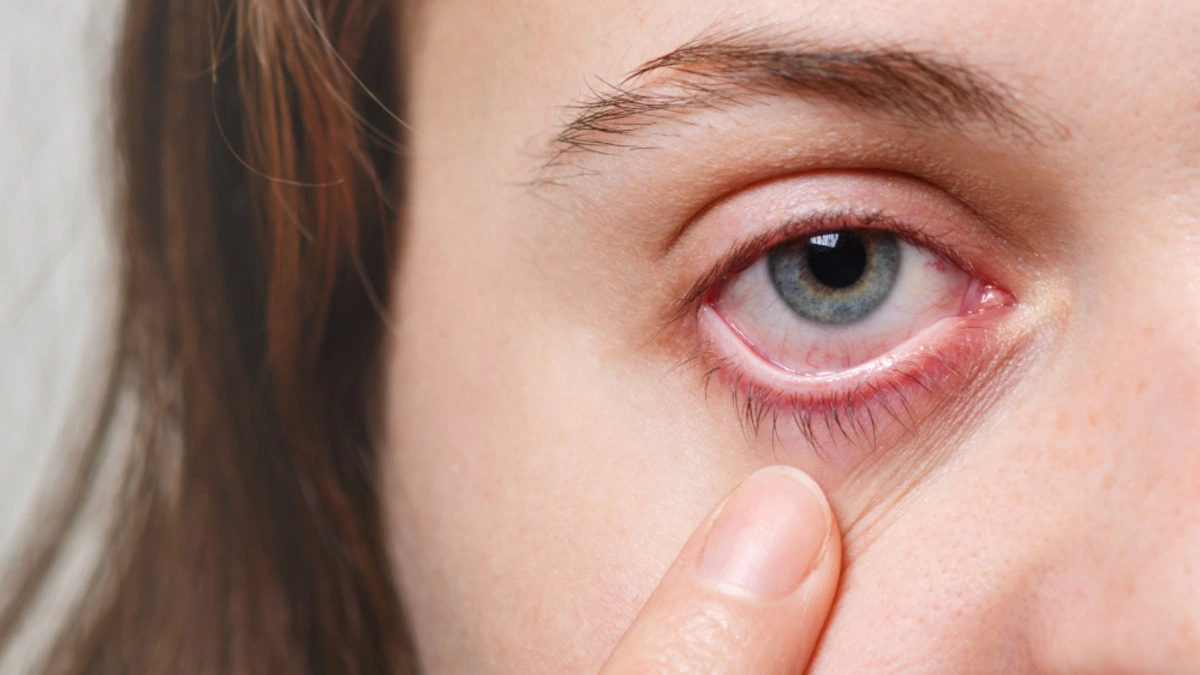
• Redness
• Sensitivity to light
• Blurred vision that improves temporarily after blinking
• Watery eyes (a reflex response to surface irritation, which sounds counterintuitive but is very common)
• Difficulty wearing contact lenses comfortably
• Eye fatigue, especially during screen work or reading
Visual symptoms tend to fluctuate rather than stay constant. Vision may clear briefly after a blink and blur again within seconds, and many people notice glare or halos around headlights and streetlights at night as the irregular tear film scatters light across the cornea. This fluctuation is a key clue that the tear film, not the eye structure itself, is the main issue.
How Is Dry Eye Disease Diagnosed?
Diagnosis usually starts with a conversation about your symptoms, followed by an eye exam. Your eye doctor will look at your eyelids, assess how you blink, and examine the surface of your eye. Common diagnostic tests include measuring how quickly your tear film breaks up, checking the thickness or quality of your tears, and sometimes staining the eye surface with a dye to spot damaged areas. These tests are quick, painless, and give valuable insight into both tear quantity and quality.
How Is Dry Eye Disease Treated?
The good news is that dry eye disease is very manageable, even though it is not usually curable outright. Treatment typically follows a step-up approach.
Step 1(Lifestyle and Environmental Changes)
This is always the starting point. Reducing exposure to air conditioning, heating vents, wind, and dry indoor air helps. So does taking regular breaks from screens using the 20-20-20 rule: every 20 minutes, look at something 20 feet away for 20 seconds, and blink fully several times. A humidifier in the bedroom or office can make a noticeable difference too. Simple changes like conscious blinking and adjusting airflow can significantly reduce symptoms.
Step 2 (Over-the-Counter Artificial Tears)
Artificial tears are the first-line treatment for most people and are available without a prescription. There are two main types worth knowing about.
Preservative containing drops come in multidose bottles and are fine for occasional use, but the preservatives can irritate the eyes with frequent dosing. Preservative free drops are generally recommended if you are using artificial tears more than four times a day, since repeated preservative exposure can itself damage the ocular surface over time.
As a pharmacist, my honest advice here is: don’t expect the first bottle you try to be “the one.” Formulations vary in thickness and ingredients, and finding your best fit sometimes takes trial and error. Consistency matters more than brand choice in the early stages.
Step 3 (Prescription Treatments)
If artificial tears alone are not enough, your eye doctor may prescribe medicated drops. Options approved in recent years include cyclosporine-based drops, lifitegrast, a nasal spray called varenicline that stimulates natural tear production, and perfluorohexyloctane, a newer water-free drop. These treatments target inflammation or tear production rather than just providing temporary relief.
Step 4 (In-Office and Surgical Procedures)
For more stubborn cases, eye doctors may recommend punctal plugs (tiny inserts that slow tear drainage), intense pulsed light therapy or thermal pulsation for meibomian gland dysfunction, or in rare severe cases, surgical approaches such as amniotic membrane grafts.
When Should You See a Doctor for Dry Eye?
You should book an eye exam if your dry eye symptoms are persistent, getting worse, interfering with daily activities, or not improving with over-the-counter drops. Significant redness, pain, light sensitivity, or sudden vision changes are red flags that need prompt attention rather than a “wait and see” approach. Early evaluation can prevent progression and protect the ocular surface.
FAQs
Q1. What is dry eye disease?
Dry eye disease is a chronic condition in which the eyes do not stay properly lubricated, either from insufficient tear production or tears evaporating too fast. It involves inflammation and instability of the tear film and can affect comfort and vision if untreated.
Q2. What are the main symptoms of dry eye syndrome, and is there a cure?
Common symptoms include grittiness, burning, redness, light sensitivity, and fluctuating blurred vision. There is no single “cure,” but the condition is very manageable with the right combination of lifestyle changes, artificial tears, and, if needed, prescription treatment.
Q3. What are common causes of dry eyes and how can they be treated?
The most common causes are aging, hormonal changes, environmental exposure (wind, low humidity, screens), certain medications, autoimmune conditions, and contact lens wear. Treatment is stepped, starting with lifestyle changes and artificial tears before moving to prescription drops or in-office procedures if needed.
Q4. Why are my eyes suddenly dry?
Sudden dry eye is often triggered by a specific new exposure, such as starting a new medication, a long stretch of screen time, dry indoor air, or a new pair of contact lenses. If it comes with pain, sudden vision changes, or discharge, it needs prompt evaluation rather than home remedies.
Q5. Is dry eye syndrome permanent, and will I need to treat it forever?
For many people, dry eye is a chronic condition that needs ongoing management rather than a one-time fix, especially if it is linked to aging or an underlying condition like Sjögren’s syndrome. That said, symptoms can be well controlled, and some cases triggered by a temporary factor improve significantly once that trigger is addressed.
Q6. Can dry eye disease cause permanent vision loss?
Mild to moderate dry eye typically does not cause permanent vision loss, but severe, poorly managed dry eye can lead to corneal surface damage over time. Seeking treatment early is the best way to protect long-term eye health.
Q7. How long does it take for dry eye treatment to work?
Mild dry eye often improves within days to a few weeks of consistent artificial tear use and environmental changes. More inflammatory or gland-related dry eye can take six to twelve weeks of combined treatment before noticeable improvement.
Q8. What is the difference between preservative-free and regular artificial tears?
Preservative-containing drops are convenient for occasional multidose use, but the preservatives can irritate the eyes if used frequently. Preservative-free drops are the better choice if you need drops more than four times a day.
A Note from Aisha
If you have been dismissing dry, gritty, or tired eyes as “just tiredness” or “just screen time,” it is worth taking seriously, especially if it has been going on for weeks rather than days. I always tell patients at the pharmacy counter: start with preservative-free artificial tears and a few environmental tweaks, but don’t be afraid to see an eye doctor if things aren’t improving. Early action can prevent long-term discomfort and complications.
Disclaimer
This article is for informational purposes only and is not a substitute for professional medical advice, diagnosis, or treatment. Always seek the advice of your physician, ophthalmologist, optometrist, or other qualified health provider with any questions you may have regarding a medical condition.
References
• American Academy of Ophthalmology, Clinical guidelines and patient-focused resources on diagnosis and management of dry eye disease.
• Mayo Clinic, Evidence-based overview of symptoms, causes, and treatment options for dry eye syndrome.
• Tear Film and Ocular Surface Society (TFOS DEWS II & III Reports), Authoritative international consensus reports defining dry eye disease and its pathophysiology.
• StatPearls (National Institutes of Health), Peer-reviewed clinical summaries covering epidemiology, diagnosis, and treatment approaches.
• Optometry Advisor, Expert-reviewed articles focusing on clinical practice and emerging treatments in eye care.
• PMC (National Center for Biotechnology Information), Repository of peer-reviewed research studies on dry eye disease and ocular surface disorders.
