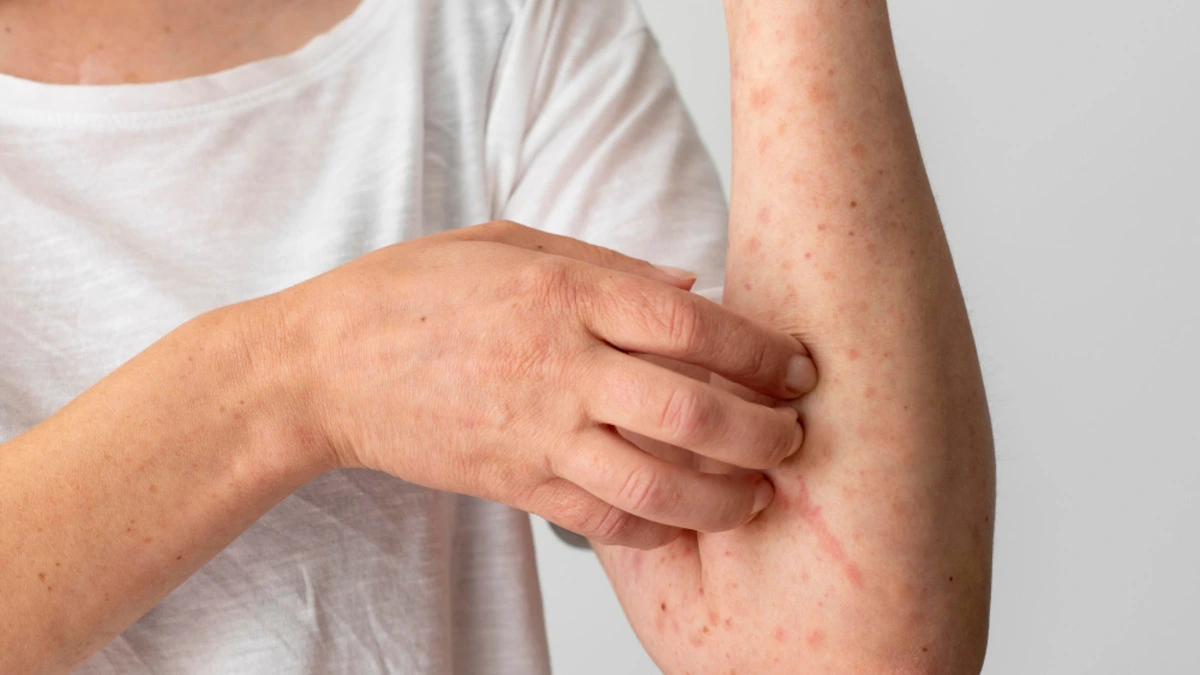

Psoriasis and eczema are two of the most common chronic skin conditions, and they’re often confused because both can cause red, inflamed, sometimes itchy patches of skin. But the underlying biology, typical triggers, and treatment pathways differ in important ways, and understanding these differences matters more than ever now that a new generation of targeted biologic drugs has changed what’s possible for people with moderate to severe disease.
Psoriasis (an immune driven skin condition)
Psoriasis happens when the immune system mistakenly speeds up the skin’s normal renewal cycle, causing cells to build up faster than they can shed. This leads to the thick, silvery scaled plaques most people associate with the condition, typically appearing on the elbows, knees, scalp, and lower back. Psoriasis is closely linked to systemic inflammation, and a meaningful proportion of people with psoriasis also develop psoriatic arthritis, affecting the joints as well as the skin.
Eczema (a barrier and immune problem combined)
Eczema, more precisely called atopic dermatitis, involves both a weakened skin barrier and an overactive immune response. The skin loses moisture more easily and becomes more reactive to irritants, allergens, and environmental triggers. Eczema often begins in early childhood, frequently appears in the creases of the elbows and knees, and tends to run alongside other “atopic” conditions like asthma and hay fever, a pattern often referred to as the atopic march.
Telling them apart
The two conditions can look similar at a glance, but a few clues help distinguish them. Psoriasis plaques tend to be well defined, thicker, and covered in a distinctive silvery scale, while eczema patches are usually less defined, more-weepy or crusted during flares, and almost always intensely itchy. Family history patterns differ too, psoriasis often clusters with other autoimmune conditions, while eczema tends to run alongside allergic conditions in the same family.
Quick snapshot
• Psoriasis (well defined plaques with silvery scale, less intense itch)
• Eczema (poorly defined, intensely itchy, often oozing or crusted during flares)
Where treatment used to stop
For decades, the first line approach to both conditions looked broadly similar: emollients and moisturizers to support the skin barrier, topical corticosteroids to calm flares, and topical calcineurin inhibitors such as tacrolimus for eczema in areas where steroids aren’t suitable long-term. Phototherapy with narrowband UVB has also been a longstanding option for both conditions when topical treatments aren’t enough. For more widespread or stubborn disease, older systemic drugs like methotrexate and ciclosporin have been used, but these dampen the immune system broadly and come with a longer list of monitoring requirements and side effects.
The shift toward targeted biologics
What’s changed dramatically over the past decade is the arrival of biologic drugs that target very specific steps in the immune pathways driving these conditions, rather than suppressing immune function broadly.
For eczema, dupilumab (marketed as Dupixent) was a turning point. It works by blocking signaling from two key inflammatory messengers, IL-4 and IL-13, which drive much of the itching and inflammation in atopic dermatitis. A landmark trial published in the New England Journal of Medicine found that patients treated with dupilumab achieved significantly clearer skin and meaningfully less itch compared with placebo, with effects that built over the course of treatment.
For psoriasis, the major advances have come from drugs targeting interleukin-17 (IL-17) and interleukin-23 (IL-23), two signalling proteins central to the psoriasis immune cascade. Secukinumab (Cosentyx) and ixekizumab (Taltz) target IL-17, while risankizumab (Skyrizi) and guselkumab (Tremfya) target IL-23. According to a review in the Journal of the American Academy of Dermatology, these newer biologics have produced rates of near-complete skin clearance that were rarely achievable with older systemic treatments, transforming expectations for what “controlled” psoriasis can look like.
There’s also a newer oral option in the mix: JAK inhibitors such as upadacitinib (Rinvoq) and abrocitinib (Cibinqo) for eczema work by blocking enzymes inside immune cells involved in the inflammatory signaling cascade. These can be appealing because they’re taken as a tablet rather than an injection, but they come with their own monitoring requirements, which I’ll come back to below.
This shift is also changing how clinicians think about sequencing therapy, especially in patients who need faster symptom control or who prefer oral options before injections.
Who actually qualifies for biologic treatment
Biologics aren’t typically a first step. Guidance from the National Institute for Health and Care Excellence generally reserves these treatments for moderate-to-severe psoriasis or eczema that hasn’t responded adequately to conventional therapies, or where the condition is having a significant impact on quality of life, sleep, or mental health. Severity is usually assessed using standardized scoring tools alongside a conversation about how the condition is affecting daily life, something that’s often underweighted in how people think about “severity” but matters a great deal in practice.
Safety monitoring on biologics and JAK inhibitors
Because these drugs modify immune function, pre-treatment screening typically includes checks for latent tuberculosis, hepatitis B and C, and a review of vaccination status, since live vaccines generally need to be completed before starting treatment. Ongoing monitoring focuses mainly on watching for signs of infection, since the immune system’s ability to respond to certain pathogens is altered. Guidance summarized in the British Journal of Dermatology emphasizes that while biologics are generally well tolerated, this monitoring isn’t optional box ticking, it’s a meaningful part of using these drugs safely.
JAK inhibitors carry additional considerations, including monitoring for blood clots and cardiovascular risk factors, which is why they tend to be considered more carefully in people with existing cardiovascular risk.
In clinical practice, this is also why JAK inhibitors are often positioned after biologics in many treatment pathways, particularly in patients with higher cardiovascular or thrombotic risk.
Lifestyle still matters
None of this replaces the basics. Maintaining the skin barrier with regular emollient use, identifying and avoiding personal triggers (which might include certain fabrics, soaps, stress, or specific foods in some people with eczema), and managing stress all remain part of the picture even for people on biologic treatment. A Cochrane review looking at dietary interventions for eczema found the evidence for specific elimination diets to be inconsistent, which is a useful reminder not to overhaul someone’s entire diet without good reason, targeted changes based on identified triggers tend to be more useful than broad restriction.
The bigger picture
What’s genuinely exciting about this area of dermatology is how much our understanding of the immune pathways behind these conditions has improved, and how that’s translated into real treatment options for people whose lives were significantly limited by visible, painful, or relentlessly itchy skin.
If you or someone you know has moderate
to severe psoriasis or eczema that isn’t responding to standard treatment, it’s worth having a specific conversation with a dermatologist about whether biologic or targeted oral therapy might be appropriate, these aren’t last resort drugs anymore, and earlier access can mean a meaningfully better quality of life.
In many cases, the goal is no longer just symptom control, but near clear or fully clear skin with long term disease suppression.
FAQs
Q1. What’s the main difference between psoriasis and eczema?
Psoriasis is primarily driven by an overactive immune response that speeds up skin cell turnover, producing thick, well-defined plaques with silvery scale. Eczema involves both a weakened skin barrier and immune overactivity, producing less defined, often weepy patches that are usually very itchy and tend to run alongside allergic conditions like asthma.
Q2. Are biologic drugs a cure for psoriasis or eczema?
No, Biologics control the underlying immune activity very effectively for many people, often leading to clear or nearly clear skin, but they don’t cure the condition. Symptoms generally return if treatment is stopped, which is why these drugs are typically used as ongoing maintenance therapy.
Q3. How are biologics different from older drugs like methotrexate?
Older systemic drugs like methotrexate and ciclosporin suppress immune function broadly, affecting many different immune pathways at once. Biologics are designed to block one specific signaling molecule, such as IL-17, IL-23, or IL-4/IL-13, which generally means a more predictable side effect profile and fewer broad immune effects.
Q4. Who qualifies for biologic treatment?
Biologics are generally reserved for moderate to severe psoriasis or eczema that hasn’t responded well to topical treatments, phototherapy, or standard systemic options, or where the condition is significantly affecting quality of life. Eligibility is assessed using standardized severity scores alongside a discussion of day-to-day impact.
Q5. What monitoring is needed while on these treatments?
Before starting, doctors typically check for latent tuberculosis, hepatitis, and vaccination status. While on treatment, the main focus is watching for signs of infection. JAK inhibitors involve additional monitoring for cardiovascular risk factors and blood clot risk.
Q6. Can diet and lifestyle changes help alongside biologic treatment?
Yes, though they work alongside rather than instead of medical treatment. Maintaining the skin barrier with regular emollients, identifying personal triggers, and managing stress remain important. Broad elimination diets aren’t well. Supported by evidence, but targeted changes based on identified personal triggers can be helpful.
Call to Action
If you’ve been navigating a psoriasis or eczema diagnosis, whether you’re just starting to explore treatment options or wondering if it’s time to talk to a dermatologist about something beyond topical creams, I hope this gave you a clearer picture of where things stand. I write regularly about chronic conditions, immune health, and medication options over on pharmahealths.com, so if this topic resonated with you, I’d encourage you to have a browse through some of the related pieces there. As always, any decisions about starting or switching treatment should be made with your prescriber, who can weigh your individual health history into the picture.
Disclaimer
This content is intended for general informational purposes only and does not constitute medical, nutritional, or pharmaceutical advice. Please consult a qualified healthcare professional before making significant changes to your diet, exercise routine,
References
• New England Journal of Medicine, clinical trial evidence for dupilumab in atopic dermatitis
• Journal of the American Academy of Dermatology, efficacy of IL-17 and IL-23 inhibitors in psoriasis
• British Journal of Dermatology, safety monitoring and biologic therapy guidance
• National Institute for Health and Care Excellence, treatment eligibility criteria for biologics
• Cochrane Library, dietary interventions in atopic dermatitis evidence review