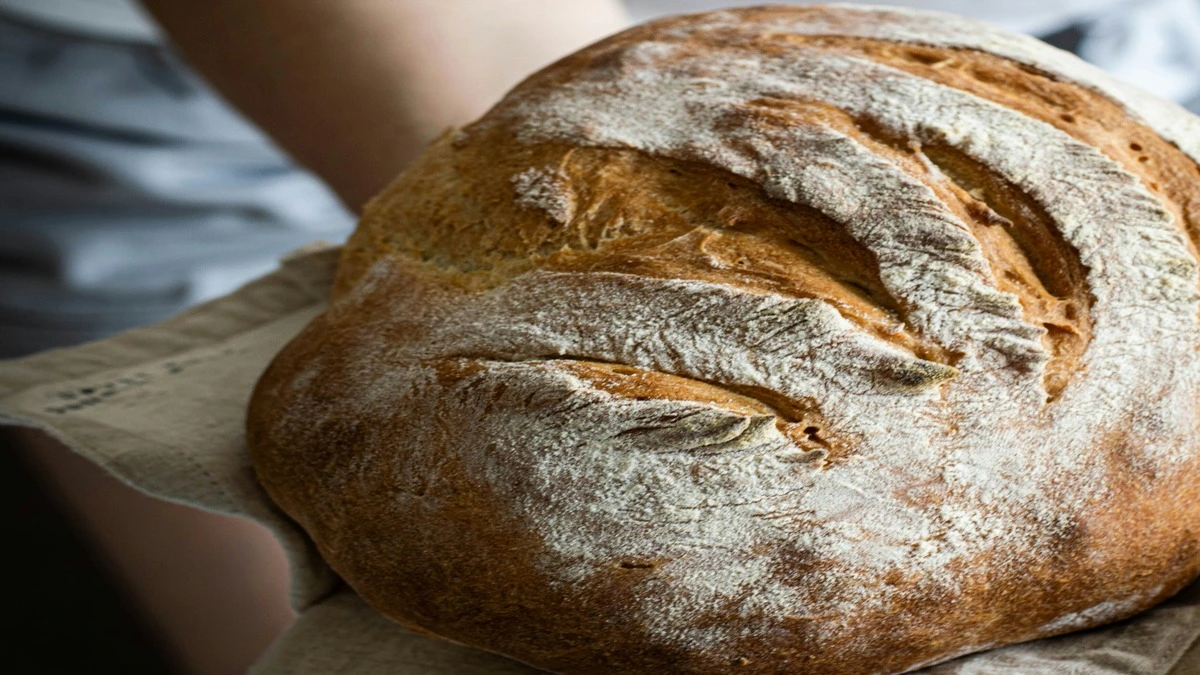

At first glance, sourdough looks like a simple food. Flour, water, time, and somehow, a loaf emerges with a crisp crust, chewy crumb, and complex flavor. Yet beneath this rustic simplicity lies a hidden world of biochemical transformation.
Most people believe sourdough’s magic comes from wild yeast and friendly bacteria alone. While that’s partly true, scientists are now uncovering a new and fascinating player: wheat fibers themselves.
Recent research suggests these fibers don’t just sit quietly inside dough. Instead, they change, reshape, and interact with enzymes and microbes during fermentation, influencing texture, structure, and even how the bread feels when you eat it.
In other words, sourdough isn’t just fermented. It is rebuilt from the inside out.
The Overlooked Components of Wheat Flour
When people think about flour, they usually think about starch and gluten. However, wheat flour also contains significant amounts of dietary fiber, especially a group called arabinoxylans.
These fibers are part of the grain’s natural cell wall structure. Traditionally, they were seen as nutritionally helpful but mechanically inconvenient. In fact, bakers often believed fiber weakened dough.
However, this assumption is now being challenged.
Scientists have discovered that arabinoxylans exist in two forms,
• Water-extractable fibers (more soluble)
• Water-unextractable fibers (more rigid)
What’s surprising is that fermentation changes how these fibers behave, and not in the way we once thought.
What Fermentation Really Does
Sourdough fermentation creates an acidic environment. Wild yeast and lactic acid bacteria consume sugars and release organic acids.
But here’s the twist, those acids don’t just affect microbes, they activate wheat’s own enzymes.
As acidity increases, native enzymes in the flour become active and begin reshaping fiber molecules. Instead of microbes breaking fibers apart directly, the wheat itself does much of the work.
This subtle shift in understanding is important. It means sourdough fermentation is not just microbial. It is also planting driven chemistry.
Why Fiber Transformation Matters
When fiber molecules change shape and size, they don’t just become “smaller.” They interact differently with water, gluten, and starch.
As a result, this affects,
• Dough elasticity
• Gas retention
• Moisture distribution
• Crumb openness
• Chewiness
This helps explain why sourdough feels different from regular bread. It isn’t just about taste, it’s about structure.
Fiber, once considered passive, is actually part of the bread’s internal architecture.
Flavor (More Than Just Sourness)
Sourdough flavor is famously complex. But that complexity doesn’t come from acidity alone.
During fermentation, microbes create a wide range of compounds:
• Mild sweetness
• Buttery aromas
• Subtle fruity notes
• Nutty undertones
These flavors emerge because microbes feed on sugars released from starch and fiber breakdown.
Meanwhile, fiber transformation indirectly shapes which compounds are produced. This creates a feedback loop: structure influences flavor, and flavor reflects structure. This is why sourdough never tastes one dimensional.
Texture (The Silent Role of Fibers)
Texture is one of sourdough’s most noticeable features, and fiber plays a quiet but crucial role.
When fibers interact with gluten, they change how the dough stretches. They also absorb and redistribute water, which influences softness and moisture retention.
Because of this,
• Crumb can feel more open
• Bread stays soft longer
• Chewiness improves
• Staling slows
Interestingly, in non-fermented bread, fiber often makes loaves dense. In sourdough, fermentation flips that effect.
Digestibility (A Structural Shift)
Fermentation doesn’t eliminate fiber, it reshapes it.
This reshaping can influence,
• How carbohydrates are broken down
• How gut bacteria interact with fiber
• How gradually sugars are released
This doesn’t make sourdough a medical food, but it does make it biologically different from conventional bread.
It’s not just about what you eat, it’s about how it’s transformed before you eat it.
Why This Matters for Home Bakers
If you’ve ever wondered why sourdough behaves unpredictably, now you know why.
Small changes in,
• Flour type
• Hydration
• Temperature
• Fermentation time
• Starter composition, can dramatically alter fiber behavior.
This is not inconsistency. This is biochemistry. Every sourdough loaf is a living experiment.
A Living Food System
Sourdough is not a recipe, it’s a system. It contains,
• Microbial ecosystems
• Enzymatic reactions
• Structural remodeling
• Chemical feedback loops
Each loaf reflects a dynamic balance between wheat chemistry and microbial metabolism. This is why no two starters are ever the same.
The Bigger Picture
For thousands of years, humans baked sourdough without knowing what was happening at the molecular level.
Now science is revealing that ancient practices often encoded deep biochemical wisdom.
Wheat fibers, once seen as simple roughage, are now understood as active participants in fermentation.
They don’t just survive the process. They evolve.
Final Thoughts
Sourdough is not just fermented flour. It is a living, breathing network of chemistry, biology, and structure, shaped by microbes, enzymes, and wheat fibers working together.
The next time you tear into a crusty loaf, remember,
• You’re not just eating bread.
• You’re tasting a molecular story.
FAQs
Q1. What makes sourdough different from regular bread?
Sourdough undergoes natural fermentation that changes starches, fibers, and structure, not just flavor.
Q2. Do wheat fibers really change during fermentation?
Yes, Native wheat enzymes reshape fiber molecules when acidity rises.
Q3. Is sourdough easier to digest?
Many people find it gentler due to structural carbohydrate changes, though it is not a medical treatment.
Q4. Does fermentation remove fiber?
No, it transforms fiber rather than destroying it.
Q5. Why does sourdough texture feel different?
Because fibers interact differently with gluten and water after fermentation.
Disclaimer
This article is for educational purposes only. It does not provide medical advice, diagnosis, or treatment. Always consult a qualified professional for personal health decisions.
Call to Action
If you enjoy learning how everyday foods transform inside your body, explore more science-based nutrition articles on Pharma Healths, where traditional foods meet modern research.
References
• De Vuyst L, Vrancken G, Ravyts F, Rimaux T, Weckx S. Biochemistry and functionality of sourdough fermentation. Int J Food Microbiol. 2009;135(1):1–18. Shows how lactic acid bacteria and wild yeast interact with wheat components during fermentation.
• Gänzle MG. Enzymatic and microbial transformations of cereal components in sourdough. Food Microbiol. 2014; 37:2–10. Highlights fiber modification and enzymatic activity in sourdough fermentation.
• Poutanen K, Flander L, Katina K. Sourdough and cereal fermentation in nutrition and health. J Cereal Sci. 2009;49(3):371–376. Explains how fermentation alters starch and fiber structure.
• Rizzello CG, Coda R, De Angelis M, Gobbetti M. Sourdough fermentation and its effect on bread digestibility. Food Microbiol. 2010;27(5):549–558. Demonstrates structural and digestibility changes of wheat fibers.
• Corsetti A, Settanni L. Lactic acid bacteria in sourdough fermentation. Food Res Int. 2007;40(5):539–558. Reviews the microbial contributions to flavor and texture.