


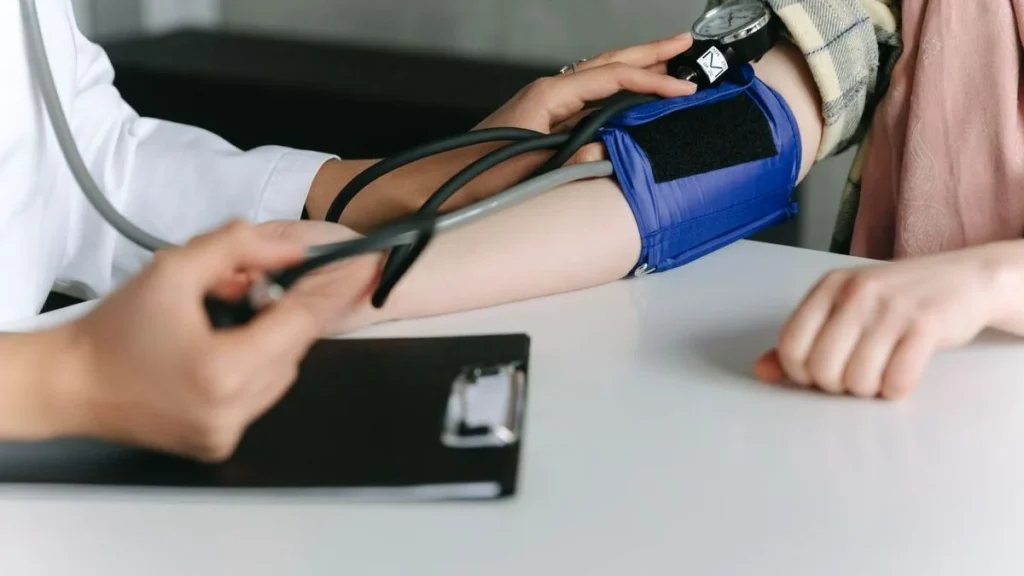
Most of us have been trained to glance at our blood pressure reading and ask one question: is the top number under 140? But once you’re in your 70s, that single number only tells part of the story. The gap between your two numbers, and how low your pressure can safely drop, often say more about your heart health and your risk of falling than the systolic reading on its own.
The number nobody explains (pulse pressure)
Pulse pressure is simply the difference between your systolic (top) and diastolic (bottom) numbers. If your reading is 145/75, your pulse pressure is 70. In younger adults, this gap usually sits somewhere between 40 and 50 mmHg. In older adults, however, that gap often widens, and that change matters. A study published in Circulation, drawing on data from the Framingham Heart Study, found that pulse pressure becomes a stronger predictor of cardiovascular events than systolic or diastolic pressure alone once people pass the age of 60.
Why does this happen? Younger arteries are elastic, they expand and contract smoothly with each heartbeat, cushioning the pressure wave. With age, the walls of the large arteries, particularly the aorta, stiffen, a process sometimes called arteriosclerosis. As this flexibility is lost, the heart’s pressure wave is no longer absorbed as efficiently. Stiffer arteries can’t absorb the surge of blood as the heart pumps, so the systolic pressure spikes higher while the diastolic pressure tends to drift lower, widening that gap between the two.
According to research published in the journal Hypertension, a pulse pressure consistently above 60 mmHg is linked to a meaningfully higher risk of heart attack, stroke, heart failure, and even cognitive decline in older adults, because it reflects how hard the heart and major vessels are working with every single beat. In simple terms, it’s a sign your cardiovascular system is under more strain than it should be. So, if your doctor has ever said your blood pressure “looks fine” based on the top number, but your bottom number has been creeping down while the top stays the same or rises, that growing gap deserves a conversation, it’s often an early signal of arterial stiffening rather than something to dismiss.
When blood pressure goes too low
On the flip side, low blood pressure, generally considered to be readings below 90/60 mmHg, carries its own risks for people in their 70s, and these risks are just as real, if less talked about, than high blood pressure.
The most immediate concern falls. Researchers writing in the Journal of the American Geriatrics Society have documented that low blood pressure, particularly orthostatic hypotension, the sudden drop that happens when standing up, is one of the most common and preventable causes of falls and fractures in older adults. And at this age, a fall is rarely “just a fall.” A fall that might be a minor embarrassment at 40 can mean a hip fracture, a hospital stays, and a long road back to independence at 75.
There’s also the question of what low blood pressure might be hiding. In older adults, a sudden or unexplained drop often points to something else going on, dehydration, an infection, anemia, an underactive thyroid, or a heart rhythm problem. Persistently low pressure can also reduce blood flow to the brain and kidneys over time, which may gradually affect memory, thinking, and kidney function rather than causing immediate symptoms.
Two patterns worth knowing: orthostatic and postprandial hypotension
Orthostatic hypotension becomes more common with age because the body’s natural reflexes, the ones that tighten blood vessels and speed up the heart rate to compensate when you stand, become slower and less efficient. A study published in Age and Ageing found that this delayed response is a major contributor to the light-headedness, blurred vision, and “grey out” feeling that many older adults describe when they stand up too quickly. It’s not just inconvenience it’s a sign your body is struggling to adjust blood flow quickly enough.
A second, less well-known pattern is postprandial hypotension, a drop in blood pressure within an hour or two after eating, especially after large or carbohydrate heavy meals. The same research in Age and Ageing notes that blood gets diverted to the digestive system after a meal, and in older adults whose blood vessels can’t compensate quickly enough, this can cause noticeable dizziness, sometimes mistaken for simply feeling tired after lunch. If you regularly feel weak or dizzy after meals, this pattern is worth paying attention to.
Medications (a double-edged sword)
It’s also worth mentioning that the medications used to treat high blood pressure can sometimes tip someone into the low range, especially if doses haven’t been reviewed in a while. The SPRINT trial, published in the New England Journal of Medicine, found real benefits to treating blood pressure more intensively in older adults, including a lower risk of heart disease and death, but also noted a higher rate of fainting and low blood pressure episodes in the more intensively treated group. This highlights an important reality: treatment targets need to evolve as the body changes with age. This doesn’t mean intensive treatment is wrong; it means the dose that was right five years ago might not be the right dose now, and it’s worth raising with your doctor or pharmacist if dizziness has become a regular companion.
Practical steps to reduce dizziness and fall risk
The good news is that many of these issues respond well to simple, everyday changes. Rise in stages: sit on the edge of the bed for a moment before standing, giving your circulation time to catch up. Stay hydrated throughout the day, especially in warm weather, since even mild dehydration lowers blood volume and pressure. Eat smaller, more frequent meals rather than large ones if dizziness tends to strike after eating. Limit alcohol, which widens blood vessels and can intensify drops in pressure. Wear compression stockings if recommended, to help blood return from the legs rather than pooling there. Avoid very hot showers or baths, which cause blood vessels to dilate. And ask for a medication review every six to twelve months, especially if you’re on blood pressure tablets, diuretics, or medications for depression or Parkinson’s disease, all of which can contribute to low pressure. Small adjustments like these can make a noticeable difference in daily stability and confidence.
The bottom line
Blood pressure in your 70s isn’t just about chasing a single “good” number. A widening pulse pressure can be an early sign of arterial stiffness worth discussing with your doctor, while a reading that’s too low, especially if it comes with dizziness on standing or after meals, deserves just as much attention as one that’s too high. The goal isn’t a perfect number on a chart, it’s a blood pressure that keeps you steady on your feet, clear in your thinking, and able to move through your day with confidence and independence.
FAQs
Q1. What is considered a normal pulse pressure for someone in their 70s?
A pulse pressure of around 40 to 50 mmHg is typical. Once it climbs above 60 mmHg, it’s worth discussing with your doctor, as it often signals stiffening arteries.
Q2. Can low blood pressure be dangerous even if I don’t feel anything?
Yes, even without obvious symptoms, persistently low pressure can reduce blood flow to organs like the brain and kidneys over time, so it’s still worth monitoring and mentioning at checkups.
Q3. What should I do if I feel dizzy every time I stand up?
Try rising in stages and staying well hydrated, but don’t just live with it. Frequent dizziness on standing is common but not “normal,” and a medication review or simple tests can often identify the cause.
Call to Action
A note from me
If this kind of explanation helped clear things up, I write regularly about heart health, blood pressure, and healthy aging over at pharmahealths.com, where I try to break down what your numbers actually mean in plain, practical terms.
Disclaimer
This content is intended for general informational purposes only and does not constitute medical, nutritional, or pharmaceutical advice. Please consult a qualified healthcare professional before making significant changes to your diet, exercise routine,
References
• Circulation (Framingham Heart Study research on pulse pressure and cardiovascular risk)
• Hypertension
• Journal of the American Geriatrics Society
• Age and Ageing
• New England Journal of Medicine