


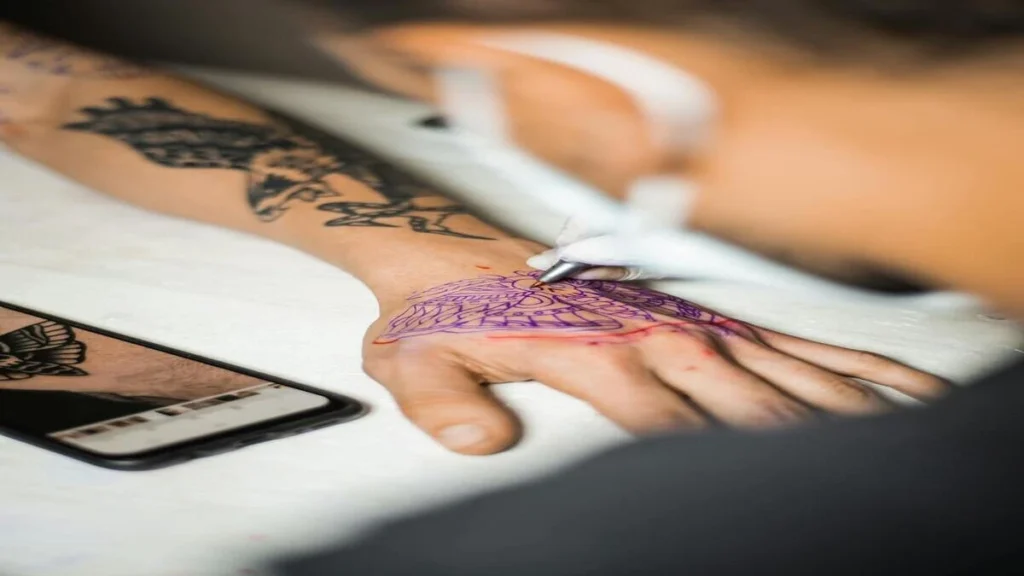
A pharmacist’s perspective shaped by real biology, not just surface-level trends
You walk into a tattoo studio, choose your design, and sit through the hum of the needle. In that moment, most people are thinking about pain, aesthetics, or meaning.
What almost no one thinks about is this,
your immune system is already reacting, in real time.
Because from a biological standpoint, a tattoo is not just art.
It’s a controlled injury combined with the permanent introduction of foreign chemical compounds into living tissue.
And your body treats it exactly that way.
What a Tattoo Really Is, Beneath the Skin
When tattoo ink is injected, it enters the dermis, a layer rich in immune activity.
This is not an empty space. It contains,
• Macrophages
• Dendritic cells
• CD4+ T cells
• Innate immune cells
The moment ink is deposited; your immune system activates.
Macrophages, your body’s frontline cleanup cells, immediately engulf the pigment particles. But here’s the key limitation,
They cannot break them down.
Tattoo pigments are often,
• Chemically inert
• Structurally large
• Resistant to enzymatic degradation
So instead of clearing the ink, macrophages hold onto it.
When these cells die, new macrophages arrive and repeat the process.
This continuous cycle is the reason your tattoo remains visible for life.
But it also means something deeper,
Your immune system never fully “finishes” responding.
The Part Most People Don’t Realize, Ink Doesn’t Stay Put
For years, it was assumed tattoo ink stayed in the skin.
It doesn’t.
A 2017 study using advanced X-ray fluorescence tracking showed that,
• Pigment particles migrate from the dermis
• Travel through lymphatic vessels
• Accumulate in lymph nodes
Smaller particles, especially nanoparticles, travel the furthest.
Then came the 2025 PNAS study, which added critical detail,
• Ink begins moving within minutes of tattooing
• Lymph node accumulation continues for months
• Human lymph nodes show visible pigment deposition
• Chronic immune activity persists for years
Microscopically, these lymph nodes are,
• Packed with pigment filled macrophages
• Showing signs of sustained inflammation
This is not just healing.
This is long term immune engagement.
The Unexpected Twist, Can Tattoos “Train” Your Immune System?
Interestingly, not all findings point in a negative direction.
Research led by Christopher Lynn explored how tattooing affects immune markers, particularly Immunoglobulin A (IgA), a key antibody involved in protecting respiratory and gastrointestinal surfaces.
Here’s what they found,
• First-time tattooing leads to a drop in IgA
• This occurs due to a cortisol spike triggered by the stress response
• Cortisol temporarily suppresses immune function
But in individuals with multiple tattoos,
• Smaller IgA drop, or even an increase
• Reduced cortisol response
• More stable immune marker levels
In repeated exposure scenarios, the immune system appears to adapt.
This has been described as a “priming effect”,
• Similar to how muscles adapt to repeated exercise
• The body becomes more efficient at handling stress
There’s also a potential secondary implication,
Lower repeated cortisol spikes could theoretically support better long term stress regulation, though this remains hypothetical, not clinically proven.
Where New Research Raises Real Concerns
The 2025 PNAS study didn’t just track ink movement, it revealed something more serious.
1. Macrophage Loss in Lymph Nodes
Within 24 hours,
• Significant reduction in macrophage numbers
• Triggered by apoptosis (cell death)
This matters because macrophages,
• Coordinate immune responses
• Help activate adaptive immunity
• Play a role in vaccine effectiveness
2. Vaccine Response May Be Altered
The study tested immune responses in tattooed models,
• mRNA COVID-19 vaccine showed a reduced antibody response
• Inactivated flu vaccine showed an enhanced response
This doesn’t suggest vaccines are unsafe.
But it does indicate,
Tattoo pigments may influence immune signaling in complex, unpredictable ways.
3. Ink Composition Is Not Biologically Neutral
Tattoo inks may contain,
• Heavy metals (nickel, chromium, cobalt, lead)
• Carbon black with PAHs (known carcinogens)
• Azo dyes (common in colored inks)
A critical issue,
Under UV exposure or laser removal, some pigments can break down into *aromatic amines*, which are potentially carcinogenic.
These substances,
• Are not originally designed for human injection
• Can persist in lymphatic tissue long term
Emerging Long Term Risk Signals
Recent epidemiological studies are raising important, though not definitive, questions:
• Swedish study (2024): ~21% higher lymphoma risk in tattooed individuals
• Danish twin study (2025): associations with
1. Melanoma
2. Squamous cell carcinoma
3. Lymphoma
4. Important clarification:
These are associations, not proof of causation.
But the consistency of signals has been strong enough that global health agencies are now investigating further.
What This Means in Practical Terms
From a pharmacological and physiological perspective, tattoos fall into a clear category,
Not inherently harmful for most healthy adults but not biologically neutral either.
Key realities,
• Foreign compounds remain in your body long-term
• They migrate beyond the skin
• They maintain low-grade immune activity
• Long term outcomes are still being studied
Situations Where Extra Caution Matters
If you are,
• Immunocompromised
• On immunosuppressive therapy
• Living with autoimmune disease
Then the risk profile changes.
There are documented cases of,
• Severe inflammatory reactions
• Muscle pain and swelling
In these situations, medical consultation is not optional, it’s essential.
Smarter Decisions If You Choose to Get a Tattoo
A balanced, evidence-based approach includes,
• Choose studios with strict hygiene protocols
• Ask about ink composition and sourcing
• Be cautious with colored inks (higher allergy risk)
• Avoid common vaccine injection sites
• Monitor for unusual or delayed skin reactions
A Note on “Immune Boosting” Claims
The idea that tattoos strengthen immunity is interesting, but not clinically actionable.
The data,
• Is limited
• Based on small studies
• Focuses on surrogate markers like IgA
And importantly,
Newer evidence introduces potential trade-offs that cannot be ignored.
The Bottom Line
A tattoo is not just a design on your skin.
It is,
• A permanent immune interaction
• A long-term presence in your lymphatic system
• A biological event your body continues to respond to
Some effects may be adaptive.
Others may represent a burden we don’t yet fully understand.
The most honest conclusion right now is simple,
Respect the biology. Stay informed. Make decisions with full awareness, not assumptions.
Because while your skin tells one story, your immune system is quietly writing another.
FAQs
Q1. Do tattoos weaken your immune system?
Not in a straightforward way. A tattoo triggers an immune response, and in the short term, stress related cortisol can temporarily suppress immunity. However, the bigger concern is the long-term low grade immune activation caused by ink particles that remain in the body.
Q2. Does tattoo ink really travel to lymph nodes?
Yes, Research shows that pigment particles can move through the lymphatic system and accumulate in lymph nodes, where they may persist for years and continue interacting with immune cells.
Q3. Are some tattoo colors riskier than others?
Yes, Colored inks. especially red, yellow, and orange. are more likely to cause allergic reactions. They may also contain compounds like azo dyes, which can break down into potentially harmful substances over time.
Q4. Can tattoos affect vaccine response?
Emerging research suggests tattoo ink may influence immune signaling, which could alter vaccine responses in specific contexts. However, this does not mean vaccines are unsafe or ineffective in tattooed individuals, the evidence is still evolving.
Q5. Do multiple tattoos strengthen immunity?
Some small studies suggest repeated tattoo exposure may reduce stress-related immune suppression (like smaller drops in IgA). But this is not strong enough evidence to consider tattoos as a way to “boost” immunity.
Q6. Are tattoos safe for people with weak immune systems?
Extra caution is needed. Individuals who are immunocompromised or on immunosuppressive medications may have a higher risk of complications and should consult a healthcare professional before getting a tattoo.
Q7. Is there a cancer risk linked to tattoos?
Some recent studies have found associations between tattoos and certain cancers like lymphoma and skin cancers. However, these are associations, not proven causes, and more research is needed to confirm any direct link.
Call to Action
If you care about what goes into your body as much as what goes on it, start asking better questions.
Follow PharmaHealths for science backed insights that go beyond trends, and help you make decisions your body will live with.
Disclaimer
This content is for educational purposes only and is not a substitute for professional medical advice, diagnosis, or treatment. Always consult a qualified healthcare provider before making decisions related to medical conditions, procedures, or lifestyle changes.
References
• PNAS (2025), Tattoo ink migration, immune response, and vaccine interaction mechanisms
• American Journal of Human Biology (2016) IgA and cortisol response to tattooing
• Scientific Reports (2017), Pigment migration via lymphatic system (ESRF study)
• EClinicalMedicine (2024), Population-level lymphoma risk association
• Danish Twin Study (2025), Cancer risk correlations in tattooed individuals
• PubMed (2019), Evolutionary perspectives on body art and immune adaptation
• Science Based Medicine (2024), Clinical interpretation of tattoo safety data