


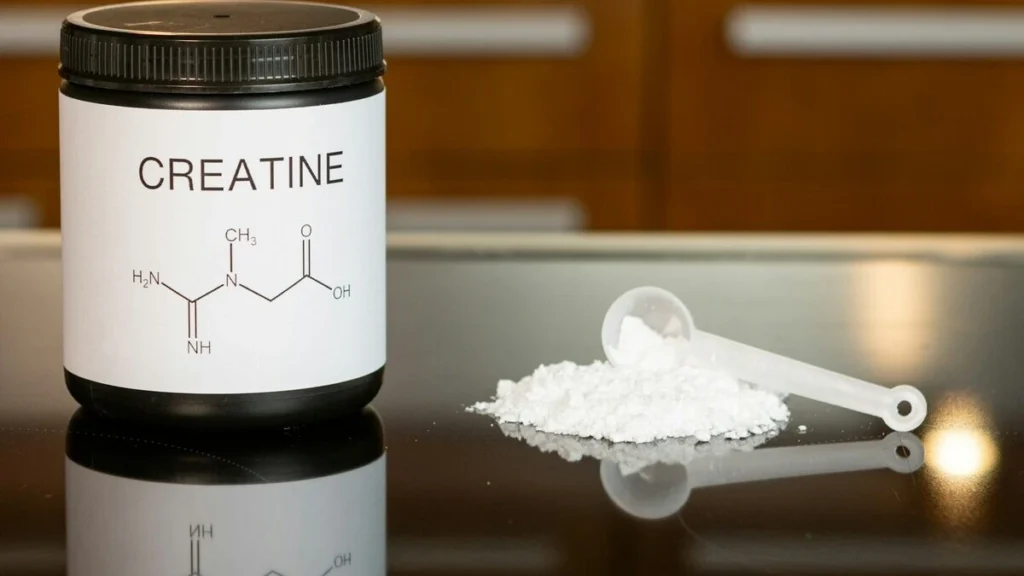
Most people think of creatine as something you find in a gym bag, tucked alongside protein powder and pre workout. It’s long had a reputation as a supplement for athletes chasing bigger muscles and faster recovery. But there’s a far more interesting story unfolding in the research, one that has neuroscientists genuinely paying attention. Creatine, it turns out, doesn’t just fuel your muscles. It fuels your brain, and the science behind how it does that is fascinating.
Your Brain Is an Energy Glutton (Why Brain Energy Matters More Than You Think)
Here’s something that often surprises people, your brain accounts for only about 2% of your body weight, yet it consumes roughly 20% of your body’s total energy supply. That demand doesn’t pause when you’re tired, stressed, or sleeping. It’s relentless. And the currency that powers almost every process inside your brain cells is adenosine triphosphate, ATP.
ATP is essentially the body’s rechargeable battery. When brain cells fire signals, maintain ion gradients, repair cellular damage, or produce neurotransmitters, they spend ATP rapidly. That demand is constant, and the brain has very little energy reserve to fall back on. The question is how quickly that ATP can be replenished. This is where creatine steps in. Through a process involving an enzyme called creatine kinase, creatine phosphate donates a phosphate group to ADP, spent ATP. converting it back into usable ATP almost instantly. Think of it as emergency power restoration in real time.
In muscles, this system is well established. But the same mechanism operates in neurons. Brain cells contain creatine kinase and express creatine transporters, which means they actively take up and use creatine to support this rapid energy buffering system. According to research published in the journal Neuroscience and Biobehavioral Reviews, the creatine-phosphocreatine system plays a critical role in maintaining neuronal energy homeostasis, particularly during periods of high cognitive demand or metabolic stress.
What Happens When Brain Energy Runs Low (Brain Fog Explained)
You’ve probably experienced what low brain energy feels like, that foggy, slow thinking, can’t-quite-form-a-sentence sensation that descends after a long day, a poor night’s sleep, or intense mental effort. This “brain fog” isn’t just in your head, it reflects real time energy strain inside neurons. What you’re partly experiencing is your neurons struggling to regenerate ATP fast enough to keep up with demand.
This isn’t just uncomfortable; over time, sustained neuroenergetic stress is linked to cognitive decline and may contribute to neurodegenerative conditions. A study published in Molecular and Cellular Biochemistry found that creatine supplementation helped preserve mitochondrial function in brain cells under metabolic stress, suggesting a neuroprotective role beyond simple energy top-ups. Mitochondria are the primary factories for ATP production, and keeping them functioning well is one of the most important things you can do for long-term brain health.
Creatine and Cognitive Performance: What the Research Shows
The evidence connecting creatine supplementation with cognitive performance has been building steadily, and it’s more compelling than most people realize.
A well cited study published in Psychopharmacology, led by researchers at the University of Sydney, found that participants who took creatine for six weeks showed significant improvements in working memory and processing speed compared to those on a placebo. Working memory, the mental workspace you use to hold and manipulate information in the moment. is deeply reliant on rapid ATP availability, which explains why creatine would have an impact there specifically.
What’s particularly interesting is that the effect appears strongest when the brain is under pressure. Researchers found that sleep deprived individuals who took creatine maintained better cognitive performance than their non-supplemented counterparts. A study in the journal Sleep found that creatine supplementation partially offset the effects of 24 hours of sleep deprivation on complex cognitive tasks. In other words, when your brain is stretched, creatine may help it cope more efficiently.
Creatine also seems to matter more for people with already low creatine stores. Vegetarians and vegans, for example, tend to have lower baseline creatine levels because the body synthesizes it from amino acids found in animal products. A study published in the British Journal of Nutrition found that vegetarians who supplemented with creatine experienced more pronounced improvements in memory and intelligence tests than meat eaters, whose levels were already higher. This suggests a simple principle: the lower your baseline, the more noticeable the benefit.
Mental Health, Ageing, and the Creatine Connection
The research doesn’t stop at cognition. There’s a growing body of work exploring creatine’s potential role in mood regulation and mental health. A study published in the American Journal of Psychiatry found that adolescent girls with major depressive disorder who took creatine alongside their antidepressant showed greater and faster improvements in depression scores than those on antidepressant alone. The proposed mechanism involves the brain’s energy metabolism being disrupted in depression, creatine may help restore some of that metabolic balance.
In older adults, the picture is equally interesting. Brain creatine levels naturally decline with age, which mirrors the decline in cognitive sharpness many people notice as they get older.
According to research in Neuropsychology Review, lower cerebral creatine concentrations have been associated with poorer cognitive outcomes in ageing populations. Supplementation in older adults has been shown to improve memory recall and reduce mental fatigue, making it a potentially useful tool for supporting healthy cognitive ageing.
Traumatic Brain Injury and Neuroprotection
Some of the most striking research comes from studies on traumatic brain injury. When the brain sustains a physical injury, energy demand spikes dramatically while ATP production is simultaneously compromised, a damaging combination. Animal studies have consistently shown that pre loading with creatine significantly reduces brain damage following head trauma, and early human research has suggested a similar protective effect. A study in the Annals of Neurology reported that children given creatine after traumatic brain injury experienced fewer complications, shorter hospital stays, and better long-term outcomes than untreated controls. While larger human trials are still needed, the neuroprotective signal here is difficult to ignore.
Should You Be Taking Creatine for Brain Health?
Creatine monohydrate is one of the most extensively studied supplements available, with a strong safety profile in healthy adults at standard doses of three to five grams per day. It’s inexpensive, widely available, and doesn’t require loading phases for most people, despite what older guidance suggested.
For practical use, consistency matters more than timing, taking it daily, with adequate hydration, is usually sufficient to support both muscle and brain energy systems.
As a pharmacist, I’d say the case for creatine has quietly shifted. It’s no longer purely a sports performance supplement. it’s a nutrient with broad physiological relevance, and the brain may be where some of its most meaningful benefits lie. If you’re vegetarian, regularly sleep-deprived, an older adult looking to support cognitive health, or simply someone who wants to give their brain cells a better energy supply, the evidence is worth taking seriously.
That said, individuals with kidney disease, those who are pregnant or breastfeeding, or anyone on long term medication should check with a healthcare professional before starting supplementation.
It won’t replace good sleep, a balanced diet, or regular exercise. But as an adjunct to those foundations, creatine’s role in brain energy metabolism makes it one of the more interesting conversations happening in nutritional neuroscience right now. And that conversation is only getting louder.
FAQs
Q1. Does creatine actually work for brain function, or is that just marketing?
It’s a fair question, and the honest answer is that the evidence is genuinely promising. Multiple independent studies, not industry-funded trials, have found measurable improvements in working memory, processing speed, and mental fatigue with creatine supplementation. The mechanism is well understood too. Because brain cells use the same creatine-phosphocreatine energy system as muscle cells, the cognitive benefits have a solid biological rationale behind them. It’s not marketing, it’s emerging neuroscience.
Q2. How much creatine do I need to take to support brain health?
Most of the research showing cognitive benefits has used doses of three to five grams of creatine monohydrate per day. This is the same dose used in sports performance studies and falls well within established safety guidelines. There’s no strong evidence that higher doses offer additional brain benefits, and there’s no need for a loading phase for general health purposes. Consistency matters more than quantity, daily supplementation over several weeks is when effects tend to become noticeable.
Q3. Are there any side effects of taking creatine regularly?
Creatine monohydrate is one of the most studied supplements in existence and has a well-established safety profile in healthy adults. The most commonly reported side effect is water retention in the early weeks, which reflects creatine drawing fluid into muscle cells rather than anything harmful. Some people report mild digestive discomfort when taking large doses on an empty stomach, splitting the dose or taking it with food usually resolves this. Creatine is not recommended for people with pre-existing kidney disease, and if you have any underlying health conditions, it’s worth checking with your health care provider or pharmacist before starting.
Q4. Who is most likely to benefit from creatine for brain health?
The research suggests the greatest benefits are seen in people with lower baseline creatine levels. Vegetarians and vegans fall into this group most clearly, as dietary creatine is found almost exclusively in animal products. Older adults, who experience a natural decline in brain creatine over time, are another group where supplementation may be particularly worthwhile. People who are regularly sleep deprived or under heavy cognitive load may also notice a meaningful difference. That said, even meat eaters have shown cognitive improvements in some studies, so it’s not exclusively a plant-based benefit.
Q5. Can creatine help with depression or low mood?
There is early but genuinely interesting research in this area. Some studies have explored creatine as an adjunct to antidepressant treatment, with findings suggesting it may enhance response, particularly in populations where brain energy metabolism appears disrupted, such as in major depressive disorder. However, this research is still developing, and creatine should never be used as a replacement for prescribed medication or professional mental health support. If you’re managing depression or anxiety, speak to your healthcare provider before adding any supplement to your routine.
Call to Action
If this article has made you think differently about creatine, you’re not alone. Most people are genuinely surprised to learn that a supplement so closely associated with gym culture has this much going on at the neurological level. At PharmaHealths, we make it our job to look past the labels and bring you the science that actually matters for your health, explained clearly, without the jargon.
Browse our evidence-based articles at pharmahealths.com, and if you found this useful, share it with someone who still thinks creatine is just for bodybuilders.
Disclaimer
The information provided in this article is intended for general educational purposes only and does not constitute medical advice. While every effort has been made to ensure accuracy and alignment with current evidence, this content should not be used as a substitute for professional medical guidance. If you are considering starting any new supplement, including creatine, please consult your healthcare provider. pharmacist, or a qualified healthcare professional, particularly if you have an existing medical condition, are pregnant or breastfeeding, or are taking prescribed medication. PharmaHealths is an informational resource and does not endorse any specific product or brand.
References
• Benton, D. and Donohoe, R. (2011). The influence of creatine supplementation on the cognitive functioning of vegetarians and omnivores. British Journal of Nutrition, 105(7), pp.1100–1105.
• Dolan, E. et al. (2019). A systematic risk assessment and meta-analysis on the use of oral creatine supplementation. Journal of Sports Medicine, 53(8), pp.1157–1168.
• Rae, C. et al. (2003). Oral creatine monohydrate supplementation improves brain performance: a double-blind, placebo-controlled, cross-over trial. Proceedings of the Royal Society B: Biological Sciences, 270(1529), pp.2147–2150.
• Lyoo, I.K. et al. (2012). A randomized, double-blind placebo-controlled trial of oral creatine monohydrate augmentation for enhanced response to a selective serotonin reuptake inhibitor in women with major depressive disorder. American Journal of Psychiatry, 169(9), pp.937–945.
• Watanabe, A., Kato, N. and Kato, T. (2002). Effects of creatine on mental fatigue and cerebral haemoglobin oxygenation. Neuroscience Research, 42(4), pp.279–285.
• Sakellaris, G. et al. (2006). Prevention of traumatic headache, dizziness and fatigue with creatine administration. Annals of Neurology, 58(5), pp.723–729.
• McMorris, T. et al. (2007). Creatine supplementation and cognitive performance following sleep deprivation. Sleep, 30(9), pp.1206–1212.
• Wyss, M. and Kaddurah-Daouk, R. (2000). Creatine and creatinine metabolism. Physiological Reviews, 80(3), pp.1107–1213.