


Written by Aisha Saleem, Pharmacist & Health Writer at https://pharmahealths.com/
Waking up with a sore throat and a pounding head can leave you wondering whether you’re dealing with a cold or the flu. Honestly, the two can feel confusingly similar at first. As a pharmacist, this is one of the questions I get asked most often at the counter, especially during the winter months when both illnesses circulate at the same time.
What’s the Actual Difference Between a Cold and the Flu?
A cold and the flu are two separate viral infections, not different stages of the same illness. According to the CDC, the common cold can be caused by a number of different viruses including rhinoviruses, parainfluenza, and seasonal coronaviruses, while flu is caused only by influenza viruses. Both attack your respiratory tract and both spread through coughs, sneezes, and contaminated surfaces, which is exactly why the symptoms overlap so much. The NHS notes that cold and flu symptoms are similar, but flu tends to be more severe. That single word, severe, is really the crux of how I explain the difference to patients.
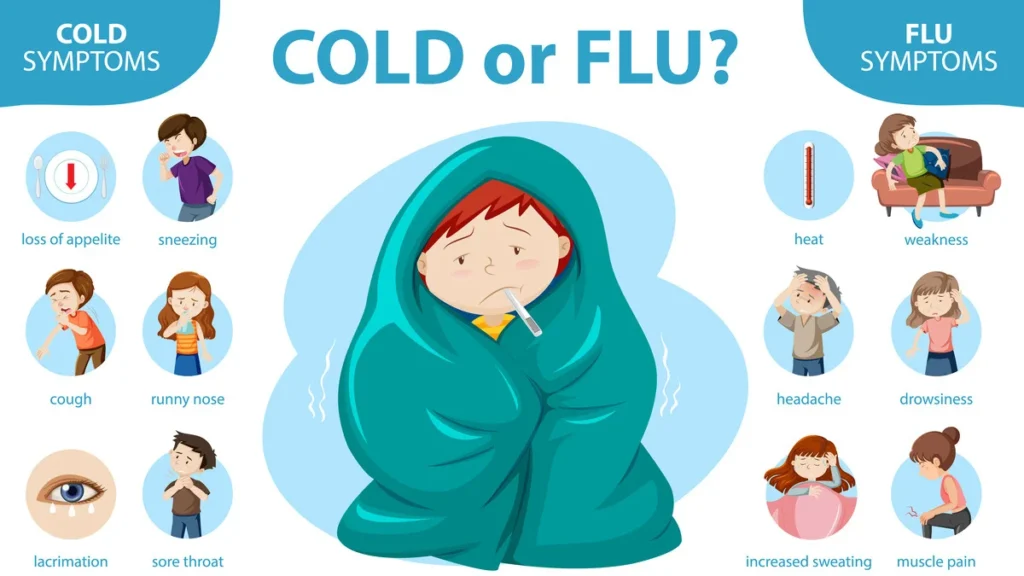
Cold vs Flu at a Glance
• Cold: gradual onset, mild symptoms, little to no fever
• Flu: sudden onset, higher fever, pronounced body aches, and fatigue
How Fast Do Symptoms Come on With Each?
Flu symptoms tend to hit within hours, while a cold builds up gradually over two to three days. Cleveland Clinic notes that flu often strikes without warning, leaving people feeling fine one day and unwell the next. That abrupt onset is one of the most reliable clues I look for. A cold, by contrast, usually starts with a scratchy throat or a bit of sniffling that slowly turns into full congestion over a couple of days. If you can pinpoint the exact moment, you started feeling unwell, flu becomes far more likely.
Is Fever the Best Way to Tell Cold from Flu?
Fever is one of the clearest distinguishing signs, though not a perfect one. The CDC lists fever or feeling feverish as a hallmark flu symptom, whereas a true cold rarely pushes your temperature much above a low-grade reading. That said, some colds in children do come with a mild fever, so I never rely on this sign alone. If your temperature climbs quickly and you’re shivering or sweating through the night, that points toward flu rather than a simple cold.
Do Body Aches Mean I Have the Flu?
Widespread muscle and joint aches are far more typical of flu than of a cold. With a cold, discomfort tends to stay localized to your nose, throat, and sinuses. Flu, on the other hand, often leaves your whole body feeling heavy and sore, sometimes described by patients as feeling bruised all over. This is one of the questions I hear most from people trying to work out whether they can push through a workday or whether they genuinely need to stay in bed.
How Long Should a Cold or the Flu Last?
A cold usually resolves within seven to ten days, while flu symptoms can persist for one to two weeks, with fatigue sometimes lingering afterward. The NHS advises that most cold and flu symptoms should clear up within around ten days. If your symptoms haven’t budged after that window, or if they suddenly worsen after initially improving, it’s worth getting checked rather than assuming it’s just a stubborn cold.
When Should I See a doctor or Pharmacist?
You should seek medical advice if you develop difficulty breathing, chest pain, a fever that won’t come down, or symptoms that improve and then sharply return. This last pattern, sometimes called a “second wave,” can signal a secondary bacterial infection layered on top of the original virus. People with asthma, heart disease, diabetes, or who are pregnant, very young, or over 65 should have a lower threshold for seeking help, since flu carries a higher risk of complications like pneumonia in these groups.
Can I Have Both a Cold and the Flu at the Same Time?
Yes, it’s possible to be infected with more than one respiratory virus at once, though it’s uncommon. Co infections tend to produce a longer, messier illness with an unpredictable mix of symptoms, which is part of why doctors sometimes recommend a flu test rather than relying on symptoms alone. As a pharmacist, my honest advice is that if you’re ever truly unsure and you’re in a higher risk group, testing removes the guesswork.
At the end of the day, focus on three key clues: how fast symptoms started, how high the fever is, and how severe the body aches feel. These are your strongest signals that you’re dealing with flu rather than a cold. Either way, rest, fluids, and paying attention to warning signs will help your body recover more smoothly.
FAQs
Q1: What’s the difference between a cold and the flu?
A cold and the flu are caused by different viruses. Colds develop gradually and stay mild, while flu comes on suddenly with fever, body aches, and more intense fatigue.
Q2: How can I tell between a common cold and the flu without a test?
Look at speed of onset and severity. A cold creeps in over a couple of days, while flu symptoms, especially fever and aches, arrive within hours and hit much harder.
Q3: How do I know if it’s a cold or the flu?
Track how quickly symptoms appeared and whether you have a fever with body aches. Sudden, severe symptoms point to flu; gradual, milder ones point to a cold.
Q4: What are the first signs of flu vs cold?
Flu often starts with a sudden fever, chills, and aching muscles. A cold typically starts with a scratchy throat or sneezing that slowly worsens.
Q5: Can you have the flu without upper respiratory symptoms?
Yes, Some people with flu experience fever, aches, and fatigue with only mild nasal symptoms, particularly in the first day or two of illness.
Q6: Can I have a cold and the flu at the same time?
Yes, It’s possible, though uncommon. A co infection usually causes a longer and more unpredictable illness, which is one reason a flu test can be helpful if you’re unsure.
Q7: Do I need a flu test to know for sure?
Not always, but a test is useful if you’re in a high-risk group or if antiviral treatment might be appropriate, since antivirals work best when started early.
Q8: Is it normal for flu symptoms to come back after they seem to be improving?
Yes. This can happen and may signal a secondary bacterial infection such as a sinus or chest infection. If your symptoms return or worsen after initially improving, it’s worth seeing a doctor.
A Note from Me
I know how unsettling it can be to feel rough and not know what you’re actually dealing with. If this has helped you make sense of your symptoms, I’d love for you to explore more of my guides on managing seasonal illness and knowing when home care is enough over on https://pharmahealths.com/.
Disclaimer
This article is for informational purposes only and does not replace personalized medical advice. Please consult your doctor or pharmacist for diagnosis and treatment appropriate to your individual health situation.
References
• NHS — Flu (UK clinical guidance on symptoms and recovery)
• Centers for Disease Control and Prevention (CDC) — Cold Versus Flu (Key symptom differences and severity)
• Centers for Disease Control and Prevention (CDC) — Signs and Symptoms of Flu (Clinical presentation and warning signs)
• Cleveland Clinic — Cold or Flu? How To Tell the Difference (Expert clinical explanation)