


Written by Aisha Saleem, Pharmacist & Health Writer at https://pharmahealths.com/
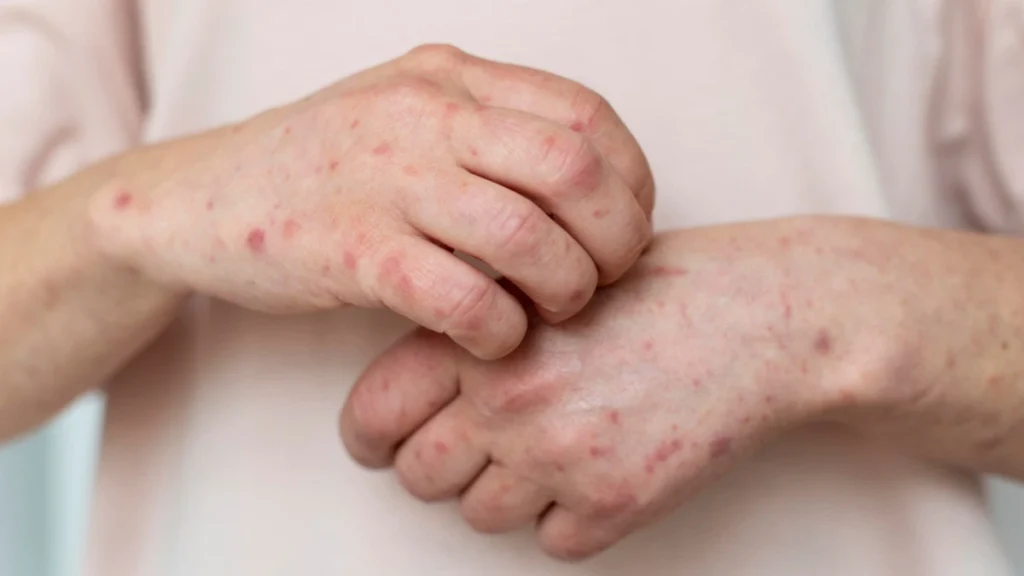
One of the most common skin mix-ups I see at the pharmacy involves patients who’ve been applying antifungal cream to what turns out to be psoriasis, or vice versa. Both conditions can produce red, scaly, itchy patches that look remarkably similar, especially in the early stages, and getting the diagnosis wrong doesn’t just mean ineffective treatment. Using the wrong treatment can actually make the condition worse and delay proper healing If you’re staring at a scaly patch wondering whether it’s psoriasis or a fungal infection, this guide will walk you through the key differences and explain exactly when you need a professional diagnosis rather than a pharmacy shelf product.
What Is the Core Difference Between Psoriasis and a Fungal Skin Infection?
Psoriasis is a chronic autoimmune condition in which the immune system drives abnormally rapid skin cell turnover, producing thick, raised, scaly plaques that can persist for weeks, months, or years. A fungal skin infection, by contrast, is caused by an external organism, dermatophyte fungi in the case of ringworm (tinea corporis), and is an infection that can be cured with the right antifungal treatment. According to the National Psoriasis Foundation, psoriasis is not contagious and cannot be passed between people, whereas fungal infections like ringworm are highly contagious and spread through direct contact with infected people, animals, or surfaces.
This single difference in origin, immune dysfunction versus external infection, is what drives everything else: why the two conditions look different as they progress, why they respond to completely different treatments, and why using the wrong one can cause real harm.
What Does Ringworm Actually Look Like Compared to Psoriasis?
Ringworm gets its name from its appearance, not from any actual worm. It presents as a circular or ring-shaped rash with a raised, scaly, sometimes blistered outer edge and a clearer center, and it tends to spread outward over days to weeks as the infection progresses. On darker skin tones, the rash may appear brown, grey, or purple rather than the classic red. The American Academy of Dermatology notes that ringworm patches typically have a well-defined raised border that distinguishes them from the surrounding skin, and this ring shape, particularly the clearer center, is one of the most reliable visual clues.
Psoriasis plaques look different. They are raised, thickened patches covered across their entire surface with silvery or white scale, not just around the edges. The scale sits on top of the plaque rather than forming a ring border, and the plaques tend to have a consistent texture throughout. Research published in the Journal of the American Academy of Dermatology has noted that psoriasis plaques are particularly likely to appear on the elbows, knees, scalp, and lower back, and they typically follow a relapsing and remitting pattern over years rather than spreading outward rapidly over days as ringworm does.
Why Are Psoriasis and Fungal Infections So Easily Confused?
Despite the differences in appearance as each condition matures, early ringworm and early psoriasis can look almost identical, particularly before ringworm has developed its characteristic ring shape. Both cause red, scaly, itchy skin, both can appear on the trunk, arms, and legs, and both can affect the scalp and nails. Research reviewed by My Psoriasis Team found that misdiagnosis between the two is genuinely common, even among healthcare providers, with some patients going years before receiving a confirmed psoriasis diagnosis after being repeatedly treated for ringworm. One scenario that creates particular confusion is inverse psoriasis, which develops in warm, moist skin folds including the armpits, groin, and under the breasts, exactly the same environments where fungal infections like jock itch thrive.
The British Journal of Dermatology (has noted that inverse psoriasis in skin folds often lacks the typical silvery scale seen in plaque psoriasis, presenting instead as smooth, shiny, well defined red patches that can closely mimic a fungal intertrigo or jock itch rash. In these cases, the distinction requires either clinical expertise or laboratory testing rather than visual assessment alone.
What Happens If You Use Antifungal Cream on Psoriasis?
Using antifungal cream on psoriasis is unlikely to cause severe harm, but it will not help and may irritate the skin. In many cases, people continue using it for weeks without improvement, which delays the correct diagnosis More importantly, the risk runs the other way too. Using topical corticosteroids, the standard first-line treatment for psoriasis, on an undiagnosed fungal infection can make the fungal infection significantly worse. Steroids suppress the local immune response that the body uses to control fungal organisms, which can allow the infection to spread more rapidly and become harder to treat. According to the Centers for Disease Control and Prevention, ringworm treated incorrectly with steroid creams can produce what is sometimes called tinea incognito, a masked fungal infection that spreads widely and becomes difficult to recognize or treat.
This is why getting the diagnosis right before reaching for any treatment matters more than most people realize.
How Do Doctors Diagnose Psoriasis vs a Fungal Infection?
Doctors have several reliable tools for distinguishing between the two. A KOH test, in which a skin scraping is examined under a microscope after treatment with potassium hydroxide, can rapidly confirm the presence of fungal elements and is often done during a routine clinic visit. A Wood’s lamp examination uses ultraviolet light to detect certain fungal organisms that fluoresce under this light. A skin biopsy, in which a small piece of skin is removed and examined histologically, can confirm psoriasis when the clinical picture is unclear.
The National Psoriasis Foundation emphasizes that psoriasis is typically diagnosed clinically based on the characteristic pattern of plaques, family history of psoriasis or autoimmune conditions, the presence of nail changes like pitting or separation from the nail bed, and the absence of a positive fungal test. Nail changes and joint symptoms in particular are strong pointers toward psoriasis rather than a fungal condition.
Can You Have Psoriasis and a Fungal Infection at the Same Time?
Yes, and this is more common than many people expect. Patients with psoriasis have a disrupted skin barrier and are often on treatments that modulate their immune response, both of which can increase susceptibility to secondary fungal infections. The challenge when both are present is that treatment needs to address both conditions in the right order. Treating the fungal infection first is important before starting or continuing steroid therapy for psoriasis, since applying steroids to an active fungal infection will worsen it regardless of how well controlled the psoriasis is.
If you’re on a biologic like Cosentyx (secukinumab) for psoriasis and develop what looks like a new or unusual skin rash, it’s worth knowing that IL-17 inhibitors specifically carry a recognized increased risk of mucocutaneous candidiasis, a type of fungal infection, as I covered in the Cosentyx guide on PharmaHealths.com.
When Should You See a Dermatologist Rather Than Treat at Home?
See a dermatologist if your rash has not responded to two weeks of over-the-counter antifungal treatment, if it is spreading despite treatment, if you have a personal or family history of psoriasis, if your nails are showing changes like pitting or thickening, if your joints are painful or swollen alongside the skin rash, or if the rash is in a skin fold and you are unsure whether it is psoriasis or a fungal infection. A dermatologist can confirm the diagnosis quickly with a skin scraping or clinical assessment and get you onto the right treatment, preventing weeks or months of ineffective self-treatment.
The Bottom Line
Psoriasis and fungal skin infections can look deceptively similar, especially early on, but they have fundamentally different causes and require completely opposite treatments. Getting the diagnosis right is not just about matching the right cream to the right condition. It is about avoiding unnecessary worsening of symptoms and getting the right treatment early. If you’re uncertain, a dermatology appointment is always the right move.
FAQs
Q1: How can you tell the difference between psoriasis and ringworm?
Ringworm typically appears as a circular rash with a raised, scaly outer edge and a clearer center, spreading outward over days. Psoriasis produces thick, silvery-scaled plaques that cover the whole patch rather than just the border, follow a relapsing pattern over months or years, and are not contagious. If you’re unsure, a dermatologist can confirm the diagnosis with a skin scraping or KOH test.
Q2: Is psoriasis caused by a fungal infection?
No, Psoriasis is an autoimmune condition caused by immune system dysfunction that drives rapid skin cell turnover. It has no fungal cause and cannot be treated with antifungal medication.
Q3: Will antifungal cream make psoriasis worse?
Antifungal cream is unlikely to significantly worsen psoriasis, but it will have no therapeutic effect. The more important risk runs in the other direction: using steroid creams on an undiagnosed fungal infection can suppress the immune response and allow the fungal infection to spread widely, a condition known as tinea incognito.
Q4: Can psoriasis be mistaken for ringworm by a doctor?
Yes, Misdiagnosis between psoriasis and ringworm is well documented, particularly in early stages before ringworm has developed its characteristic ring shape, and in inverse psoriasis affecting skin folds where both conditions look similar. A skin scraping, KOH test, or skin biopsy can confirm the correct diagnosis.
Q5: Can you have psoriasis and a fungal infection at the same time?
Yes, Patients with psoriasis have a disrupted skin barrier and altered immune function that can increase susceptibility to secondary fungal infections. When both are present, the fungal infection should be treated first before resuming steroid therapy for psoriasis, since steroids applied to an active fungal infection will worsen it.
Q6: What is inverse psoriasis and why is it confused with fungal infections?
Inverse psoriasis develops in warm, moist skin folds including the groin, armpits, and under the breasts. Unlike typical plaque psoriasis, it often lacks silvery scale and presents as smooth, shiny red patches, closely mimicking fungal infections like jock itch that thrive in the same environments. Clinical examination or a KOH skin scraping test is often needed to distinguish between them.
Q7: How do doctors test for fungal infection vs psoriasis?
Doctors use a KOH test, examining a skin scraping under a microscope to detect fungal elements, a Wood’s lamp examination, or a skin biopsy to confirm psoriasis histologically. In most cases, a KOH test can be done quickly during a routine clinic visit.
Q8: Is ringworm contagious but psoriasis not?
Yes, Ringworm is highly contagious and spreads through direct contact with infected people, animals, or contaminated surfaces, with fungal spores remaining contagious for up to eighteen months. Psoriasis is not contagious in any way and cannot be passed between people.
Call to Action
If this article helped you understand the difference between psoriasis and a fungal skin infection, I have covered psoriasis symptoms and stages in depth on PharmaHealths.com, alongside a full series on biologic treatments including Cosentyx, Skyrizi, and Taltz for moderate to severe disease. Head over to PharmaHealths.com to explore the full psoriasis series and find the information you need to have a more informed conversation with your dermatologist.
Disclaimer
This article is for general informational purposes only and is not a substitute for professional medical advice, diagnosis, or treatment. Always consult your doctor, dermatologist, or pharmacist before starting, stopping, or changing any treatment.
References
• National Psoriasis Foundation
• American Academy of Dermatology
• Journal of the American Academy of Dermatology
• British Journal of Dermatology
• Centers for Disease Control and Prevention