


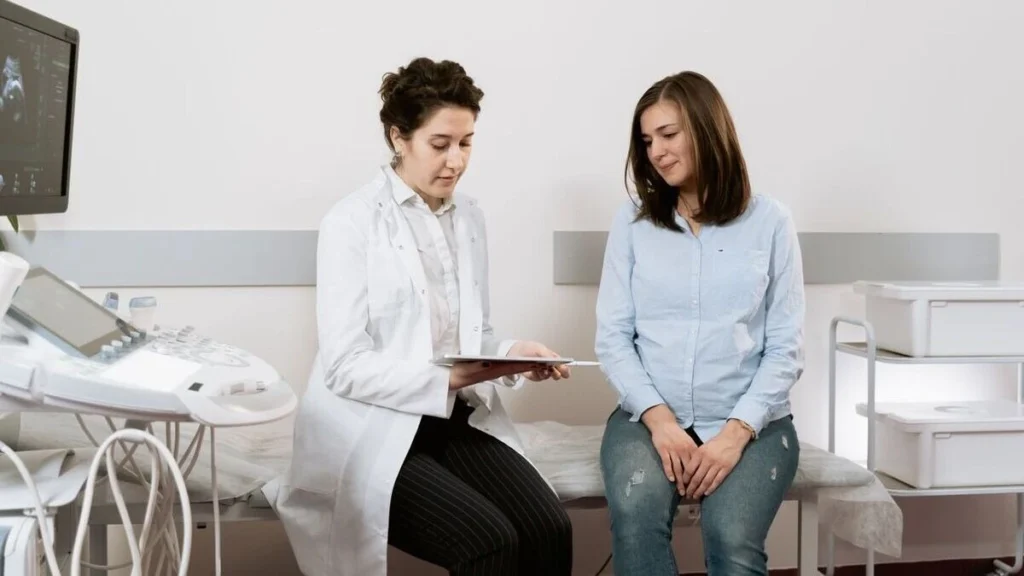
If you’ve been told you have uterine fibroids, or you’re living with the heavy periods, pelvic pressure, and exhaustion that often come with them, you’ve probably wondered what’s driving them. Genetics gets mentioned. Oestrogen gets mentioned. But one factor that rarely comes up in a routine healthcare provider conversation, and arguably should, is your vitamin D level.
The evidence connecting low vitamin D to fibroid growth has been building for years, and it’s now strong enough that researchers are calling vitamin D deficiency a genuine modifiable risk factor for uterine fibroids. That’s significant, because unlike your age or your family history, your vitamin D level is something you can actually do something about.
Let me walk you through what’s happening inside the body when vitamin D levels fall too low, and why it matters so much for your uterine and ovarian health.
What Vitamin D Actually Does in the Body
Most people still think of vitamin D as a bone nutrient something you take in winter to avoid feeling run down. In reality, vitamin D behaves more like a hormone than a vitamin. It has receptors in tissues throughout the body, including the uterus, the ovaries, and the smooth muscle cells of the myometrium, the very tissue where fibroids form.
When vitamin D levels are adequate, it helps regulate cell growth, reduce inflammation, and keep growth-promoting pathways in check. When levels fall, which is common in many populations due to limited sun exposure, indoor lifestyles, or dietary gaps, this protective effect weakens. As a result, the uterine environment may shift in ways that support the development and growth of fibroids.
The Fibroid Vitamin D Connection (What the Research Shows)
The numbers here are hard to ignore. Research published in Fertility and Sterility found that women with uterine fibroids had significantly lower vitamin D levels compared to age matched controls, averaging around 11.4 ng/mL versus 17.5 ng/mL in women without fibroids.
Importantly, this isn’t limited to a single population. The same inverse relationship, lower vitamin D levels associated with higher fibroid risk, has been observed across diverse groups, including African American, Chinese, Iranian, Turkish, Nigerian, and European populations. This consistency across different genetic and environmental backgrounds strengthens the biological relevance of the link.
A 2026 study in Frontiers in Global Women’s Health extended these findings by identifying a specific threshold for fibroid risk. Women with serum vitamin D levels below 14.34 ng/mL were more likely to have asymptomatic fibroids, those that often go undetected. Notably, this cutoff is higher than the 12 ng/mL level commonly used to define deficiency for bone health, suggesting that current standards may overlook women at reproductive risk.
Beyond incidence, vitamin D status also appears to influence fibroid behavior. Prospective ultrasound data show that women with sufficient vitamin D levels tend to have slower fibroid growth and, in some cases, regression over time, compared to those who remain deficient
Why Deficiency Allows Fibroids to Grow: The Mechanisms
This isn’t just a statistical association, there are real, well understood biological reasons why low vitamin D creates a more favorable environment for fibroids.
The first involves cell proliferation. Fibroid cells carry a receptor specifically designed to bind vitamin D, the vitamin D receptor, or VDR. Research has consistently shown that fibroid tissue expresses lower levels of this receptor than normal uterine tissue, and when vitamin D binds to it, it puts the brakes on cell growth. It does this by down regulating proteins like PCNA, CDK1, and BCL-2, which are essentially the molecular machinery that drives cells to keep dividing. Without adequate vitamin D to activate this pathway, fibroid cells are left to proliferate more freely.
The second mechanism involves a protein called TGF-β3, transforming growth factor beta-3. This is one of the key drivers of fibrosis inside fibroid tissue, meaning it’s responsible for the dense, collagen rich extracellular matrix that makes fibroids so resistant to normal tissue remodeling. Studies have shown that vitamin D directly suppresses TGF-β3 activity in human leiomyoma cells. When vitamin D levels are low, TGF-β3 goes unchecked, fibrosis accelerates, and fibroid tissue accumulates more rapidly.
The third involves the Wnt/β-catenin signaling pathway, which regulates how cells migrate, divide, and grow. A Johns Hopkins systematic review confirmed that vitamin D receptor activation suppresses Wnt-related gene expression in fibroid cells, and that this anti proliferative effect holds true regardless of the genetic subtype of fibroid involved, including those carrying the commonly mutated MED12 gene. Remove the vitamin D, and this signaling pathway runs hotter than it should.
There’s also a hormonal angle. Animal studies have found that vitamin D deficiency in uterine tissue is associated with upregulated oestrogen and progesterone receptors, meaning fibroid cells become more sensitive to the very hormones that drive their growth. This creates a compounding effect: low vitamin D doesn’t just allow fibroid cells to proliferate; it also makes them more responsive to oestrogen (estrogen) stimulation.
What About the Ovaries?
The story doesn’t stop at the uterus. Vitamin D deficiency has also been consistently linked to polycystic ovary syndrome (PCOS), one of the most prevalent hormonal conditions affecting women of reproductive age.
Research has found that vitamin D plays an active role in ovarian function, including follicle development, ovulation, and the regulation of anti Müllerian hormone (AMH), which reflects ovarian reserve. Studies show that vitamin D levels correlate positively with AMH, and that deficiency is associated with irregular cycles, anovulation, and impaired follicular development.
In women with PCOS, the picture becomes particularly complicated. Studies show that upwards of 84% of women with PCOS are vitamin D deficient, a rate far higher than in the general population. And it’s not just a coincidence of lifestyle. In those women, low vitamin D is associated with higher levels of testosterone, DHEAS, and LH, the hormonal markers that drive the worst symptoms of PCOS. One study found that women with PCOS who were vitamin D deficient had significantly higher androgen levels than those with PCOS but normal vitamin D, pointing to a direct relationship between the deficiency and hormonal dysregulation.
Part of this is driven by the interaction between vitamin D, insulin resistance, and adipose tissue. Excess body fat sequesters vitamin D, reducing its availability, while insulin resistance simultaneously drives the ovaries to produce more androgens. Low vitamin D may worsen insulin resistance, which in turn worsens androgen excess, which in turn worsens ovarian dysfunction, a cycle that is difficult to break without addressing all the components.
What This Means Practically
In many parts of the world, vitamin D deficiency is surprisingly common. Limited sun exposure, indoor lifestyles, skin coverage, and low dietary intake all contribute to suboptimal levels across diverse populations. General health guidelines often recommend a daily intake of around 10 micrograms (400 IU), particularly during periods of low sunlight or for individuals at higher risk of deficiency.
For women with fibroids or PCOS, or those with a higher risk due to family history or background, it’s worth discussing vitamin D testing with a healthcare professional. A simple blood test can provide clarity, and if levels are low, supplementation is widely available, safe, and relatively affordable.
It’s also important to keep expectations realistic. While the evidence supporting vitamin D as a protective factor is strong, it is not a standalone treatment for fibroids or PCOS. Its benefits are most meaningful when combined with a broader strategy that includes weight management, metabolic health, and hormonal balance.
That said, from a clinical perspective, vitamin D remains one of the most under recognized and underutilized tools in women’s reproductive health. The biological rationale is well established, the evidence base continues to grow, and the intervention itself is simple, safe, and accessible, especially in environments where consistent sun exposure cannot be relied upon year-round.
FAQs
Q1. Can low vitamin D cause fibroids to develop from scratch, or does it only make existing ones worse?
Both, potentially. Research suggests that low vitamin D creates conditions that make fibroid development more likely in the first place, by removing the anti-proliferative controls that would normally keep uterine smooth muscle cells in check. It also appears to accelerate growth in fibroids that have already formed. A five-year prospective study found that women with sufficient vitamin D levels had slower fibroid growth and were more likely to experience fibroid regression, meaning that maintaining healthy levels may matter both before and after fibroids appear.
Q2. What vitamin D level should I aim for to support reproductive health?
Most clinical guidelines define vitamin D deficiency as a serum 25-hydroxyvitamin D level below 25 nmol/L (approximately 10 ng/mL), with levels between 25 and 50 nmol/L considered insufficient.
However, emerging research focusing specifically on fibroid risk suggests that higher levels may be more protective. One study identified a threshold of 14.34 ng/mL as the point below which the risk of developing fibroids increased slightly above traditional deficiency cutoffs used for bone health.
For overall health, including reproductive wellbeing, many specialists consider levels of 50 nmol/L (20 ng/mL) or higher to be a reasonable target.
If you have fibroids, PCOS, or risk factors such as limited sun exposure or a family history, it’s worth discussing vitamin D testing with a healthcare professional. A simple blood test can help guide whether supplementation is needed.
Q3. Does vitamin D supplementation actually shrink fibroids?
The evidence here is promising but still developing. Some clinical trials have shown that vitamin D supplementation in deficient women led to a reduction in fibroid size over time. A double-blind trial involving women with uterine leiomyomas and confirmed vitamin D deficiency found measurable reductions in fibroid volume following supplementation. However, not all clinical studies have shown the same degree of benefit, and researchers are calling for larger randomized controlled trials before firm clinical recommendations can be made. What is well established is that vitamin D inhibits fibroid cell proliferation and fibrosis in laboratory studies, the clinical picture is catching up.
Q4. Can vitamin D deficiency affect my fertility?
Yes, it can. Vitamin D plays a direct role in ovarian function, including follicle development and ovulation. Studies have shown that deficient women with PCOS have higher androgen levels and more pronounced ovulatory dysfunction than those with adequate levels. There is also evidence that vitamin D correlates positively with anti Müllerian hormone (AMH), a key marker of ovarian reserve. Addressing deficiency as part of a broader fertility-supportive approach is something worth discussing with your healthcare provider or a reproductive specialist.
Q5. Which women are most at risk of vitamin D deficiency affecting their uterine health?
Women with darker skin tones are at higher risk because melanin reduces the skin’s ability to synthesize vitamin D from sunlight. Women who are rarely outdoors, those who cover most of their skin, those with higher body weight, and individuals living in regions with limited sunlight are also at elevated risk.
Research consistently shows that Black and South Asian women have higher rates of vitamin D deficiency and also experience a greater burden of uterine fibroids. While this relationship is multifactorial, addressing vitamin D deficiency may be one meaningful and modifiable factor that can help reduce this disparity.
Q6. Is a 10-mcg daily vitamin D supplement enough for women with fibroids or PCOS?
A daily intake of around 10 micrograms (400 IU) is commonly used as a general maintenance dose to prevent deficiency in the wider adult population. However, for women who are clinically deficient, particularly those with fibroids, PCOS, or other reproductive health concerns, this amount may not be sufficient to restore optimal levels.
In such cases, healthcare professionals may recommend a higher, short term therapeutic dose followed by a maintenance dose once blood levels improve. The exact dose should be guided by a blood test and individual risk factors.
It is important to avoid self-prescribing high dose vitamin D long term, as excessive intake can lead to toxicity, even though this is uncommon. A personalized approach under medical guidance is the safest and most effective strategy.
Call to Action
If this article has made you think about your own vitamin D levels, the first step is simple, ask your healthcare provider for a blood test. It’s quick, straightforward, and gives you real information to work with rather than guesswork.
Speak to your pharmacist about which form and dose is right for you, vitamin D3 (cholecalciferol) is generally considered the more effective form for raising serum levels.
And if you found this article useful, share it with someone who might need it. Women’s reproductive health conditions like fibroids and PCOS are still widely underdiagnosed and underdiscussed. and sometimes, the most useful thing is simply knowing what questions to ask.
Disclaimer
This article has been written for general informational purposes only and is not intended to replace professional medical advice, diagnosis, or treatment. The information provided reflects current research evidence, but individual circumstances vary. If you have concerns about uterine fibroids, PCOS, vitamin D deficiency, or any aspect of your reproductive or general health, please consult your GP, pharmacist, or a qualified healthcare professional. Do not begin, change, or stop any supplementation or treatment without seeking personalized medical advice.
References
• Tang N, Li H, Luo C, et al. Serum vitamin D as a novel biomarker for asymptomatic uterine fibroids: re-evaluating the risk threshold for incident fibroid development. Frontiers in Global Women’s Health. 2025.
• Combs A, Singh B, Nylander E, et al. A systematic review of vitamin D and fibroids: pathophysiology, prevention, and treatment. Reproductive Sciences. 2023;30(4):1049–1064.
• Corachán A, Ferrero H, Escrig J, et al. Long-term vitamin D treatment decreases human uterine leiomyoma size in a xenograft animal model. Fertility and Sterility. 2020.
• Hajhashemi M, Ansari M, Haghollahi F, Eslami B. The effect of vitamin D supplementation on the size of uterine leiomyoma in women with vitamin D deficiency. Journal of Research in Medical Sciences. 2019.
• Harmon QE, Patchel SA, Denslow S, et al. Vitamin D and uterine fibroid growth, incidence, and loss: a prospective ultrasound study. Fertility and Sterility. 2022; 118:1127–1136.
• Sabry M, Halder SK, Allah AS, et al. Serum vitamin D3 level inversely correlates with uterine fibroid volume in different ethnic groups: a cross-sectional observational study. International Journal of Women’s Health. 2013; 5:93–100.
• Ciebiera M, Zgliczyński S, et al. Vitamin D and uterine fibroids: insights into pathophysiology and therapeutic potential. Endocrine Reviews. 2026.
• Muscogiuri G, Altieri B, de Angelis C, et al. Vitamin D deficiency and polycystic ovary syndrome: an opinion and positioning article. Nutrients. 2022.
• Unluturk U, Yildiz BO. The relationship between vitamin D deficiency and polycystic ovary syndrome. PMC/NCBI. 2021