


Written by Aisha Saleem, Pharmacist & Health Writer at PharmaHealths.com
If your eczema keeps coming back despite treatment, the problem may not be the treatment, it may be the type. One of the most common misconceptions I encounter is that eczema is a single condition. Patients come in describing itchy, inflamed skin and assume they have “eczema,” not realizing that eczema is actually an umbrella term covering several distinct conditions that look similar but have different causes, triggers, and treatment approaches. Getting the type right matters enormously, because treating atopic dermatitis the same way you’d treat contact dermatitis, or confusing seborrhoeic dermatitis with atopic eczema, can leave patients cycling through ineffective treatments for years.
What Is Eczema and How Many Types Are There?
Eczema is a broad term describing a group of chronic inflammatory skin conditions that share common features including itching, redness, and skin barrier disruption, but differ significantly in their underlying causes and patterns of presentation. According to the National Eczema Association, the main types of eczema include atopic dermatitis, contact dermatitis, seborrhoeic dermatitis, dyshidrotic eczema, nummular eczema, and neurodermatitis, with atopic dermatitis being the most common and most extensively studied of the group.
Understanding which type you have is the starting point for effective management, because the right diagnosis determines whether treatment will actually work or continue to fall short.
What Is Atopic Dermatitis and What Causes It?
Atopic dermatitis is the most common form of eczema and is driven by a combination of genetic skin barrier dysfunction and an overactive immune response involving the IL-4 and IL-13 inflammatory pathways. It is atopic, meaning it is associated with a tendency toward allergic conditions including asthma, hay fever, and food allergies, and it commonly presents alongside one or more of these conditions in the same individual.
Research published in the Journal of Allergy and Clinical Immunology has established that atopic dermatitis begins with a defect in the filaggrin protein, which is essential for maintaining the skin’s protective barrier. When this barrier is compromised, allergens and irritants penetrate more easily, triggering the immune response that produces the characteristic itch, redness, and inflammation. According to the National Eczema Association, atopic dermatitis affects up to twenty percent of children and around three percent of adults worldwide, making it one of the most prevalent chronic skin conditions globally.
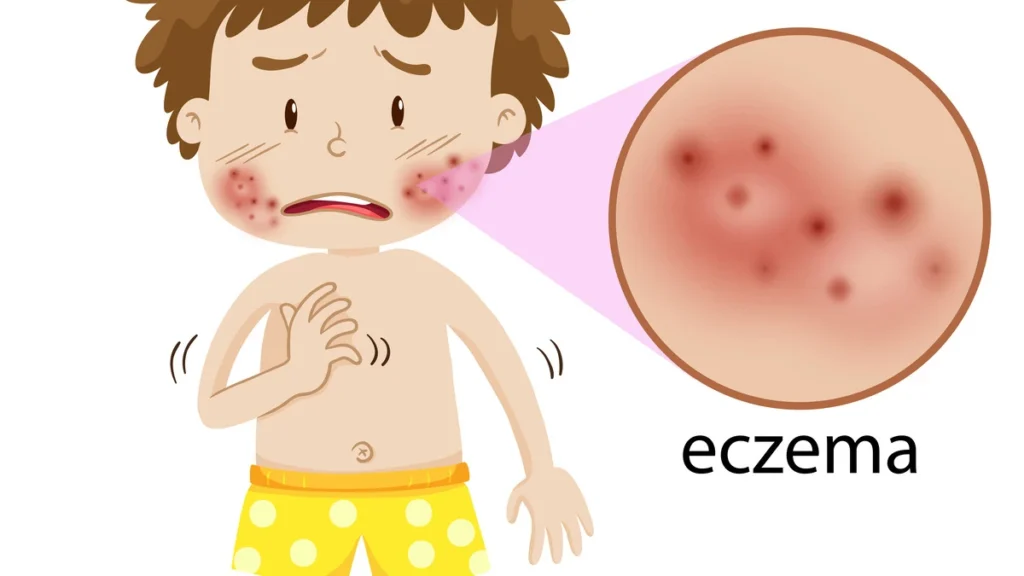
Atopic dermatitis typically presents as intensely itchy, ill-defined patches of dry, inflamed skin appearing in the creases of the elbows and knees, the neck, wrists, and face, particularly in children. In adults, it often presents more diffusely, sometimes affecting the hands, feet, and eyelids prominently. The condition follows a relapsing and remitting pattern, with periods of relative calm interrupted by flares triggered by stress, sweat, heat, allergens, or infections.
What Is Contact Dermatitis and How Does It Differ from Atopic Dermatitis?
Contact dermatitis is an inflammatory skin reaction caused by direct exposure to an external substance, rather than by an internal immune dysregulation as in atopic dermatitis. It presents as red, itchy, sometimes blistered or weepy skin at the site of contact with the triggering substance, and it resolves when that substance is identified and avoided.
There are two distinct subtypes of contact dermatitis. Irritant contact dermatitis is the more common of the two and occurs when a substance directly damages the skin barrier without involving the immune system, through repeated exposure to soaps, detergents, cleaning products, or water. Allergic contact dermatitis involves a specific immune reaction to an allergen, with common culprits including nickel in jewelry, fragrances, preservatives in cosmetics, rubber latex, and certain plants. A review published in the British Journal of Dermatology noted that allergic contact dermatitis requires prior sensitization, meaning the reaction develops after repeated exposure to the allergen rather than on first contact.
The key practical difference lies in pattern and persistence. Contact dermatitis appears where the triggering substance touches the skin, making its distribution a diagnostic clue. Atopic dermatitis follows a more predictable anatomical pattern related to skin creases and has a lifelong, relapsing course rather than resolving with allergen avoidance.
How Is Each Type of Eczema Diagnosed?
Atopic dermatitis is typically diagnosed clinically based on the characteristic pattern of symptoms, personal or family history of atopic conditions, and age of onset. There is no single definitive test, though raised IgE levels and positive allergy testing can support the diagnosis in some cases.
Contact dermatitis diagnosis, particularly allergic contact dermatitis, often involves patch testing, a standardized diagnostic procedure in which small amounts of common allergens are applied to the skin under occlusion for forty-eight hours to identify specific sensitivities. Research published in Contact Dermatitis journal has demonstrated that patch testing significantly improves management outcomes by allowing targeted allergen avoidance rather than broad lifestyle restrictions.
What Are the Other Types of Eczema Worth Knowing About?
Beyond atopic and contact dermatitis, several other eczema types are clinically relevant.
Seborrhoeic dermatitis affects oily areas of the skin including the scalp, face, and chest, producing greasy yellowish scales rather than the dry, silvery plaques of psoriasis or the classic eczema pattern. It is associated with a yeast called Malassezia and is treated with antifungal preparations rather than the typical eczema treatments.
Dyshidrotic eczema produces small, intensely itchy blisters on the palms, fingers, and soles, often triggered by stress, heat, or sweating, and is more common in adults.
Nummular eczema presents as coin-shaped patches of irritated skin, typically on the legs and arms, and is often associated with very dry skin in older adults.
According to the American Academy of Dermatology, correctly distinguishing between these types is important not just for treatment selection but because some types, particularly seborrhoeic dermatitis and nummular eczema, are frequently misdiagnosed as atopic eczema, leading to treatments that partially work but never fully resolve the condition.
How Is Atopic Dermatitis Treated Compared to Contact Dermatitis?
Atopic dermatitis treatment follows a stepwise approach based on severity. Mild cases are managed with regular emollient use and topical corticosteroids or calcineurin inhibitors for flares. Moderate to severe cases may require phototherapy or systemic therapy, with biologic treatment including dupilumab (Dupixent) representing the most significant advance in moderate to severe atopic dermatitis management in recent years, as established by trial data published in the New England Journal of Medicine.
Contact dermatitis treatment centers primarily on identifying and eliminating the causative substance. Topical corticosteroids manage the acute inflammatory reaction, and in severe cases of allergic contact dermatitis, short courses of oral corticosteroids may be needed. Unlike atopic dermatitis, contact dermatitis can often resolve completely once the trigger is removed, making accurate identification essential.
When Should You See a Dermatologist for Eczema?
See a dermatologist if your eczema is not responding to over-the-counter treatments, if it is significantly affecting your sleep, work, or mental health, if it is widespread or involves sensitive areas like the face, hands, or genitals, or if you are uncertain about which type of eczema you have. Early diagnosis can prevent months or even years of trial-and-error treatment.
The Bottom Line
Eczema is not one condition, and treating it as though it often explains why so many patients spend years managing poorly. Atopic dermatitis and contact dermatitis look similar but are driven by completely different mechanisms, require different investigations, and respond to different treatments. Getting the diagnosis right isn’t just helpful, it’s the difference between temporary relief and long-term control.
FAQs
Q1: What are the different types of eczema?
The main types of eczema are atopic dermatitis, contact dermatitis, seborrhoeic dermatitis, dyshidrotic eczema, nummular eczema, and neurodermatitis. Atopic dermatitis is the most common and is driven by immune dysfunction and skin barrier defects, while contact dermatitis is caused by direct skin exposure to an irritant or allergen.
Q2: What is the difference between atopic dermatitis and contact dermatitis?
Atopic dermatitis is driven by internal immune dysregulation involving the IL-4 and IL-13 pathways and follows a relapsing, lifelong pattern. Contact dermatitis is caused by external skin contact with an irritant or allergen and can resolve completely with avoidance of the trigger.
Q3: What causes atopic dermatitis?
Atopic dermatitis is caused by a combination of genetic skin barrier dysfunction, particularly a defect in the filaggrin protein, and an overactive immune response involving IL-4 and IL-13 inflammatory signaling. It is associated with other atopic conditions including asthma and hay fever.
Q4: What causes contact dermatitis?
Irritant contact dermatitis is caused by repeated skin exposure to substances that damage the skin barrier directly, such as soaps, detergents, or water. Allergic contact dermatitis results from a specific immune reaction to an allergen such as nickel, fragrance, or latex, and requires prior sensitization before a reaction develops.
Q5: How is contact dermatitis diagnosed?
Allergic contact dermatitis is diagnosed using patch testing, where small amounts of common allergens are applied to the skin for forty-eight hours to identify specific sensitivities. Irritant contact dermatitis is typically diagnosed clinically based on the pattern of skin involvement and exposure history.
Q6: Is eczema contagious?
No, no type of eczema is contagious. Eczema is driven by immune dysfunction, skin barrier defects, or external irritant and allergen exposure, none of which can be transmitted from person to person.
Q7: When does atopic dermatitis need biologic treatment?
Atopic dermatitis requires biologic treatment when moderate to severe disease has not responded adequately to topical therapies and other systemic options. Dupilumab (Dupixent) is the most widely used biologic for atopic dermatitis and is approved for patients from six months of age upward.
Q8: Can eczema be cured?
Atopic dermatitis cannot currently be cured but can be effectively controlled with appropriate treatment. Contact dermatitis can resolve completely if the causative substance is identified and successfully avoided.
Call to Action
If this article helped you understand which type of eczema you might be dealing with, I have covered atopic dermatitis treatments in depth across several guides on PharmaHealths.com, including detailed breakdowns of Dupixent, JAK inhibitors like Rinvoq and Cibinqo, and how these treatments compare. Head over to PharmaHealths.com to explore the full eczema and biologics series.
Disclaimer
This article is for general informational purposes only and is not a substitute for professional medical advice, diagnosis, or treatment. Always consult your doctor, dermatologist, or pharmacist before starting, stopping, or changing any treatment.
References
• National Eczema Association
• Journal of Allergy and Clinical Immunology
• British Journal of Dermatology
• Contact Dermatitis
• American Academy of Dermatology
• New England Journal of Medicine